
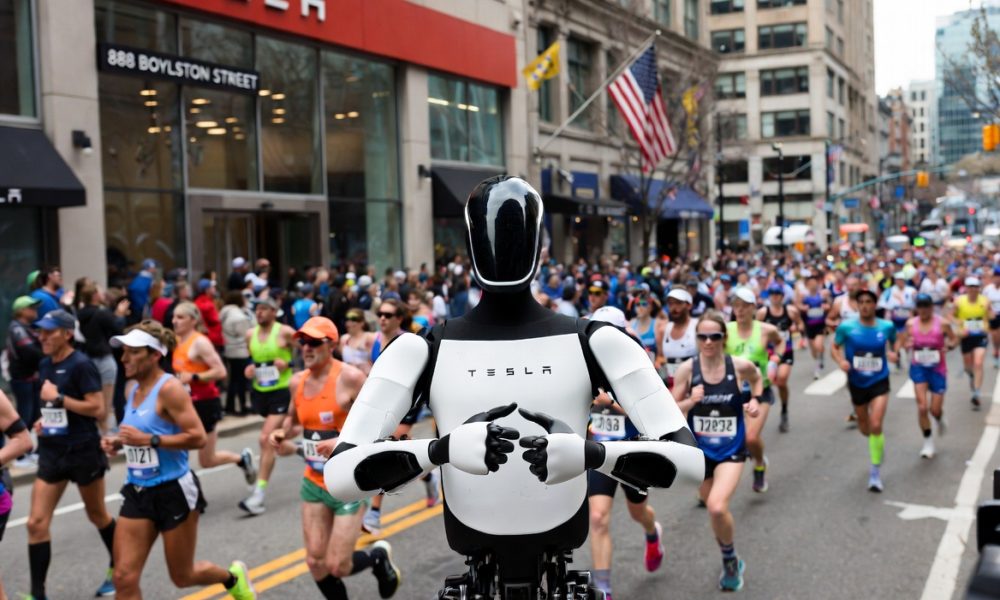
Tesla is gearing up to unveil the latest iteration of its Optimus humanoid robot, along with a series of groundbreaking patents for the hands and arms. The company has been facing significant challenges in developing this project, particularly in designing the hands, which are crucial for achieving human-like dexterity.
The new patents, filed on the same day as the “We, Robot” event in October 2024, focus on Tesla’s mechanically actuated, tendon-driven architecture. These designs involve innovative approaches such as relocating heavy actuators to the forearm, routing cables through a sophisticated wrist design, and using unique joint assemblies to enable lightweight construction and high-volume manufacturing.
The core patent, titled “Mechanically Actuated Robotic Hand,” outlines a cable/tendon-driven system where actuators are positioned in the forearm instead of the hand. Each finger boasts four degrees of freedom (DoF), while the wrist adds two more. This setup allows for precise finger movements through the use of thin, flexible control cables that extend from the forearm actuators, pass through the wrist, and connect to the finger segments.
One of the standout features of the design is the wrist’s cable transition mechanism, which significantly reduces issues like cable stretch, torque, friction, and crosstalk during wrist movements. This innovation ensures smoother and more reliable multi-axis wrist operation, essential for performing complex tasks.
Additionally, two supporting patents provide further insights into the appendage and joint design of the robotic hand. The “Robotic Appendage” patent covers the overall forearm-to-palm-to-finger assembly, while the “Joint Assembly for Robotic Appendage” patent describes curved contact surfaces on mating structures paired with a composite flexible member to enhance durability and simplify assembly.
Tesla executives have acknowledged the hand as the most challenging component of the Optimus robot. Elon Musk himself has described it as “the majority of the engineering difficulty of the entire robot,” emphasizing the complexity of replicating human hand functionality.
Despite initial struggles in finalizing the hand and forearm design, Tesla has made significant progress in overcoming key engineering challenges. The newly patented solutions address critical pain points such as hand mass reduction, friction reduction, and high-volume manufacturing readiness.
Overall, these patents showcase Tesla’s commitment to engineering excellence and innovation in the field of robotics. By leveraging cutting-edge technologies and novel design approaches, the company is positioning itself as a leader in the development of humanoid robots with advanced capabilities.