
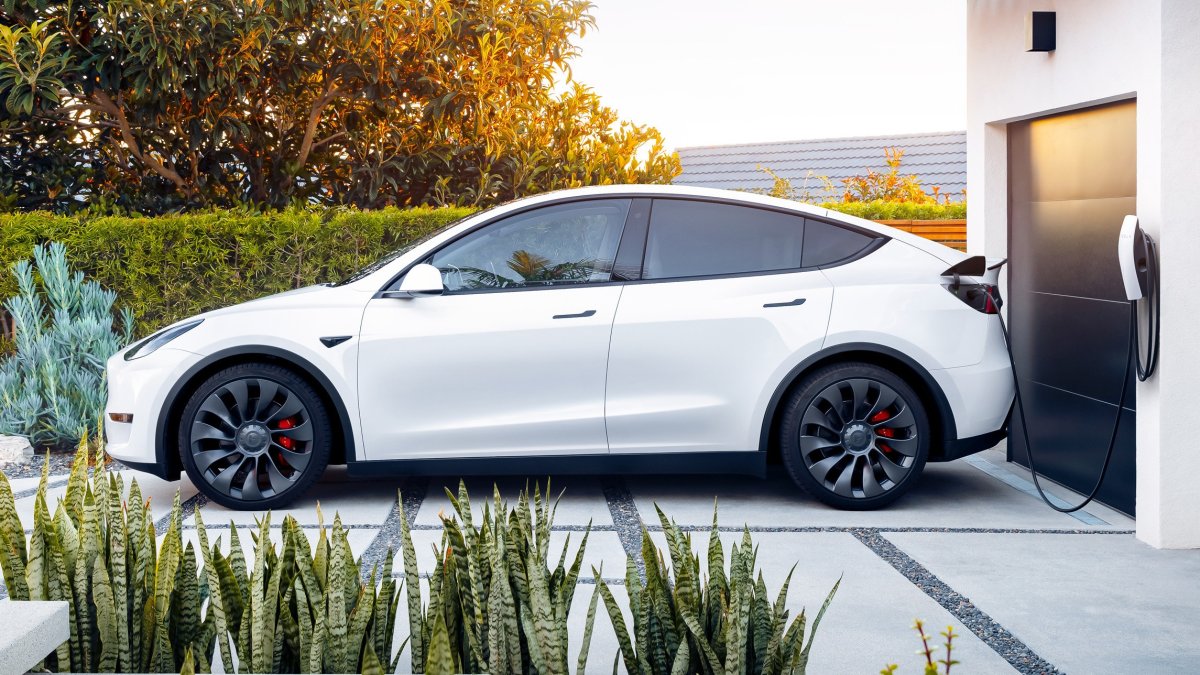
Tesla Home Charging: A Comparison of Tesla’s Wall Connector & Mobile Connector
For those new to electric vehicles, transitioning from the gas station model to home charging can be a significant adjustment. Instead of stopping at a station to refuel, EV owners simply plug in their vehicle at home overnight and wake up to a fully charged battery in the morning. However, understanding the different charging hardware options, electrical requirements, and installation logistics can be overwhelming. Using the popular Tesla Model Y as a reference point, let’s explore everything you need to know to set up your ideal home charging experience.
Gold Standard: Wall Connector
If you own a single-family home and want the fastest residential charging speeds, a dedicated hardwired unit like Tesla’s Wall Connector is the way to go. Priced around $450, the Wall Connector can deliver up to 48 amps of continuous power on a dedicated 60-amp circuit, adding approximately 44 miles of range per hour of charging for a Model Y. While the maximum amperage is 48 amps, it can be adjusted to a lower amperage based on your home’s electrical capabilities.
It’s important to note that the installation cost for the Wall Connector can range from $500 to over $2,000, as it requires a hardwired connection to your electrical panel. Additionally, the Wall Connector offers WiFi connectivity, allowing you to monitor and control your charging habits through the Tesla app.
Versatile Option: Mobile Connector
For a more cost-effective and flexible solution, the Tesla Mobile Connector is a great choice. Retailing for around $300, this portable unit comes with adapter plugs to match various electrical outlets. When plugged into a standard 120-volt household outlet, the Mobile Connector draws 12 amps, providing about three to four miles of range per hour.
To achieve faster charging speeds without a hardwired installation, you can have an electrician install a standard 240-volt outlet, allowing the Mobile Connector to draw up to 32 amps and add roughly 30 miles of range per hour. This option is generally more affordable than installing a Wall Connector and offers a good balance between cost and convenience for most homeowners.
Matching Hardware to Your Lifestyle
When deciding between a 12-amp trickle charge, a 32-amp outlet, or a 48-amp Wall Connector, consider your daily mileage to determine the most suitable charging solution. For those driving less than 20-30 miles a day, a standard household outlet may suffice, while those driving 40+ miles a day will benefit from a 240-volt solution.
The Apartment Dweller Dilemma
Renters and apartment dwellers may face challenges in setting up home charging, as options are often limited by building management. However, some modern complexes are installing shared Level 2 charging stations in parking garages, while landlords may consider installing 240-volt outlets in assigned parking spaces.
Street Charging Solutions
For those relying on street parking, access to EV charging largely depends on local infrastructure. While residential street charging is rare in North America, European countries have integrated street charging into urban life, offering curbside Level 2 chargers and retrofitting lampposts with charging sockets.
In summary, here is a breakdown of standard hardware configurations for home charging based on the Tesla Model Y, including expected upfront costs:
Hardware Option (Circuit)Charge Rate0 to 100% Charge TimeExpected Upfront Costs
Mobile Connector12A / 120V~3 to 4 miles per hour~50+ hours$300 (charger Only)
Mobile Connector24A / 240V~21 miles per hour~14 hours$500 to $800
Mobile Connector32A / 240V~30 miles per hour~10.5 hours$600 to $1,000
Wall Connector48A / 240V~44 miles per hour~7 hours$950 to $2,500+
By understanding your daily mileage and charging needs, you can choose the most suitable home charging solution for your electric vehicle.