
# SpaceX Successfully Conducts Static Fire Tests on Ship 39 and Super Heavy Booster 19 in Preparation for Flight 12 Launch
SpaceX had a big week as preparations for the Flight 12 launch and landing test (IFT-12) moved into high gear with successful static fire tests on both Ship 39 and Super Heavy Booster 19 at Starbase, Texas.
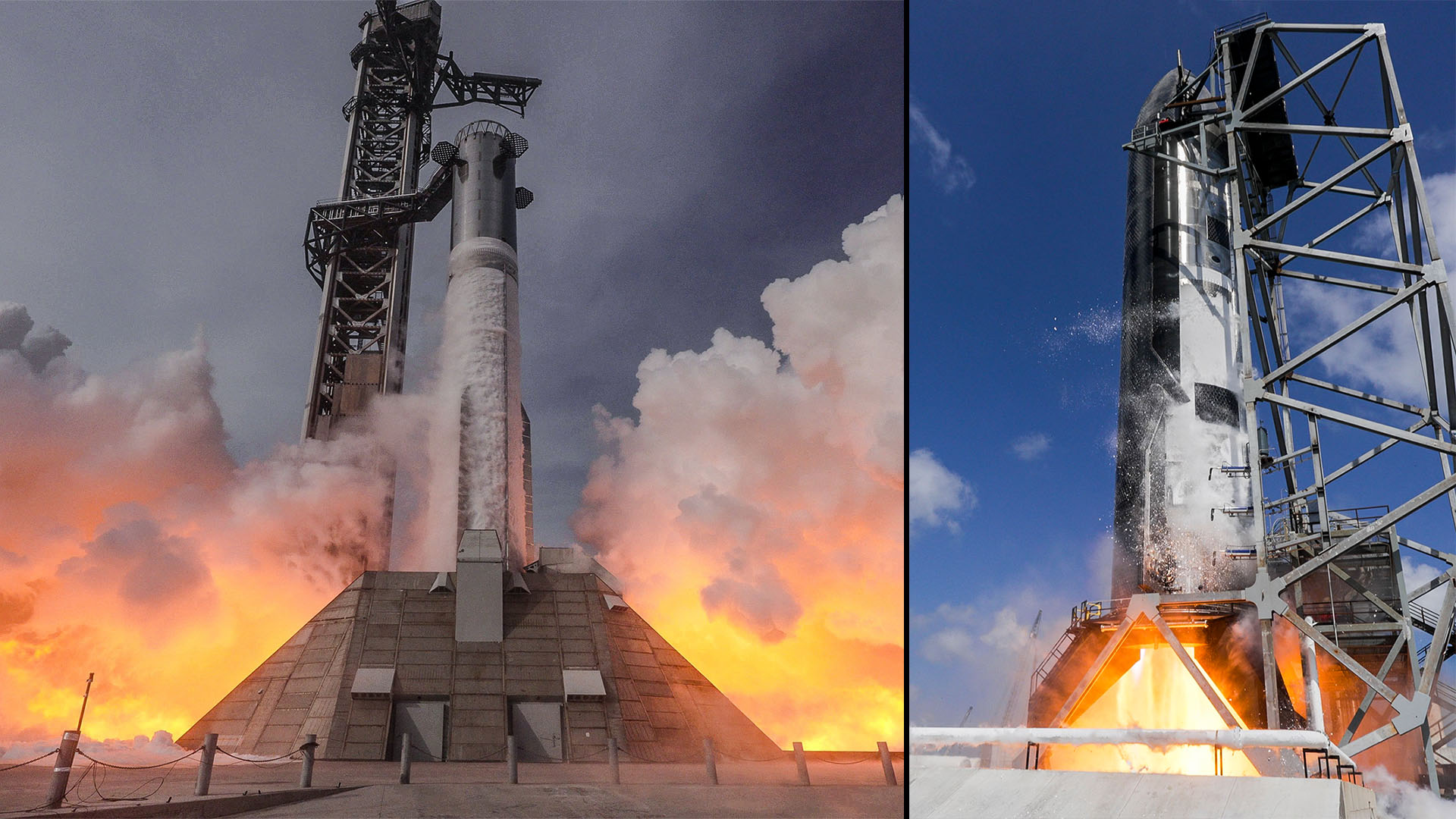
On Wednesday, April 15th, SpaceX conducted a 6-engine static fire test on the upper stage Starship 39 spacecraft. The very next day, on April 16th, a massive 33-engine static fire test was successfully conducted on the Booster 19 lower stage rocket.
Starship 39 and Booster 19 combined form the Flight 12 Starship. Ship 39 is the first V3 Starship prototype, and this was the first time Raptor 3 engines (both vacuum and sea-level) were fired for a full duration while installed on a V3 Starship.
These static fire tests mark a significant step toward the upcoming Starship Flight 12 launch, which is targeted for May. SpaceX conducted additional ground testing on both vehicles following the static fire tests.
Ship 39 is the first V3 upper stage prototype spacecraft and uses the latest Raptor 3 generation engines for thrust on sea-level and in space. A total of six Raptor 3 engines are installed on a Starship V3 upper stage, with three sea-level engines installed in the inner circle and three vacuum-level engines installed on the outer circle of the aft section.
SpaceX has developed a steel truss structure integrated with a test stand at the Massey’s Outpost, Starbase, to perform various tests on the upper stage V3 Starship. The 6-engine Ship 39 static fire test lasted the full duration of 60 seconds.
In a separate test, SpaceX conducted a full 33-engine static fire test on Super Heavy Booster 19. Last month, a 10-engine static fire test on Booster 19 ended abruptly, indicating a problem. However, SpaceX quickly readied the rocket for the full 33-engine test, which was successfully completed.
Booster 19 was transported from the production site to the launch site at Starbase, where it was mounted on the newly developed and improved orbital launch mount (OLM) Pad 2. Pad 2 features a dual-way flame trench, an improved water deluge system, and a new detonation suppression system (DSS) to disperse oxygen under the launch pad.
The full-scale, full-duration 33-engine static fire test on Booster 19 confirmed that Pad 2 is flight-ready for the upcoming Starship Flight 12 launch in May. SpaceX CEO Elon Musk announced that the Starship V3 booster and ship will be ready for their first test flight in a few weeks.
The successful static fire tests mark a significant milestone for SpaceX as they continue to push the boundaries of space exploration and commercial space travel. SpaceX has successfully conducted static fire tests on Starship 39 and Booster 19, with Flight 12 expected to take place in the coming weeks. The tests involved a full duration 15-second static fire test of the Super Heavy Booster 19, equipped with 33 Raptor 3 engines. This milestone marks a significant step forward in SpaceX’s ambitious plans for space exploration.
The recent development follows previous tests, including a 10-engine static fire test that ended abruptly, leading to preparations for a 33-engine static fire test. Booster 19 has shown improved propellant load speeds, indicating progress in the testing phase. SpaceX is also set to test Raptor 3 engines on Booster 19 for the first time, showcasing the company’s commitment to innovation and advancement in rocket technology.
Starship Flight 12, which includes Ship 39, has undergone three cryogenic pressure-proof tests, demonstrating its resilience and readiness for upcoming launch and landing tests. The first V3 Starship, Ship 39, has been undergoing prelaunch testing at Starbase, with preparations in full swing for the upcoming mission.
As SpaceX continues to push the boundaries of space exploration, stay tuned for further updates on Starship and SpaceX developments. Follow us on Google News, Twitter, Flipboard, WhatsApp Channel, and RSS Feedly for the latest news, videos, and informative articles on SpaceX’s groundbreaking initiatives. The world is constantly changing, and with it, so are the ways we live our lives. From technological advancements to societal shifts, there is no denying that we are living in an era of rapid change. One area that has seen significant transformation in recent years is the way we work.
Gone are the days of traditional 9-5 office jobs with rigid schedules and limited flexibility. Today, more and more people are turning to remote work as a viable option. This shift has been accelerated by the global pandemic, which forced many businesses to adopt remote work practices to ensure the safety of their employees.
Remote work offers numerous benefits for both employers and employees. For employers, it can lead to increased productivity, reduced overhead costs, and access to a larger talent pool. By allowing employees to work from anywhere, companies can attract top talent from around the world without being limited by geographic location.
Employees also benefit from remote work in a variety of ways. They have more flexibility in terms of when and where they work, allowing them to better balance their professional and personal lives. Remote work also eliminates the need for long commutes, saving time and reducing stress.
However, remote work is not without its challenges. One of the biggest issues is maintaining a sense of connection and collaboration among team members. Without the face-to-face interactions that come with working in an office, employees may feel isolated and disconnected from their colleagues.
To address this challenge, many companies are turning to virtual team-building activities and online communication tools to foster a sense of community among remote workers. These tools can help employees stay connected, collaborate on projects, and build relationships with their colleagues, even when they are not in the same physical location.
Overall, the rise of remote work represents a fundamental shift in the way we approach work. As technology continues to advance and the world becomes increasingly interconnected, remote work is likely to become even more prevalent in the years to come. By embracing this change and finding ways to overcome its challenges, businesses and employees alike can reap the benefits of a more flexible and efficient way of working.