
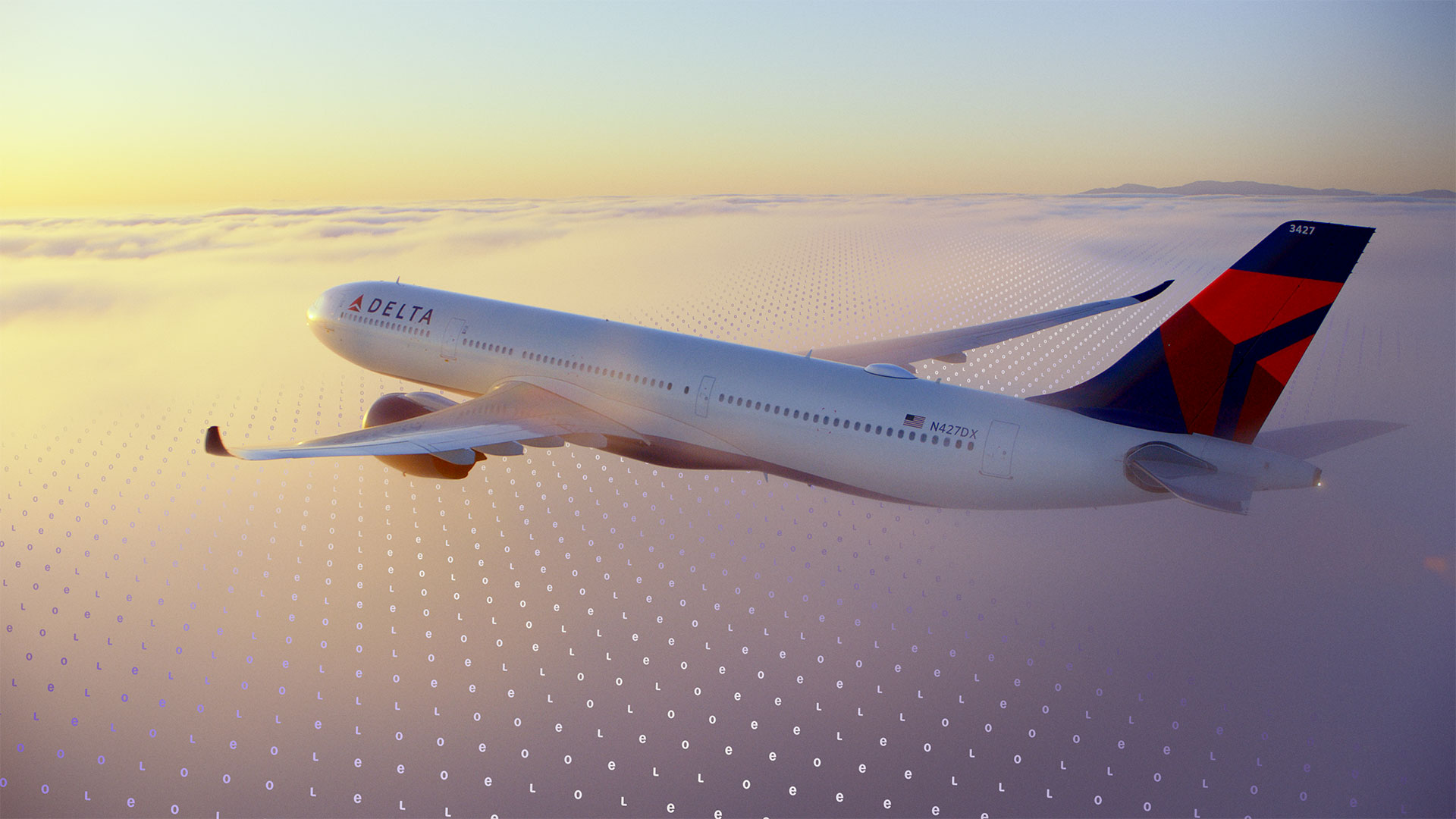
Delta Air Lines and Amazon have announced a groundbreaking partnership that will see Amazon Leo satellite technology installed on hundreds of aircraft starting in 2028. This move marks a significant expansion of the collaboration between the two companies and aims to provide high-speed, low-latency Wi-Fi connectivity from gate-to-gate.
The decision to bring Amazon Leo technology to Delta’s fleet is seen as a direct challenge to SpaceX’s Starlink, which has already secured deals with multiple global airlines. The competition in the skies is expected to benefit passengers by offering improved connectivity options.
Amazon Leo operates using a constellation of thousands of satellites in low Earth orbit, significantly reducing latency compared to traditional geostationary systems. Each aircraft will be equipped with a specialized antenna capable of supporting download speeds of up to 1 Gbps and upload speeds of up to 400 Mbps.
Delta’s CEO, Ed Bastian, expressed excitement about the partnership, highlighting the potential for global connectivity. The collaboration builds upon Delta’s existing use of Amazon Web Services (AWS) to power its reservation systems and operational tools. The companies plan to integrate AWS, Amazon Leo, and artificial intelligence to enhance the overall travel experience for passengers.
Amazon’s President and CEO, Andy Jassy, emphasized the impact of Leo’s speed and reliability on businesses, governments, and consumers worldwide. With over 200 satellites currently in orbit and more than 20 full-scale missions planned for the coming year, Amazon Leo aims to provide a robust and efficient connectivity solution.
While Amazon Leo’s satellite network is still growing, SpaceX’s Starlink currently boasts over 10,000 satellites in orbit. The competition between these two tech giants is expected to drive innovation in the aerospace industry and ultimately benefit travelers seeking seamless connectivity during their journeys.
Overall, the partnership between Delta Air Lines and Amazon signifies a significant step forward in the evolution of in-flight connectivity, offering passengers a reliable and high-speed Wi-Fi experience from takeoff to landing.