
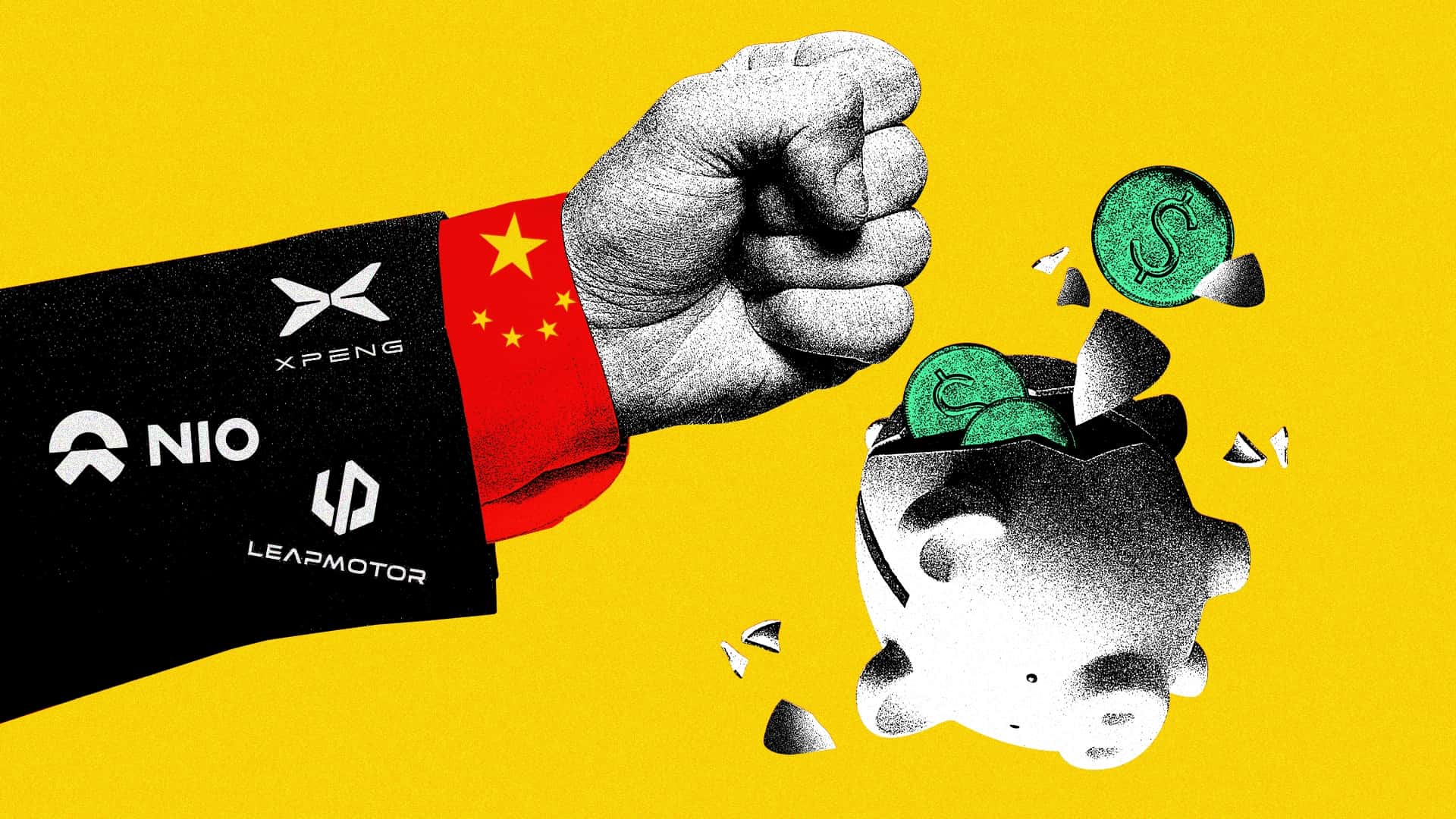
While Western auto giants are still burning billions in the race to go electric, a new era has already begun in China. The country’s EV disruptors have taken the world by storm with high-tech battery-powered cars and affordable prices. Now, for the first time, they are actually making money.
So far this year, three Chinese automakers have posted their first annual or quarterly profits. Stellantis-backed Leapmotor disclosed its first-ever full-year profit of $78 million in 2025, marking a sharp reversal from a $410 million loss the year before. Nio posted $104 million in adjusted net profit in Q4 after reporting a roughly $900 million loss during the same period in 2024. Xpeng turned its business around with a net profit of about $55 million in the fourth quarter of last year, after reporting a loss of around $190 million during the same period the year before.
The three companies join BYD, Xiaomi, and Li Auto in what is a growing roster of Chinese makers of plug-in vehicles—NEVs, or new energy vehicles, in Chinese parlance—that are no longer in the red. It’s a signal of the global automotive power balance shifting East, where Chinese EV makers are maturing quickly while battling brutal competition and price wars on their home turf.
“These companies are really just beginning to fit into their shoes,” Tu Le, the founder of consultancy Sino Auto Insights, told InsideEVs. “They are gathering data on the market, their competitors, what their strengths and weaknesses are, and rightsizing their companies better than their competition.”
By contrast, Tesla is the only profitable pure-play EV manufacturer in the West, although its profits have lately been plummeting as it pivots toward AI and robotics. All major American legacy automakers, including General Motors, Ford, and Stellantis, booked multi-billion-dollar charges last year as they recalibrated their EV ambitions.
European automakers are facing similar financial headwinds, but many continue to push forward with EVs. BMW, Volkswagen, Mercedes-Benz, Audi, and Volvo are rolling out updated models with improved software, longer range, and faster charging capabilities, signaling that they’re still committed to the shift.
Chinese automakers, of course, benefit from broad structural and systemic advantages. BYD received at least $3.7 billion in direct government subsidies to dominate the global EV market, Bloomberg reported in 2024, citing a study from the German Kiel Institute, a think tank.
This move allowed Leapmotor to quickly establish a presence in the European market and leverage Stellantis’ established network. The company has also focused on exporting its vehicles to other countries, maximizing its reach and potential customer base.
The Chinese EV industry’s rapid growth and innovation can be attributed to a combination of government support, vertical integration, and strategic partnerships. The significant investments made by Chinese automakers have enabled them to develop cutting-edge technology, control costs, and expand their market reach.
As the global EV market continues to evolve, Chinese companies are poised to play a significant role in shaping its future. With a strong focus on innovation, sustainability, and customer experience, these companies are well-positioned to compete on a global scale and drive the transition to electric mobility. Xiaomi, the renowned consumer electronics giant, has made significant strides in the auto industry with its foray into electric vehicles. In 2025, the company achieved a remarkable milestone by delivering 596,555 vehicles worldwide, representing a staggering 103% increase compared to the previous year. With a presence in 40 countries across Asia, Europe, the Middle East, Africa, and South America, Xiaomi has solidified its position as a key player in the global automotive market.
The success story of Xiaomi’s entry into the auto industry is particularly notable in China, where the company launched its SU7 sedan in April 2024 without any prior experience in auto manufacturing. Within a short span of less than two years, Xiaomi managed to sell over 380,000 units of the SU7 sedan, showcasing its rapid growth and strong consumer demand. Additionally, the company’s EV business achieved its first quarterly profit in just 19 months, underscoring its financial viability in the competitive automotive landscape.
Unlike some tech giants that faced challenges in developing their own vehicles, Xiaomi leveraged its scale as a technology company to strategically position itself in the EV market. By integrating its electric vehicles with its broader ecosystem of connected devices, Xiaomi has crafted a unique “Human x Car x Home” platform that offers a seamless experience for consumers. This innovative approach has set Xiaomi apart from traditional automakers and tech companies alike, enabling the company to carve out a distinct niche in the industry.
As Chinese EV makers continue to expand into global markets, the United States is poised to witness a surge in EV adoption, albeit at a slower pace compared to other regions. With countries like Canada and Mexico embracing Chinese EVs, the U.S. faces the prospect of being sandwiched between its neighbors in terms of EV market penetration. According to industry experts, non-Chinese EV manufacturers must act swiftly to avoid being left behind in the rapidly evolving landscape of electric mobility.
In light of these developments, industry analysts emphasize the importance of agility and proactive decision-making for automakers seeking to thrive in the dynamic EV market. Failure to adapt quickly to changing trends and consumer preferences could result in falling behind competitors, underscoring the need for decisive action and strategic investments in the evolving automotive landscape. Xiaomi’s success story serves as a testament to the potential for innovation and growth in the electric vehicle sector, offering valuable insights for industry players looking to capitalize on the burgeoning demand for sustainable transportation solutions.