
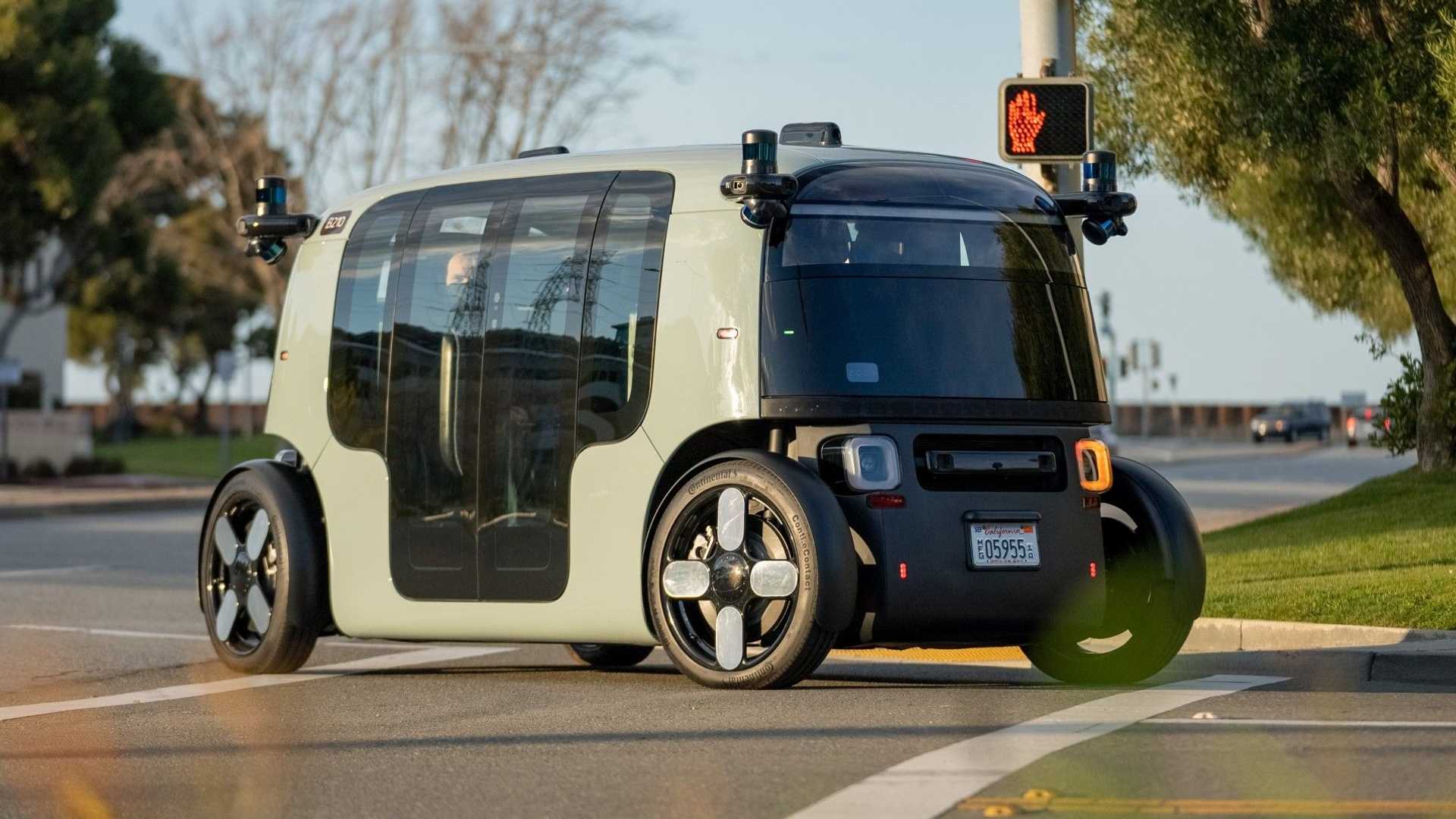
Amazon’s Zoox robotaxi company is making significant strides in expanding its service area to include more cities and increase its presence in existing locations. The company recently announced its plans to introduce its driverless electric pods in Austin, Texas, and Miami, Florida, later this year. This expansion will add two more cities to Zoox’s service area, allowing more people to experience the convenience and innovation of autonomous transportation.
In Austin, where competitors like Tesla and Waymo are already offering rides, Zoox is planning a soft rollout initially. The service will be limited to company employees, their families, and friends, with the waitlist opening soon. The company’s Zoox Explorers early rider program will launch in Austin and Miami later this year, providing a unique opportunity for individuals to experience the future of transportation firsthand.
Zoox has been testing its technology in both Austin and Miami with retrofitted vehicles since 2024. The company is now ready to introduce a small-scale test fleet of its purpose-built robotaxis in these cities. These driverless pods are equipped with automatic sliding doors, opposing bench seats, and no steering wheel or pedals, offering passengers a truly futuristic and immersive experience.
In addition to expanding its service area in Austin and Miami, Zoox is also increasing its presence in San Francisco and Las Vegas. In Las Vegas, Zoox’s service area will include the Harry Reid International Airport (LAS) and high-traffic events at Sphere and T-Mobile Arena. In San Francisco, the company plans to quadruple the geofenced area where it offers rides to waitlist members, reaching a larger portion of the eastern half of the city.
Furthermore, Zoox is enhancing the overall passenger experience by improving its estimated time of arrival calculations and offering pre-booking estimates to give riders a clearer picture of their journey. Passengers will also have the option to connect their devices via Bluetooth to listen to their favorite music and enjoy curated Stingray Music playlists. In crowded pickup zones, riders can use the “Find My Zoox” feature, which activates a distinct lighting and sound signature to help them locate their specific robotaxi.
Since launching limited rides in Las Vegas less than a year ago, Zoox’s driverless pods have driven nearly two million miles and carried over 350,000 passengers. The company’s commitment to innovation and customer satisfaction is evident in its continuous efforts to expand its service area and improve the overall passenger experience. With Zoox’s expansion into new cities and increased presence in existing locations, more people will have the opportunity to experience the future of autonomous transportation firsthand. The world of technology is constantly evolving, and one of the most exciting developments in recent years is the rise of virtual reality (VR) technology. VR has the potential to revolutionize the way we interact with computers and experience digital content, opening up a whole new world of possibilities for entertainment, education, and communication.
One of the key advantages of VR technology is its ability to create immersive, realistic experiences that transport users to virtual worlds that look and feel just like the real thing. With the help of a VR headset and motion-tracking controllers, users can explore these virtual environments and interact with objects and characters in ways that were previously only possible in science fiction.
In the world of entertainment, VR has the potential to completely transform the way we experience movies, TV shows, and video games. Imagine being able to step inside your favorite film or game and become part of the action, feeling like you are actually there alongside the characters. This level of immersion can create a truly unforgettable experience and take entertainment to a whole new level.
But VR technology is not just limited to entertainment – it also has the potential to revolutionize education and training. Imagine being able to take a virtual tour of ancient ruins, or practice surgery in a virtual operating room, all from the comfort of your own home. VR can provide a safe and realistic way to learn new skills and concepts, making education more engaging and accessible to people of all ages.
In the world of communication, VR technology has the potential to bring people together in new and exciting ways. Virtual reality social platforms allow users to interact with others in virtual spaces, creating a sense of presence and connection that is much more immersive than traditional video calls or chat rooms. This can be especially valuable for people who are unable to meet in person due to distance or other limitations.
Of course, like any new technology, VR also presents challenges and concerns. Issues such as motion sickness, privacy, and accessibility need to be addressed in order to ensure that VR technology is safe and inclusive for all users. But with careful development and regulation, VR has the potential to transform the way we experience the digital world and open up a whole new realm of possibilities for how we interact with technology.
In conclusion, virtual reality technology has the potential to revolutionize the way we experience entertainment, education, and communication. By creating immersive, realistic experiences that transport users to virtual worlds, VR has the power to transform the way we interact with computers and digital content. With careful development and regulation, VR has the potential to open up a whole new world of possibilities for how we experience technology – and the future looks bright for this exciting new frontier.