
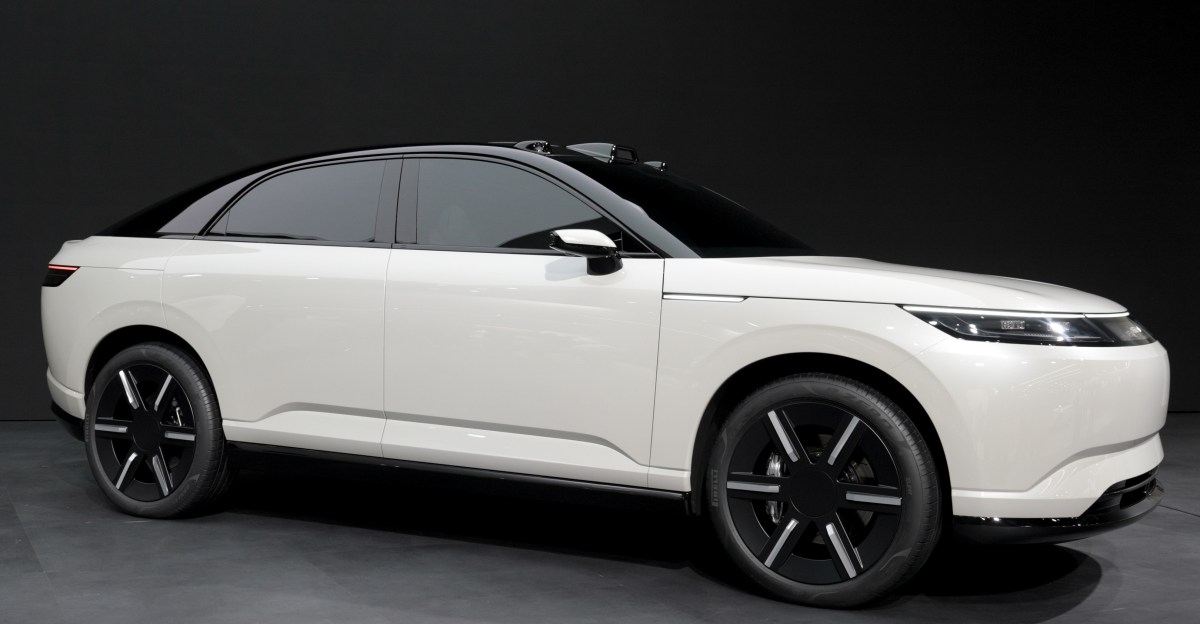
The joint venture between Sony and Honda made a tough decision today to discontinue the production of the $90,000 Afeela 1 electric sedan and the unnamed Afeela SUV concept. This move comes as a response to slower demand for electric vehicles and changes in EV policies. In a statement released by Sony Honda Mobility (SHM), it was explained that Honda had to reassess its EV strategy due to significant losses, which led to the decision to halt production of several planned EV models, including the Afeela.
Earlier this month, Honda announced a substantial writedown of up to 2.5 trillion yen ($15.7 billion) on its EV investments, marking the company’s first annual loss in over 70 years. This financial setback prompted Honda to cancel the production of the Honda Zero Series Saloon and SUV, in addition to the Afeela models.
SHM expressed disappointment in not being able to move forward with the Afeela project, citing Honda’s shift in electrification strategy as the primary reason. The joint venture had ambitious plans to combine Sony’s entertainment technologies with Honda’s automotive expertise to create innovative mobility products. However, with the change in Honda’s plans, SHM found it impossible to proceed with the development and launch of the Afeela vehicles as originally intended.
Customers who had placed a $200 deposit to reserve a future Afeela will be refunded by SHM, as the project is now officially discontinued. The Afeela was envisioned as more than just a car, with features such as a wide dashboard screen, advanced driving assistance systems, all-wheel drive, and integration of augmented reality and virtual worlds into the driving experience. Sony even planned to allow Playstation 5 owners to stream games directly onto the vehicle’s infotainment system.
Unfortunately, the Afeela has now joined the growing list of casualties in the auto industry’s pullback on EV investments. Despite rising gas prices and increasing interest in electric vehicles, automakers are facing challenges and incurring significant losses. Some companies are rushing to develop more affordable EV models to compete with Chinese manufacturers, while others are delaying their transition to electric vehicles altogether. While EV sales are on the rise in Europe and China, automakers are still grappling with the complexities of transitioning to a more sustainable future.
Overall, the discontinuation of the Afeela serves as a stark reminder of the shifting dynamics in the automotive industry and the challenges that manufacturers face in adapting to the evolving landscape of electric mobility.