
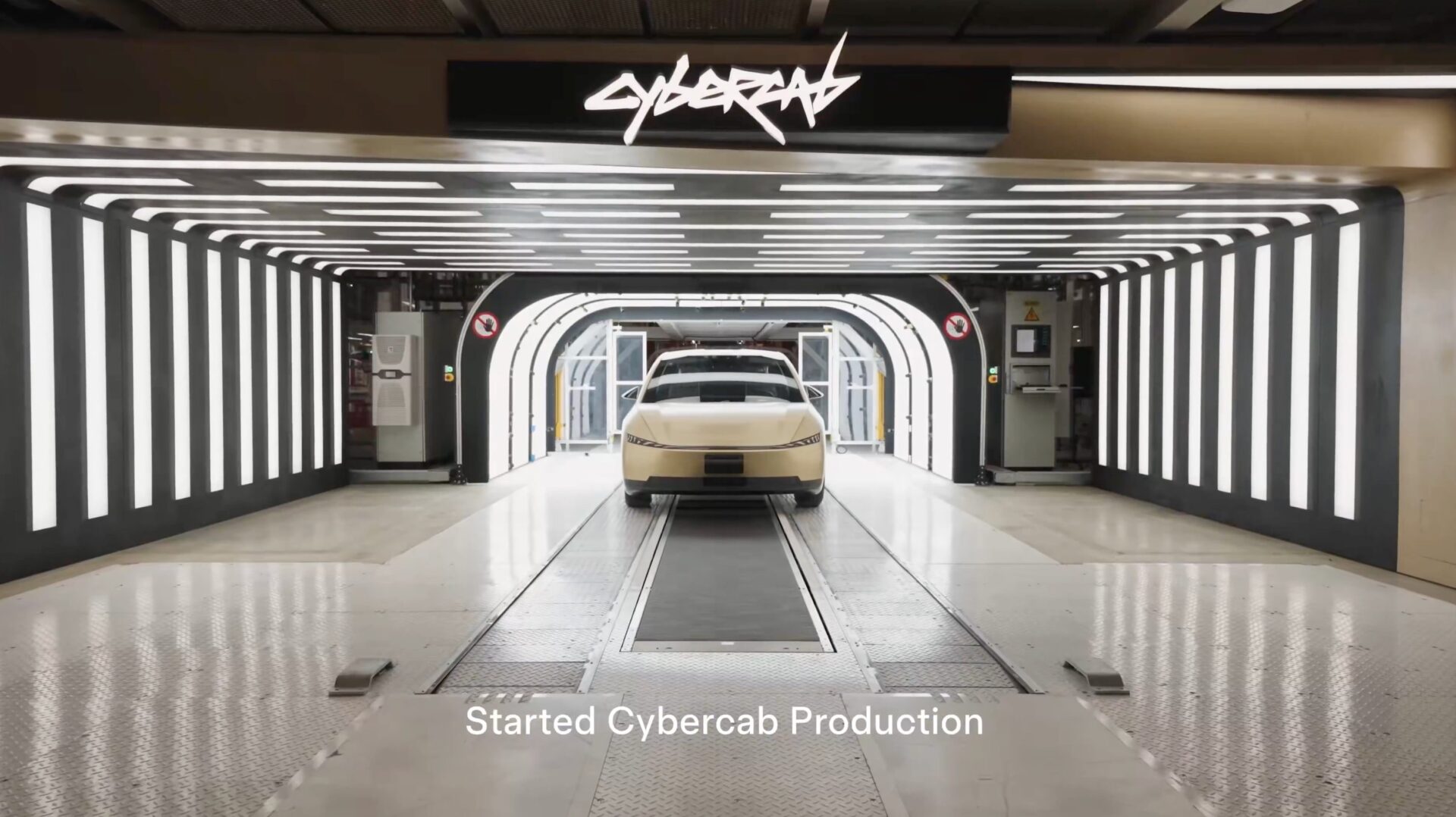
Tesla made a significant regulatory move this week by unveiling the production version of its highly anticipated Cybercab at the U.S. Department of Transportation (USDOT) headquarters in Washington, D.C. The vehicle’s appearance on March 10, 2026, coincided with the first-ever federal autonomous vehicle safety forum, indicating Tesla’s proactive engagement with regulators to pave the way for its steering-wheel-less design.
The public got a glimpse of the production-ready interior of the two-seater during this appearance. The cabin boasts a massive 21-inch center display, approximately 25% larger than the screens in the current Model S and Model X. With no steering wheel or pedals, the interior offers significantly more legroom than any other Tesla model.
Key production details include a larger interior safety camera for passenger monitoring, two USB-C ports in the center console, and a rear storage area featuring a more durable, easy-to-clean material suitable for fleet use.
The Cybercab’s Washington visit coincided with Tesla achieving major production milestones at its Gigafactory in Texas. The first mass-produced Cybercab rolled off the line last month, and production has since ramped up, with over 30 units seen being loaded onto transport trucks or undergoing validation at crash-testing facilities this week.
Footage captured the Cybercab’s automated camera washers in action, essential for keeping the vehicle’s “eyes” clear of road debris without human intervention. Despite Elon Musk cautioning a slow initial production ramp due to the vehicle’s unique design and assembly process, the long-term goal is to reach an impressive output of one unit every 10 seconds.
While volume production is set to commence in April, early production units are likely being shipped to major cities across North America to gather localized data and finalize safety certifications for fully unsupervised operation.
In other news within the category of News, Elon Musk unveiled Digital Optimus, a new collaboration between Tesla and xAI aimed at automating complex office work through screen monitoring and human action imitation. The initiative, known as Macrohard, follows Tesla’s recent $2 billion investment in xAI.
Additionally, the Mississippi Environmental Quality Permit Board granted xAI permission to install 41 permanent gas turbines at its Southaven facility. This decision enables the company to power its “Colossus 2” data center in Memphis, supporting the Grok AI chatbot.
Tesla also made headlines for filing a $1 billion lawsuit against former supplier Matthews International over alleged theft of trade secrets related to its critical dry electrode battery manufacturing process. The lawsuit, filed in the U.S. District Court for the Northern District of California, accuses Matthews of sharing Tesla’s proprietary innovations with competitors.
The integration of these updates seamlessly into a WordPress platform ensures a comprehensive coverage of recent developments in the automotive and technology sectors.