
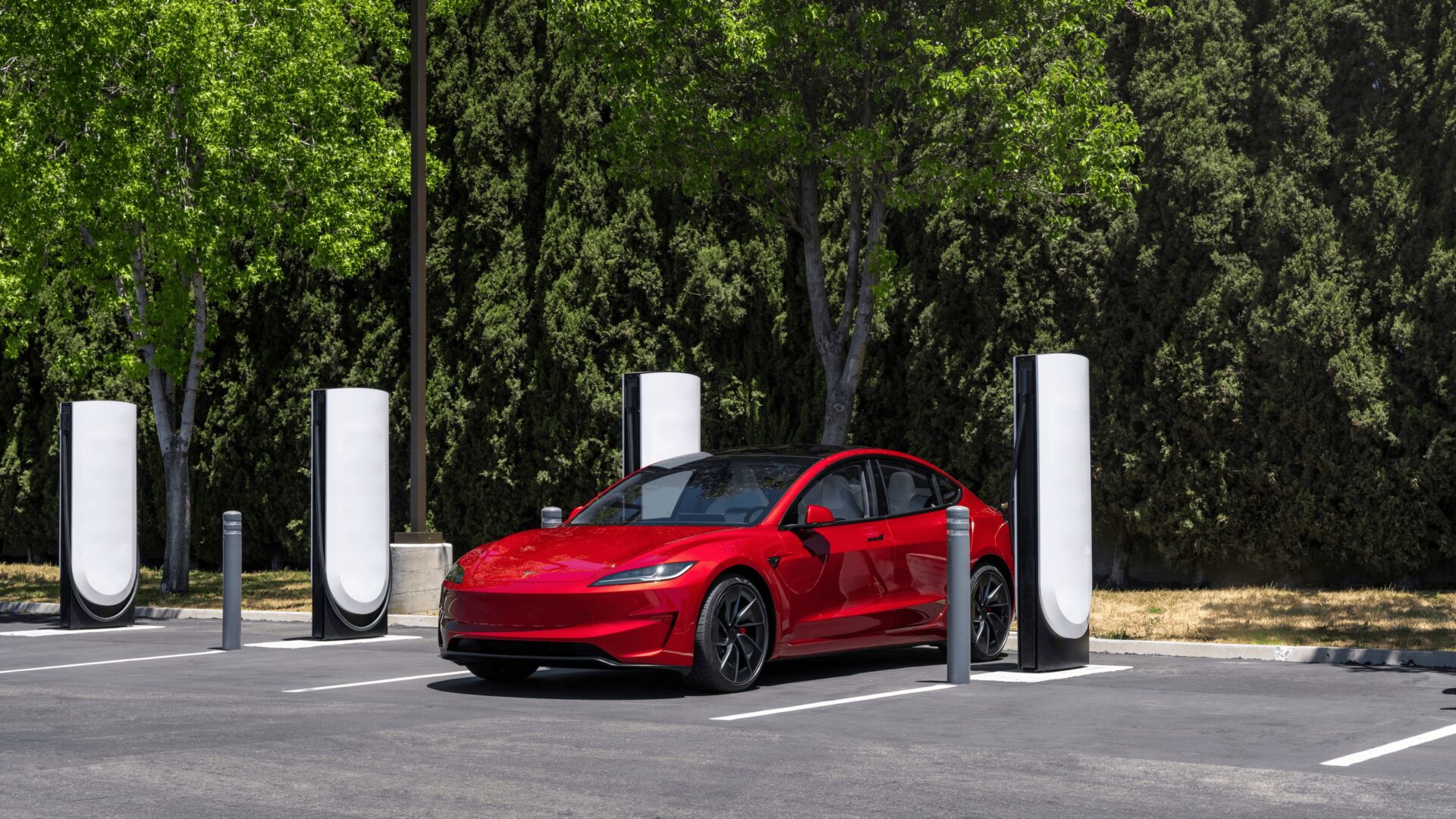
Tesla’s Supercharger Site Maps are rapidly expanding, with hundreds of locations already live and hundreds more being added each week. Max de Zegher, Tesla’s Director of Charging, recently provided an update on Twitter, stating that 300 sites currently have the Site Maps feature, with an additional 300+ sites being added each week. The team at Giga New York is doing an excellent job validating the data for these new locations.
Site Maps, which was introduced as part of Tesla’s 2025 Holiday Update, initially launched as a pilot program at 18 Supercharger locations in California and Texas. Since then, the rollout has picked up speed, providing Tesla drivers with high-fidelity, interactive 3D renderings of charging locations directly on their in-car display. This feature allows drivers to view a detailed layout of the Supercharger station, including information on individual stalls, occupancy status, and the type of vehicles currently charging.
This level of integration is a prime example of Tesla’s vertical integration at work. By controlling the vehicle software, the charging network, and the backend systems connecting everything, Tesla can offer a dynamic, real-time 3D visualization experience that sets it apart from third-party charging providers.
The expansion of the Supercharger Site Maps feature comes at a time when Tesla’s global Supercharger network is rapidly expanding. With over 75,000 Supercharger stalls worldwide, Tesla has solidified its position as the largest DC fast-charging network globally.
In addition to adding new stalls, Tesla has been continuously improving the charging experience for its customers. Features like real-time stall availability information, idle fees, and enhanced route planning have made long-distance travel more convenient for Tesla drivers. Reports suggest that a virtual Supercharger queuing system is also in development, which could further reduce wait times at busy locations once implemented.
As Tesla continues to roll out 300+ new Site Maps each week, it’s clear that the company sees this feature as more than just a visual enhancement. De Zegher hinted that Site Maps could potentially play a crucial role in Full Self-Driving and future Robotaxi operations, where understanding the layout and occupancy of charging infrastructure will be essential for efficient operations.