
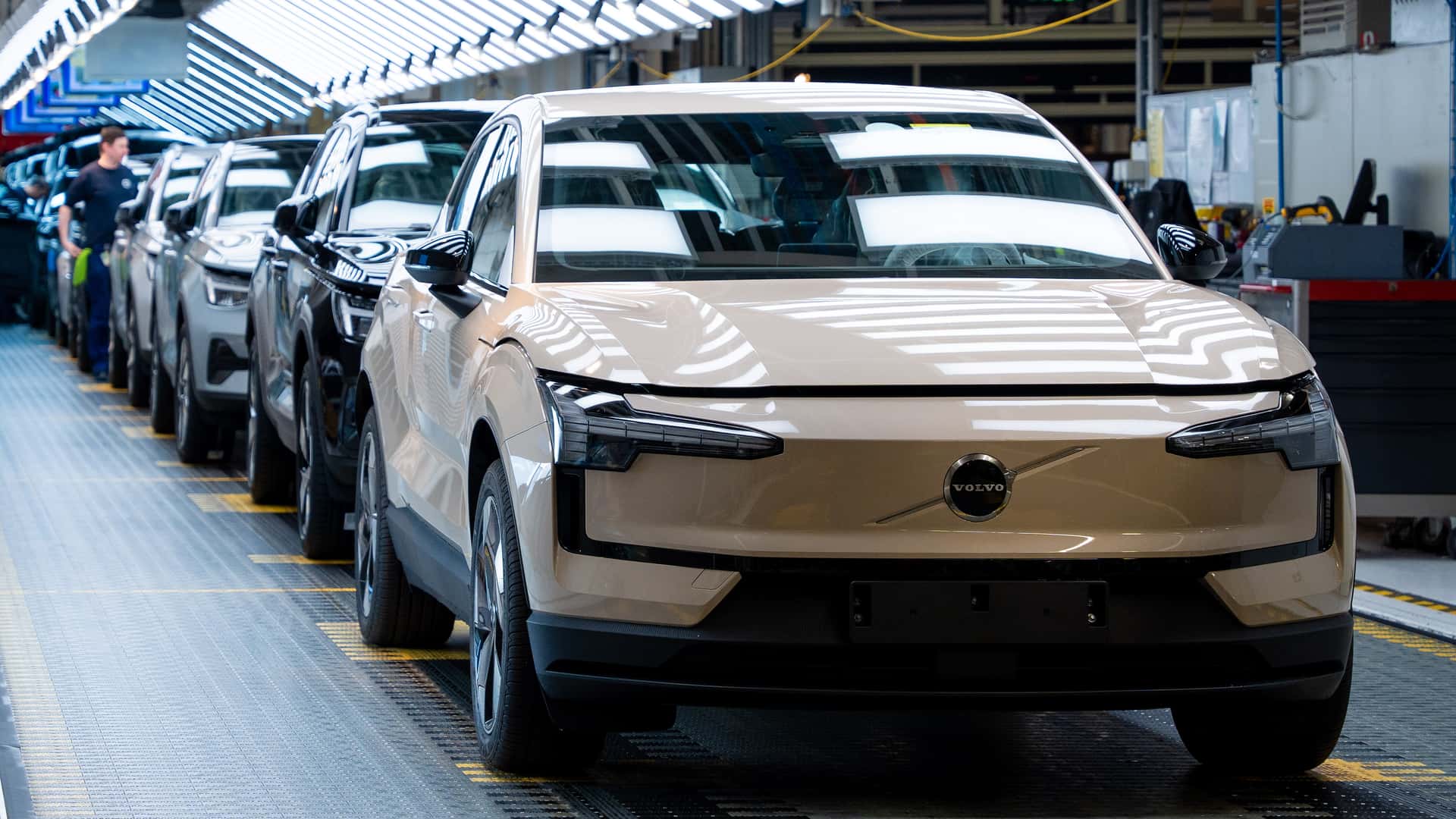
Volvo is facing yet another setback in its electric vehicle lineup, as the automaker has announced a massive recall of over 40,000 EX30 models due to a battery fire risk. The recall, reported by Reuters, is a blow to Volvo’s efforts to offer affordable electric cars to consumers worldwide.
The affected cars, including both Single-Motor Extended Range and Twin-Motor Performance trims, are equipped with battery modules that are at risk of overheating and catching fire. These modules are supplied by Shandong Geely Sunwoda Power Battery Co, a joint-venture backed by Volvo’s parent company, Geely. Volvo has stated that the battery supplier has rectified the issue and will be replacing the packs with the revised part.
In response to the recall, Volvo has advised affected owners to park their cars away from buildings and limit charging to just 70%. The company is working to deploy the fix, which involves replacing the modules in the high-voltage battery packs of the affected vehicles. Owners in more than a dozen countries have been asked to follow these precautions while the recall process is underway.
The recall has raised concerns among owners, with some reporting higher charging costs as a result of the 70% charging limit. This could be due to increased usage of more expensive public fast-chargers, as well as potential range limitations for owners with longer commutes. The 2025 Volvo EX30 Single Motor has an estimated range of 261 miles, which translates to around 183 miles at 70% charge.
This latest recall poses a challenge to Volvo’s reputation for safety, which has been a cornerstone of the company’s brand since it introduced the three-point seat belt to the auto industry in 1959. Any safety-related issue, especially one involving the risk of fire, is a significant concern for Volvo and its customers.
Volvo is not the only automaker to face battery-related recalls in the electric vehicle market. General Motors, for example, recalled 140,000 Chevy Bolts in 2020 due to battery issues, resulting in significant costs for the company and its battery supplier, LG Chem. Nissan has also recalled tens of thousands of Leaf EVs for battery problems, highlighting the challenges faced by car companies in the EV space.
Mass recalls like these are a reminder of the complexities involved in developing and manufacturing electric vehicles, and the importance of ensuring the safety and reliability of these vehicles for consumers. As Volvo works to address the battery fire risk in its EX30 models, the company will need to navigate this challenge carefully to maintain consumer trust and confidence in its electric vehicle offerings. The world is constantly changing, and with these changes come new challenges and opportunities. One such challenge that we are currently facing is the rapid advancement of technology, particularly in the fields of artificial intelligence and automation.
Artificial intelligence, or AI, refers to the ability of machines to perform tasks that typically require human intelligence. These tasks can range from simple data analysis to complex decision-making processes. As AI continues to evolve, its applications are becoming more widespread and diverse.
One area where AI is making a significant impact is in the field of automation. Automation refers to the use of technology to perform tasks with minimal human intervention. This can include anything from robotic process automation in business operations to self-driving cars on the road.
The integration of AI and automation has the potential to revolutionize industries across the board. For example, in healthcare, AI-powered robots are being used to assist surgeons during complex procedures, leading to more precise outcomes and faster recovery times for patients. In manufacturing, automation is streamlining production processes, reducing costs, and increasing productivity. In agriculture, AI is being used to analyze data and optimize crop yields, leading to more sustainable farming practices.
While the benefits of AI and automation are clear, there are also concerns about the impact they will have on the workforce. As machines become more capable of performing tasks that were once reserved for humans, there is a fear that jobs will be lost and unemployment rates will rise. However, proponents of AI and automation argue that these technologies will create new job opportunities and lead to a more efficient and productive workforce.
Ultimately, the integration of AI and automation into our lives is inevitable. It is up to us to adapt to these changes and harness the potential benefits that they offer. By embracing new technologies and exploring innovative solutions, we can ensure that AI and automation work for us, rather than against us.