
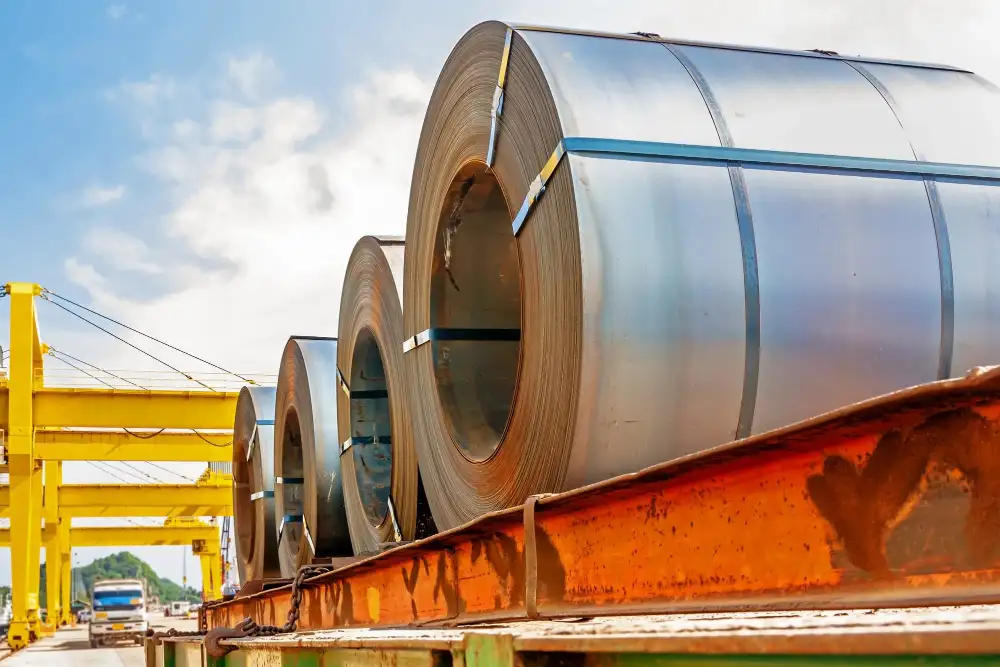
UK Implements Tariff Cordon to Protect Steel Industry
Ministers in the UK have recently announced a significant move to protect the country’s steel industry by implementing a tariff cordon. This decision comes in response to a flood of Chinese steel imports that have been impacting British steelmakers. The new measures include cutting import quotas for tariff-free steel by 60% starting in July and imposing a 50% tariff on imports that exceed these limits.
According to Peter Kyle, these tariffs are crucial in safeguarding a sector that plays a vital role in the government’s industrial policy. The aim is to shift away from the destructive deindustrialisation that has plagued the industry for decades and instead focus on supporting and preserving Britain’s steelmaking legacy.
UK Steel, the lobby group representing steelmakers, has praised this move as a “transformation” in trade policy towards the sector. The industry’s market share in the UK has dwindled to just 30% due to fierce global competition and high pricing.
Gareth Stace, director-general of UK Steel, commended the government for its bold action in defending essential industries and national security. This shift marks a departure from the previous emphasis on free trade at all costs.
While the steel industry welcomes these tariffs, there are concerns that higher tariffs could have adverse effects on manufacturing industries that rely on imported steel. William Bain from the British Chambers of Commerce warned that this move could signal the end of decreasing tariffs on manufactured goods, potentially straining manufacturers who rely on imports.
The decision by the UK follows a similar move by the EU last year to reduce quotas and increase tariffs on global steel imports. This broader “steel strategy” aims to revitalize and decarbonize the industry, with a focus on electric arc furnaces for cleaner steel production using recycled scrap.
During a visit to Tata Steel’s plant in Port Talbot, Business and Trade Secretary Peter Kyle emphasized the importance of making steel in the UK for national security, critical infrastructure, and the economy. He stressed the need to strengthen and sustain Britain’s position as a steel-making nation to avoid reliance on overseas suppliers for essential materials.
Mr. Kyle stated, “Steel-making is a cornerstone of our modern industrial policy that deliberately focuses support for key industries, technologies, and strategically important sectors. With this strategy, we are closing the decades-long chapter of destructive de-industrialization and committing instead to strengthening and sustaining Britain as a steel-making nation.”