
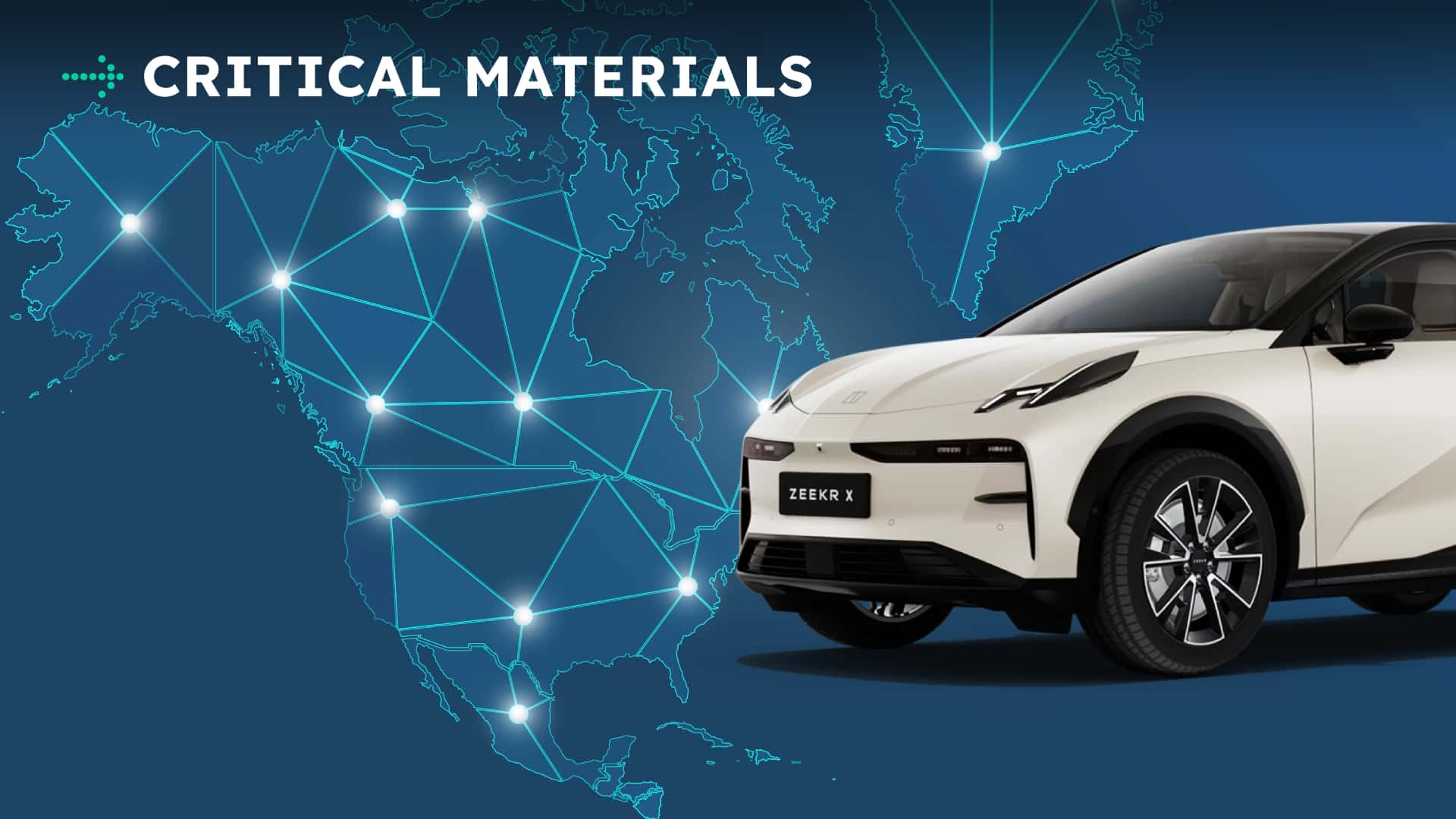
China’s auto industry has been making significant strides on the global stage, with a particular focus on expanding into the North American market. The recent trade deal between Canada and China has raised concerns and sparked discussions about the potential impact on the U.S. auto industry.
The trade deal between China and Canada, which allows for the import of Chinese electric vehicles into Canada, has set off alarm bells in the U.S. The deal, which is initially limited to 49,000 cars in its first year with plans to expand to 70,000 within five years, has the potential to open the floodgates for Chinese EVs in North America.
Canadian Prime Minister Mark Carney has highlighted that most of these imported vehicles will be priced under $25,000 U.S., making them an attractive option for consumers. However, this move has drawn criticism from some U.S. officials, who see it as a threat to automotive jobs in North America.
Senator Brian Schatz, D-Hawaii, expressed his concerns about the deal, calling it a “foreign policy failure with domestic economic consequences.” President Donald Trump, on the other hand, seemed supportive of the deal, emphasizing the importance of securing trade agreements with China.
The implications of the trade deal extend beyond Canada, with experts warning that Chinese automakers will need to meet stringent standards to compete in the Canadian market. This could incentivize Chinese auto manufacturing investment in Canada and potentially pave the way for Chinese brands to capture a significant share of the global market by 2030.
The increasing presence of Chinese automakers in various regions, including Europe, South America, Mexico, and now Canada, underscores the need for U.S. automakers to remain competitive on a global scale. The fear of being left behind in the rapidly evolving auto industry is a real concern for American carmakers, highlighting the importance of adapting to changing market dynamics.
As discussions around the trade deal continue to unfold, it is clear that the U.S. auto industry is at a crossroads. The need to stay ahead of the curve and remain relevant in the global marketplace has never been more pressing. With Chinese EVs poised to make a significant impact in North America, the U.S. auto industry must adapt and evolve to secure its position in an increasingly competitive landscape.
With the Canada-China trade deal potentially bringing more affordable hybrid and zero-emission options to North America, the auto industry is facing a major shift. While this may mean a departure from loyalty to local production, it could also lead to a significant reduction in the average new car price, which currently stands at $50,000.
Tesla, which experienced a significant decline in sales in Canada in 2025, may benefit from the trade deal with China. The electric automaker builds a large number of cars in China, including ones exported to Canada, and the deal could make these vehicles more affordable for Canadian consumers. With Tesla already equipped to build a Canada-specific version of its Model Y in its Shanghai plant, the resumption of exports to Canada could happen quickly.
However, the affordability issue is not limited to Tesla or Chinese imports. The North American car market is facing a broader affordability crisis, with consumers expressing anxiety over the high prices of new vehicles. This sentiment was evident at the 2026 Detroit Auto Show, where affordability was a major concern among attendees.
As the auto industry grapples with these challenges, it will be interesting to see how automakers respond. Whether through partnerships with overseas manufacturers, innovative pricing strategies, or new government policies, the industry is likely to undergo significant changes in the coming years.
Ultimately, the shift towards more affordable and sustainable options in the auto industry may benefit both consumers and the environment. By making electric and hybrid vehicles more accessible, automakers have the opportunity to not only meet consumer demand but also contribute to a greener future for all.
When it comes to the origin of my car, I have to admit that it doesn’t matter much to me. What matters more is the quality, reliability, and affordability of the vehicle. However, with the current trends in the automotive industry, where cars are becoming more globalized, it’s becoming harder to pinpoint where exactly a car is made.
With the rise of electric vehicles and the push for sustainability, the focus is shifting towards the environmental impact of the manufacturing process rather than the geographical location of the factory. Companies like Zeekr, a new electric vehicle brand from China, are making waves in the industry with their innovative designs and sustainable practices.
As a consumer, I appreciate companies that prioritize sustainability and ethical manufacturing practices. Knowing that my car was made in a factory that values the environment and treats its workers fairly is important to me. Whether it’s made in the US, Mexico, South Korea, or anywhere else, what matters most is that the car meets my needs and aligns with my values.
So while the origin of my car may not be the deciding factor for me, I do believe that it’s important for carmakers to be transparent about where their vehicles are made and the impact of their manufacturing processes. By supporting companies that prioritize sustainability and ethical practices, we can drive positive change in the automotive industry and beyond.
The world is constantly changing, and with it, the way we live our lives. From technological advancements to new scientific discoveries, every day brings new opportunities and challenges. In this fast-paced world, it is important to stay informed and adapt to the changes around us.
One of the most exciting developments in recent years is the rise of artificial intelligence (AI). AI is revolutionizing industries across the board, from healthcare to finance to transportation. With AI, machines are able to perform tasks that were once thought to be exclusive to humans, such as problem-solving, pattern recognition, and decision-making.
In the healthcare industry, AI is being used to improve patient outcomes and streamline processes. From diagnosing diseases to personalizing treatment plans, AI is helping doctors and medical professionals make better decisions faster. AI-powered robots are even being used to perform surgeries with more precision and accuracy than ever before.
In the finance industry, AI is transforming the way we manage money and investments. With the help of algorithms and machine learning, financial institutions are able to make better predictions and optimize their strategies. This has led to more efficient trading, reduced risks, and higher returns for investors.
In the transportation industry, AI is paving the way for self-driving cars and trucks. Companies like Tesla and Google are investing heavily in autonomous vehicles, which have the potential to revolutionize the way we travel. With AI, vehicles can navigate roads, avoid obstacles, and make split-second decisions without human intervention.
But with all these advancements, there are also concerns about the ethical implications of AI. As machines become more intelligent and autonomous, questions arise about their impact on jobs, privacy, and even human rights. It is crucial that we address these issues and ensure that AI is used responsibly and ethically.
In conclusion, the rise of artificial intelligence is transforming the world as we know it. From improving healthcare outcomes to revolutionizing transportation, AI has the potential to make our lives easier and more efficient. However, it is important that we approach this technology with caution and ensure that it is used in a way that benefits society as a whole. Only then can we truly harness the power of AI for the betterment of humanity.