
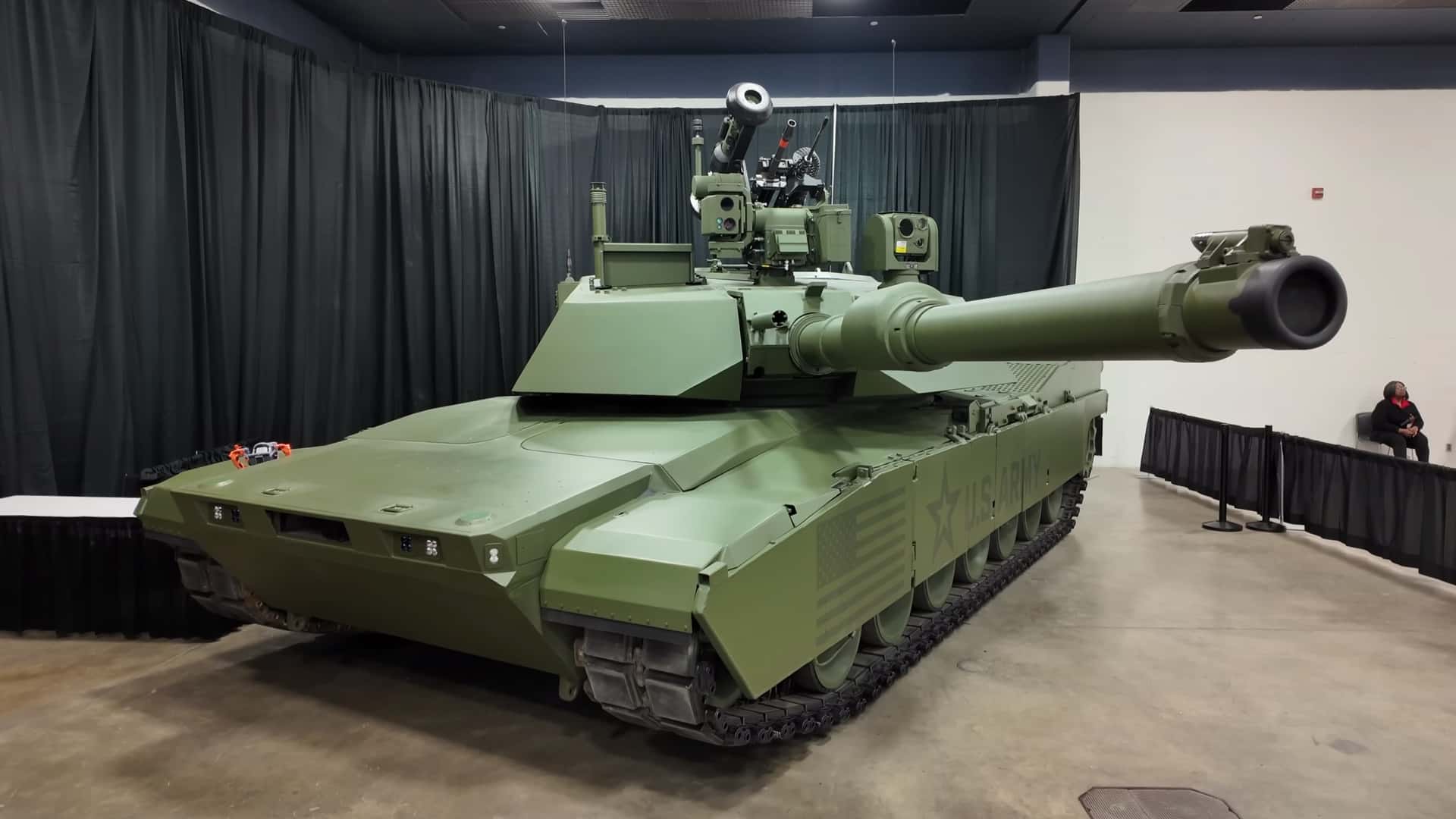
The legendary Abrams tank is undergoing a major transformation with the introduction of a new hybrid version. Designed by the U.S. Army and built by Roush, the diesel-hybrid M1E3 Abrams tank is set to revolutionize the battlefield with its lighter weight and increased efficiency.
One of the key advantages of the M1E3 Abrams is its ability to be quickly deployed in any part of the world, where it can also be easily serviced. This is a significant improvement over the previous model, which required specialized servicing at large army bases.
The new hybridized Abrams made its debut at the Detroit Auto Show, showcasing cutting-edge technology and a hybrid powertrain. The traditional 1,500-horsepower turbine engine has been replaced with a Caterpillar C13D diesel engine, providing 690 horsepower in stock form. This engine is widely used in industrial and heavy machinery, making spare parts more readily available.
Additionally, the Allison Transmission has been replaced with a hybridized SAPA transmission that integrates an electric drive unit. This allows the tank to use both the combustion engine and the electric motor simultaneously or separately, offering increased flexibility and efficiency on the battlefield.
According to Alex Miller, the U.S. Army’s chief technology officer, the M1E3 Abrams is 20% to 30% lighter than its predecessor, resulting in a significant improvement in fuel efficiency of up to 50%. The tank is also equipped with state-of-the-art technology, including a custom-made software architecture, microphones for detecting drones, and a 360-degree camera system.
Despite these advancements, the M1E3 Abrams is still in the prototype phase. The Army is currently evaluating different high-voltage battery options, including conventional lithium-ion and lithium-iron-phosphate chemistries. Certification testing is expected to begin soon, with the goal of fully integrating the hybrid tank into military operations.
In addition to the U.S. Army, the Marine Corps is also looking to upgrade its fleet with more efficient hybrid trucks. The transition to hybrid technology represents a significant step forward in modernizing military vehicles and enhancing overall operational capabilities on the battlefield. The world is constantly changing and evolving, and with it, so are our habits and behaviors. One of the most significant changes in recent years has been the shift towards a more sustainable way of living. As we become more aware of the impact our actions have on the environment, many people are making conscious choices to reduce their carbon footprint and live a more eco-friendly lifestyle.
One of the key ways in which people are embracing sustainability is through their dietary choices. The food we eat has a significant impact on the environment, from the resources required to produce it to the waste generated in the process. As a result, many people are turning towards plant-based diets as a way to reduce their environmental impact.
Plant-based diets, which focus on consuming foods derived from plants such as fruits, vegetables, grains, and legumes, have been shown to have a number of environmental benefits. For starters, plant-based foods generally require less land, water, and energy to produce than animal-based foods. This means that adopting a plant-based diet can help reduce greenhouse gas emissions, deforestation, and water usage associated with food production.
In addition to the environmental benefits, plant-based diets have also been shown to have numerous health benefits. Research has shown that plant-based diets can lower the risk of chronic diseases such as heart disease, diabetes, and certain types of cancer. They are also typically lower in saturated fats and cholesterol, making them a healthier option for many people.
But making the switch to a plant-based diet isn’t always easy. Many people are used to eating meat and dairy products as a staple of their diet, and giving them up can be a challenge. However, there are plenty of resources available to help people make the transition to a plant-based diet, from cookbooks and meal plans to online communities and support groups.
It’s also important to remember that adopting a plant-based diet doesn’t have to be an all-or-nothing decision. Even making small changes, such as incorporating more plant-based meals into your diet or choosing plant-based options when dining out, can have a positive impact on both your health and the environment.
As we continue to learn more about the impact of our food choices on the planet, it’s clear that adopting a plant-based diet is one of the most effective ways to reduce our environmental footprint. By making conscious choices about the foods we eat, we can help create a more sustainable future for generations to come.