
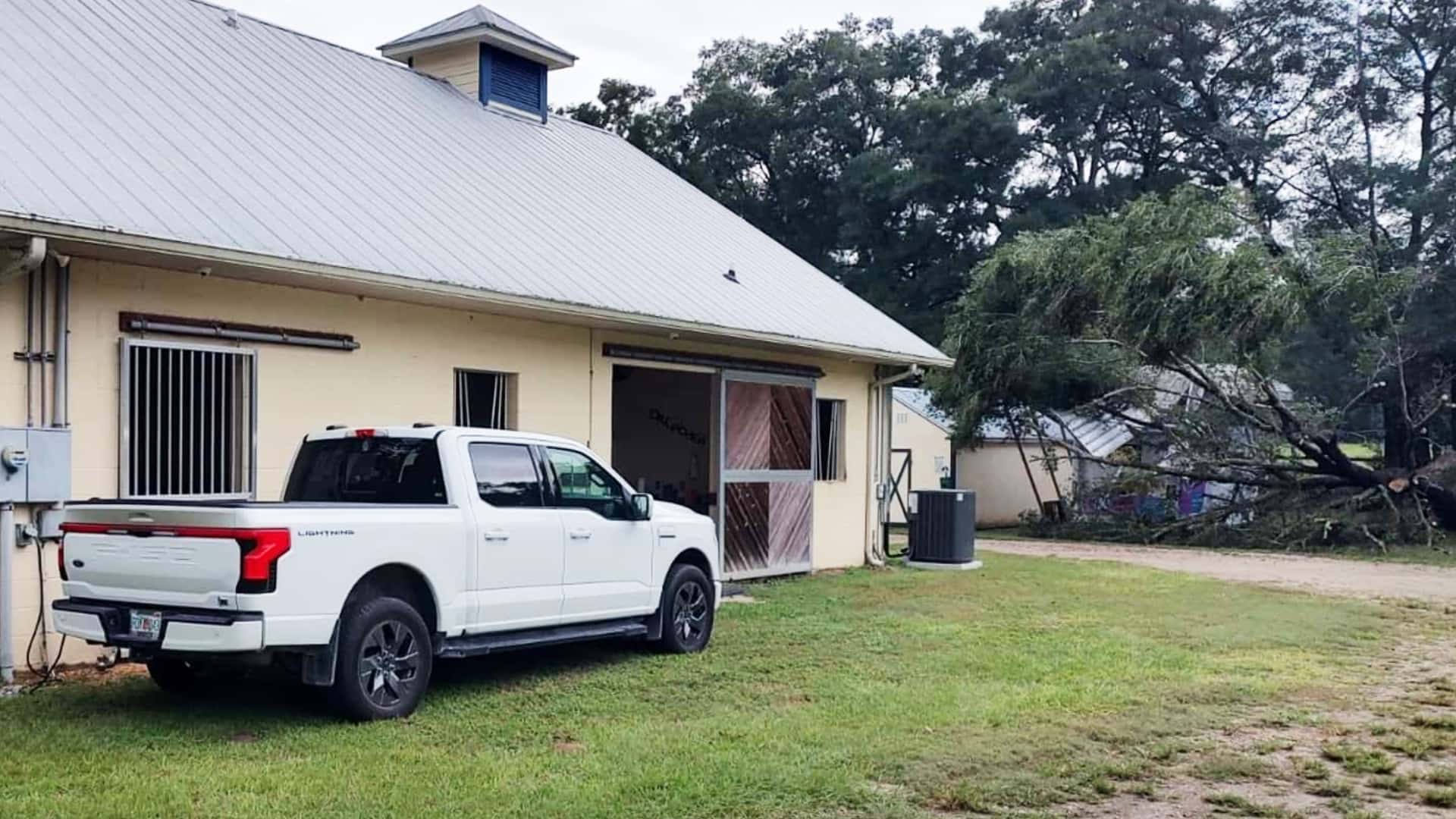
The Ford F-150 Lightning may have had a short lifespan, but its impact was significant for many individuals and communities. The high-voltage battery of the Lightning, ranging from 96 kilowatt-hours to 131 kWh, proved to be a valuable resource in times of need.
One such example is when a hurricane struck a veterinary clinic in Florida, causing a power outage. The Lightning’s giant battery was able to power the clinic back up, allowing for life-saving surgeries to continue. Similarly, an elderly man in California was stranded when his electric wheelchair’s battery ran out. The Lightning came to the rescue, providing the necessary power to make the wheelchair operational again.
During the devastating floods in Kentucky in 2022, Ford deployed two Lightnings as mobile generators to support cleanup efforts. These instances demonstrate the versatility and reliability of the Lightning in providing assistance to homeowners, first responders, people with disabilities, and even pets.
Dr. Erica Lacher, who runs an emergency veterinary clinic in Florida, shared her experience with the Lightning as a daily driver and a reliable backup generator for her clinic. When Hurricane Helene knocked out power at her clinic, Dr. Lacher used her electric truck to restore power within minutes, saving lives in the process.
The Lightning’s support for bidirectional charging, allowing for the vehicle’s battery to power external appliances, homes, or even send power back to the grid during emergencies, set it apart from other EVs. The capability of vehicle-to-load (V2L), vehicle-to-home (V2H), and vehicle-to-grid (V2G) was a feature that the Lightning offered long before it became more common among EVs today.
Despite its short-lived existence, it’s challenging to find Lightning owners who were dissatisfied with the truck. In fact, many praised its performance and reliability, showcasing the positive impact it had on their lives. The Ford F-150 Lightning may no longer be in production, but its legacy of providing assistance and support in times of need will not be forgotten. Many of them feel betrayed by Ford’s decision to discontinue the electric pickup truck. These owners were early adopters of the Lightning, attracted by its impressive performance, capability, and environmental benefits. They were proud to be part of the electric vehicle revolution and saw the Lightning as a symbol of Ford’s commitment to sustainability and innovation.
For these owners, the Lightning was more than just a vehicle – it was a lifestyle choice. They enjoyed the quiet, smooth, and powerful driving experience that only an electric vehicle can provide. They appreciated the convenience of being able to charge at home and never having to visit a gas station. They were impressed by the Lightning’s towing and hauling capabilities, which rivaled those of its gas-powered counterparts. And they were inspired by the positive impact their choice of vehicle was having on the environment.
But now, with Ford’s decision to end production of the Lightning and shift its focus back to gas trucks, these owners feel like they have been left in the lurch. They worry about the future of electric vehicles at Ford and whether the company is truly committed to transitioning to a more sustainable future. They feel frustrated that their trust and loyalty to Ford has not been reciprocated.
Despite their disappointment, many Lightning owners are determined to continue advocating for electric vehicles and pushing for a more sustainable transportation system. They are sharing their stories online, organizing meetups and events, and spreading the word about the benefits of electric vehicles. They hope that Ford will reconsider its decision and recommit to electrification, not just for the sake of their own investment in the Lightning, but for the future of the planet. Many Ford F-150 Lightning enthusiasts had been eagerly awaiting the release of the now-cancelled T3 model. The T3 was expected to bring improvements in charging speeds, range, and software, making the Lightning an even more compelling electric truck option. However, the cancellation of the T3 has left many disappointed and wondering what the future holds for the Lightning.
One proposed alternative to the T3 is an Extended Range Electric Vehicle (EREV) version of the Lightning. While some see this as a potential solution to the range and towing concerns of F-150 buyers, others are worried that an EREV model would undermine one of the Lightning’s key advantages: minimal maintenance. Owners of the current Lightning models have expressed their concerns, with some stating that they have no desire to go back to using gas in their trucks.
Ford has promised that the EREV version of the Lightning will retain the exportable power feature of the current models while offering impressive towing capabilities. This move is aimed at addressing the concerns of customers who rely on their F-150 for heavy-duty towing. Additionally, Ford is also rumored to be working on a smaller electric pickup truck based on the Universal EV Platform.
However, Ford now faces the challenge of convincing consumers that these alternative models will be superior to the now-cancelled T3. With the competition in the electric truck market heating up, Ford will need to deliver on its promises of improved range, towing capability, and overall performance to maintain its position as a leader in the electric truck space. Only time will tell if Ford’s new electric truck offerings will be able to live up to the expectations set by the highly anticipated T3 model.