
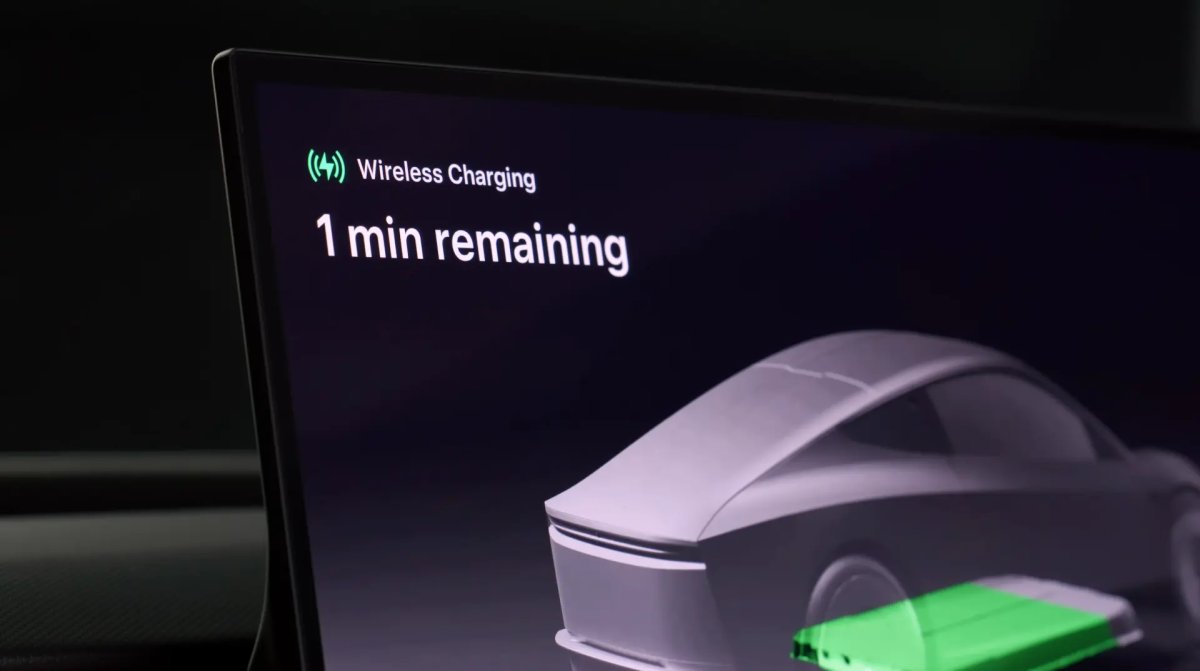
Tesla Receives FCC Approval for Groundbreaking Wireless Cybercab Charging System
Tesla has achieved a major milestone in bringing its revolutionary Cybercab concept to life. The Federal Communications Commission (FCC) has officially granted Tesla a waiver to utilize Ultra-Wideband (UWB) radio technology for the Cybercab’s innovative wireless charging infrastructure.
This development is significant as UWB technology is typically restricted to handheld devices and not intended for permanent installation on outdoor equipment. With Tesla’s wireless charging pads set to be fixed on the ground in driveways and charging hubs, obtaining approval from the FCC was crucial to proceed with their plans.
Understanding Wireless Charging Mechanisms
Tesla’s vision for the Cybercab entails a fully automated, wireless fleet that eliminates the need for NACS charging ports and relies solely on inductive charging, similar to wireless smartphone charging. However, optimal alignment between the vehicle and the ground pad is essential for efficient wireless charging.
The incorporation of UWB technology is pivotal in this process. According to the FCC filing, the vehicle utilizes Bluetooth to locate the charging pad, and UWB transceivers come into play to precisely track the car’s position as it approaches. Once the vehicle is accurately positioned over the pad, wireless power transfer initiates. Tesla has patented beam-steering technology to concentrate power on the vehicle’s receiver.
Tesla’s persuasive argument to the FCC emphasized the low-power nature of the signal, which briefly activates only during parking. Moreover, the vehicle’s metal body acts as a shield, blocking the signal once parked to prevent interference with nearby devices.
Unveiling Tesla’s Inaugural Robotaxi
The FCC approval coincides with Tesla’s recent milestone of unveiling the first production Cybercab at Gigafactory Texas. This autonomous, two-seat electric vehicle serves as the flagship model for Tesla’s Robotaxi network.
The concept is straightforward: a fleet of self-driving cars capable of driving, cleaning, and now charging autonomously. Tesla has confirmed that the Cybercab will be devoid of a steering wheel, pedals, and side mirrors, operating solely on the Full Self-Driving system.
Future Prospects for the Cybercab
With the debut of the initial unit at Giga Texas, Tesla is poised to commence gradual manufacturing escalation. While prototype testing has been conducted in cities like Austin and Buffalo under harsh winter conditions, mass production is slated to kick off in April.
Tesla remains committed to implementing inductive wireless charging for the Cybercab. However, recent sightings of validation units have shown the presence of a traditional charge port. Despite this, Tesla aims to introduce steering-wheel-free taxis into the Robotaxi fleet within the next two months, demonstrating their dedication to advancing both hardware and infrastructure in tandem.