
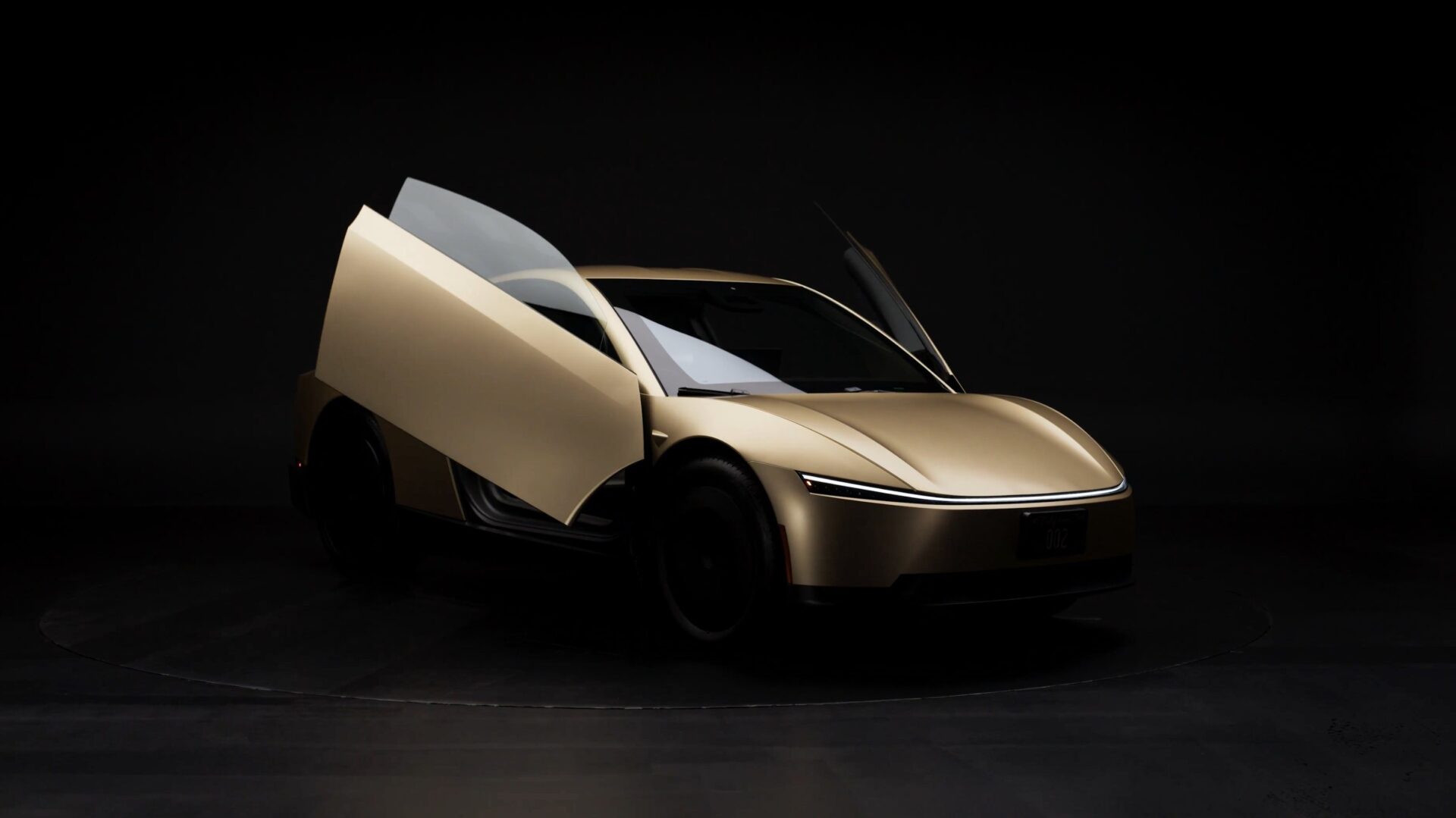
Tesla’s highly anticipated Cybercab has made its first appearance on public roads in Austin, Texas, marking a significant milestone for the company’s autonomous ambitions. The sighting was initially shared on X by @JT59052914, who posted photos of the futuristic two-seat vehicle cruising through city streets.
This sighting in Austin is notable as it is the first time the Cybercab has been seen testing on public roads outside of California. Tesla’s Cybercab was previously spotted on public streets in California back in October, but its debut in Texas is significant given that Austin is home to Gigafactory Texas and is now a focal point for Tesla’s Robotaxi efforts.
The Cybercab is a purpose-built, all-electric autonomous vehicle specifically designed for Tesla’s Robotaxi service. Unlike existing Tesla models that can be adapted for ride-hailing, the Cybercab is optimized for autonomy, efficiency, and high utilization. It is a compact, two-seat vehicle intended to transport passengers around cities without a human driver.
The timing of this sighting is particularly intriguing as Tesla recently began testing “unsupervised” Full Self-Driving on Robotaxis in Austin. While it is unclear whether the Cybercab spotted in Austin was operating in an unsupervised mode, its presence on public roads indicates that Tesla is rapidly expanding real-world testing of its autonomous fleet.
Visually, the Cybercab seen in Austin closely resembles earlier prototypes, including the presence of side mirrors. Tesla has indicated that the final production version will not include a steering wheel, pedals, or mirrors, relying entirely on FSD and cameras. This suggests that the vehicle is still in a pre-production testing phase, collecting data and validating systems before wider deployment.
Elon Musk confirmed last month that the Cybercab is expected to enter production in April 2026. Once in production, the Cybercab will be a key component of Tesla’s Robotaxi service, which aims to provide autonomous ride-hailing at scale by utilizing Tesla’s extensive fleet and vertically integrated software stack. Tesla has also mentioned that owners will eventually be able to add their vehicles to the Robotaxi network, facilitating rapid scalability of the service.
The sighting of the Cybercab in Austin signifies that Tesla’s autonomous future is steadily approaching reality, and it is unfolding right on public roads. It’s an exciting glimpse into the future of transportation and the potential of autonomous vehicles.