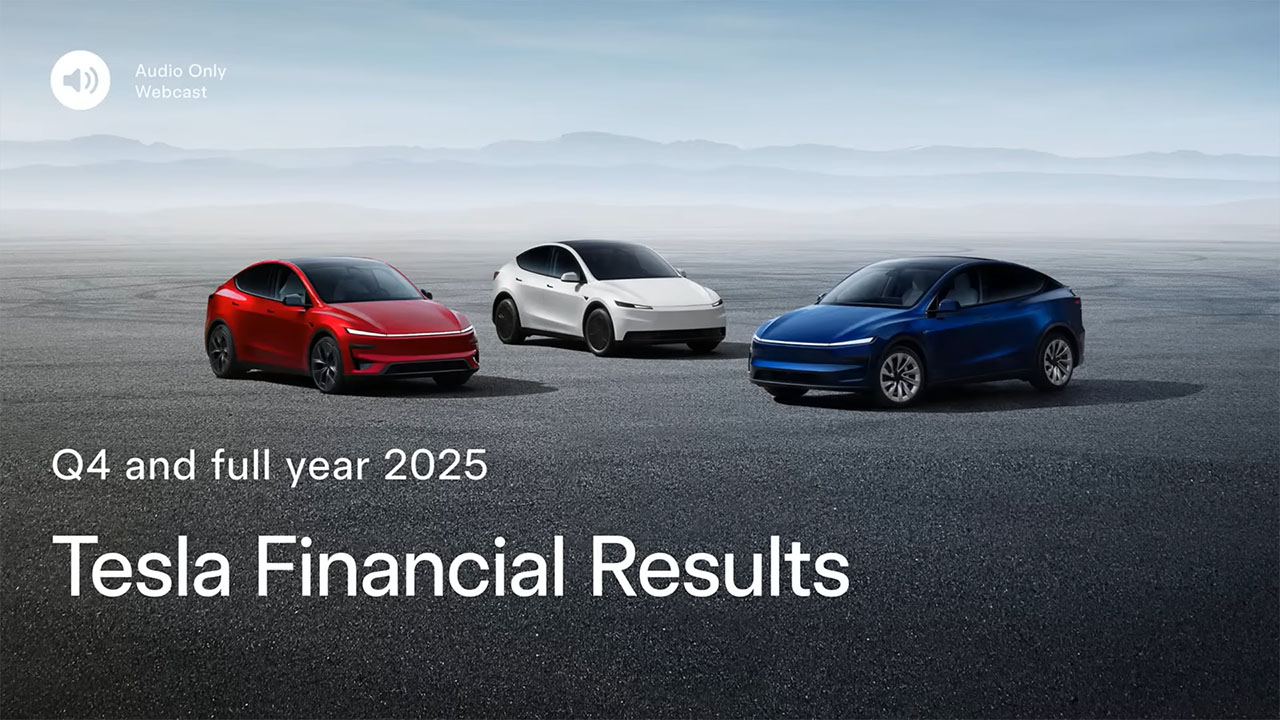
The company is on track to achieve its goal of becoming a real-world AI and robotics company
Tesla is working on improving its energy business, with Megapack and solar projects showing promising growth
Despite a drop in vehicle deliveries, Tesla’s financial performance remained strong with improved margins and profits
The company’s total revenues, including energy, regulatory credits, and services, decreased slightly compared to the previous year, but other revenue sources compensated for the loss in automotive sales
Elon Musk highlighted the company’s focus on innovation and solving complex problems to create value for its customers and shareholders
Tesla’s shift from being just an EV manufacturer to a full-fledged AI and robotics company is evident in its decision to discontinue the Model S and Model X production and focus on the development of the Optimus humanoid robot
The announcement of the Robotaxi service in Austin, Texas, without safety monitors showcases Tesla’s confidence in its autonomous driving technology
The development of Unsupervised FSD is progressing faster than anticipated, indicating Tesla’s commitment to pushing the boundaries of technology
Overall, the Q4 2025 Earnings Call highlighted Tesla’s ambitious goals for the future and its relentless pursuit of innovation in the fields of AI, robotics, and sustainable energy
Investors and analysts are optimistic about Tesla’s long-term prospects as the company continues to lead the way in the transition to a sustainable and autonomous future
Overall, the Tesla Q4 2025 Earnings Call provided valuable insights into the company’s performance, goals, and future plans. With a strong financial performance, a focus on innovation, and a commitment to sustainability, Tesla is well-positioned to continue its leadership in the electric vehicle and technology industries.
Tesla continues to push the boundaries of technology with its focus on Full Self-Driving (FSD), artificial intelligence (AI), and general-purpose robotics. These are considered some of the most challenging problems to solve in the automotive industry, and Tesla is at the forefront of innovation in these areas.
One of the key strategic moves by Tesla was investing $2 billion in explainable AI (xAI) for the integration of Grok AI in its vehicles. This decision underscores Tesla’s commitment to developing advanced AI technology for its self-driving capabilities.
While demand for Tesla’s electric vehicles in the US saw a slight decline in the fourth quarter compared to the third quarter, the company experienced a surge in demand from smaller countries like Malaysia, Taiwan, Saudi Arabia, Norway, Poland, and the Asia Pacific region. This global reach highlights Tesla’s growing popularity and market presence beyond its home country.
Despite a lower number of sales, Tesla managed to increase its automotive margins, showcasing the company’s ability to optimize production and efficiency in its operations. Looking ahead, Tesla is gearing up to ramp up production at all of its factories in 2026, indicating a strong growth trajectory for the company.
In terms of battery technology, Tesla has started using the 4680 cells in non-structural battery packs, further enhancing the performance and energy efficiency of its vehicles. This innovation is part of Tesla’s continuous efforts to improve its battery technology and drive advancements in the electric vehicle market.
With around 1.1 million paid FSD customers worldwide, Tesla has a solid customer base for its autonomous driving features. Notably, 70% of these customers have opted to pay upfront for the FSD package, demonstrating the strong demand for Tesla’s self-driving technology.
In a significant move, Tesla announced a shift to a subscription-only pricing model for its FSD package starting this month. While this change may impact automotive margins in the short term, it reflects Tesla’s strategic shift towards a subscription-based business model for its advanced features.
On the production front, Tesla has achieved a major milestone of producing 9 million vehicles globally. Additionally, the company has produced 6 million drive units (motors) at its Giga Nevada facility alone, highlighting Tesla’s manufacturing prowess and scale.
Looking ahead, Tesla has shared its plans for Tesla Semi Megacharger stations across the US, signaling the company’s commitment to expanding its electric vehicle infrastructure and supporting the growth of its commercial vehicles segment.
In conclusion, Tesla’s focus on FSD, AI, and robotics, coupled with its strategic investments and innovative technologies, positions the company as a leader in the automotive industry. With a strong global demand for its electric vehicles and a relentless drive for technological advancement, Tesla continues to set the bar high for innovation in the automotive sector. The Impact of Technology on Society
Technology has become an integral part of modern society, shaping the way we communicate, work, and live our lives. From the invention of the wheel to the development of smartphones, technology has had a profound impact on the way we interact with the world around us.
One of the most significant impacts of technology on society is the way it has revolutionized communication. The invention of the telephone, followed by the internet and social media, has made it easier than ever to connect with people across the globe. This has led to a more interconnected world, where information can be shared instantaneously and relationships can be maintained over long distances.
Technology has also transformed the way we work. The rise of automation and artificial intelligence has led to the automation of many tasks that were once done by humans. This has increased efficiency in many industries, but has also led to concerns about job loss and the future of work. However, technology has also created new job opportunities in fields such as software development, data analysis, and digital marketing.
In addition to communication and work, technology has also had a major impact on our daily lives. The development of smartphones has made it easier than ever to access information, entertainment, and services on the go. From ordering food delivery to booking a ride share, technology has made our lives more convenient and efficient.
However, the impact of technology on society is not always positive. The rise of social media has led to concerns about privacy, mental health, and the spread of fake news. The constant barrage of information and notifications can also lead to feelings of overwhelm and burnout.
Despite these challenges, technology has the power to improve our lives in many ways. From medical advancements that save lives to environmental innovations that reduce our carbon footprint, technology has the potential to create a better future for all of us.
In conclusion, the impact of technology on society is undeniable. While there are challenges and drawbacks, the benefits of technology far outweigh the negatives. As we continue to innovate and develop new technologies, it is important to consider the ethical and social implications of these advancements. By working together to harness the power of technology for good, we can create a brighter future for all.