
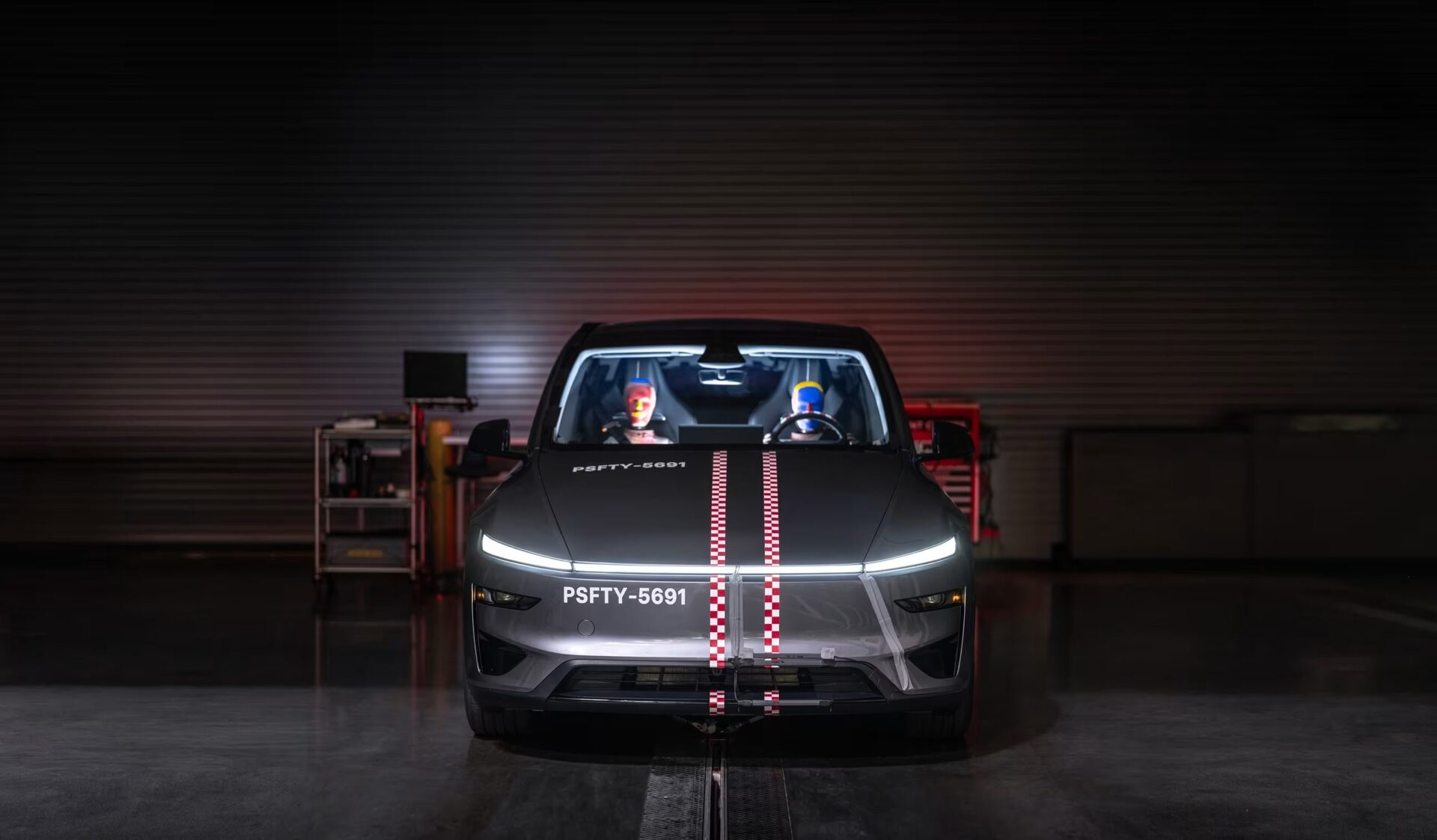
Tesla has recently unveiled a new Safety page on its website, offering a comprehensive overview of how the company prioritizes safety in its vehicle designs. This initiative is aimed at not only protecting occupants but also ensuring the safety of other road users and wildlife.
The newly launched Safety page, as announced by Tesla on X, emphasizes safety as a core pillar of the brand. It provides detailed insights into how Tesla vehicles are engineered to prevent accidents, minimize injuries, and intelligently respond in the event of a crash. The page showcases three main pillars: five-star safety ratings, data-driven safety, and continuous improvement over time. Tesla highlights that its vehicles have consistently earned five-star safety ratings from the U.S. National Highway Traffic Safety Administration (NHTSA), surpassing regulatory standards in all categories.
A key focus of the Safety page is on accident prevention. Tesla underlines that the safest crash is no crash at all, attributing this to its suite of active safety features that are designed to anticipate and avoid collisions. Systems such as Forward Collision Warning, Automatic Emergency Braking, lane monitoring, blind spot alerts, and drowsiness detection work together to reduce the risk of accidents before they occur.
Furthermore, Tesla leverages its vast real-world data advantage to enhance vehicle safety. With a global fleet of 8.6 million vehicles, Tesla collects anonymous driving data to gain valuable insights from real-world scenarios. These insights are then integrated into free over-the-air software updates, allowing vehicles to continually improve their safety features long after leaving the factory.
In the event of a crash, Tesla vehicles are engineered to effectively manage impact energy. They feature reinforced passenger compartments, impact-absorbing zones, advanced seat belts, and adaptive airbags that deploy within milliseconds to protect occupants. Additionally, Tesla’s vehicle structures are designed to mitigate impact severity for other vehicles involved in a collision.
The Safety page also outlines post-crash safety measures such as automatic emergency service calls, hazard light activation, door unlocking for first responders, and battery protection systems that reduce the risk of fire. This comprehensive approach to safety underscores Tesla’s commitment to prioritizing the well-being of its customers and other road users.
The timing of the launch of the new Safety page coincides with Tesla’s continued recognition for its safety achievements. Recent milestones include Autopilot crash data demonstrating a significant reduction in accident risk, the Model Y being named an IIHS Top Safety Pick+ for 2025, and the Cybertruck earning recognition as the safest pickup on the market by IIHS.
Overall, Tesla’s new Safety page serves as a technical guide and a testament to the company’s unwavering dedication to safety. It reinforces the message that safety is not just a feature but an integral part of every aspect of Tesla vehicles.