
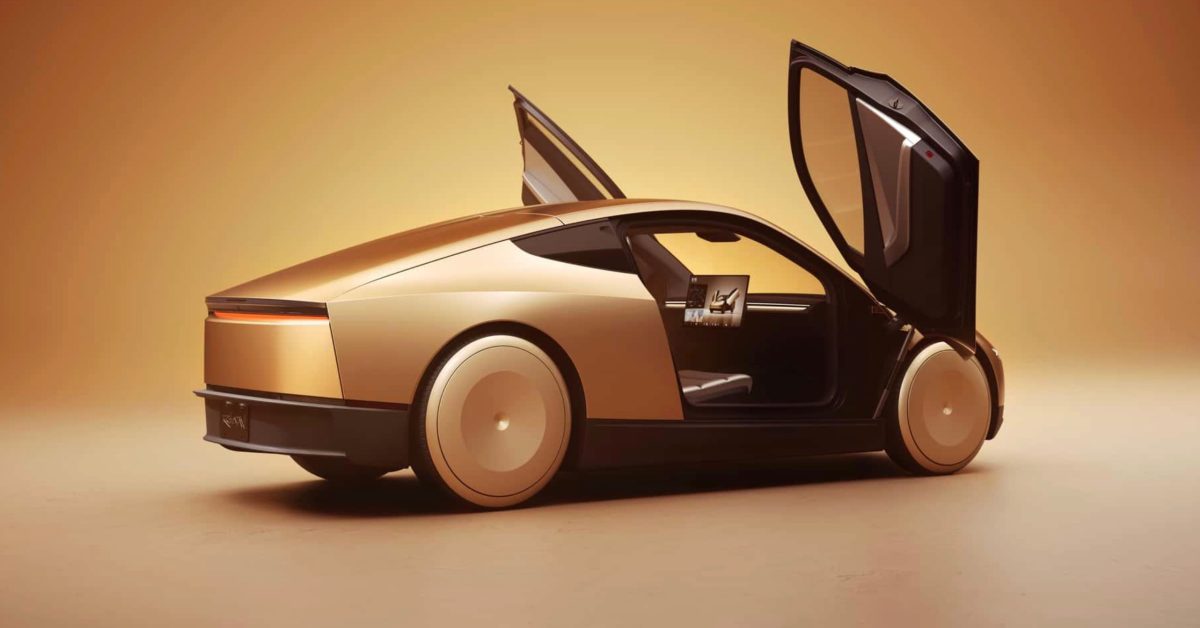
Victor Nechita, the former Tesla vehicle program manager for the Cybercab, has recently announced his departure from the company. This move comes shortly after the first Cybercab production unit was unveiled at Giga Texas, adding to a growing list of senior program managers leaving Tesla.
Nechita initially joined Tesla in 2017 as an intern on the Model 3 production line during the challenging “production hell” phase. Over the course of nearly nine years, he steadily progressed from a seating engineer to a technical program manager for vehicle engineering, ultimately leading the Cybercab program. In a LinkedIn post, Nechita reflected on his journey from an intern to overseeing Tesla’s first autonomous vehicle, the Cybercab. He expressed gratitude towards his team but did not disclose his next career move, only mentioning that he is embarking on a new chapter in Boston.
During his tenure at Tesla, Nechita made significant contributions to projects like the Model 3 Highland refresh, which enhanced the vehicle’s overall performance. Despite his departure, the Cybercab project has reached a milestone with the production of the first unit. However, the vehicle’s primary challenge lies in achieving unsupervised autonomy, a feat that Tesla has yet to accomplish effectively.
The Cybercab is designed without a steering wheel, pedals, or manual controls, relying solely on self-driving software for operation. Tesla’s shift in the definition of “Full Self-Driving” in 2025 raised concerns about the vehicle’s autonomy capabilities. The upcoming AI5 chip, crucial for autonomous functionality, is not expected until mid-2027, leaving the Cybercab reliant on AI4 hardware, which has yet to achieve unsupervised autonomy in existing Tesla vehicles.
Tesla’s struggle to deliver on its autonomous driving promises has been evident, with recent setbacks in launching unsupervised Robotaxi rides in Austin. Despite Nechita’s departure, Tesla faces a broader exodus of senior program managers, creating a void in institutional knowledge essential for scaling projects like the Cybercab.
While Nechita’s leadership brought the Cybercab to its production phase, the vehicle’s purpose remains unclear without a viable autonomous driving solution. Tesla’s continuous delays and unmet timelines raise doubts about the vehicle’s feasibility at scale. The company’s ability to address the fundamental challenge of achieving unsupervised autonomy will determine the Cybercab’s success in the future.