
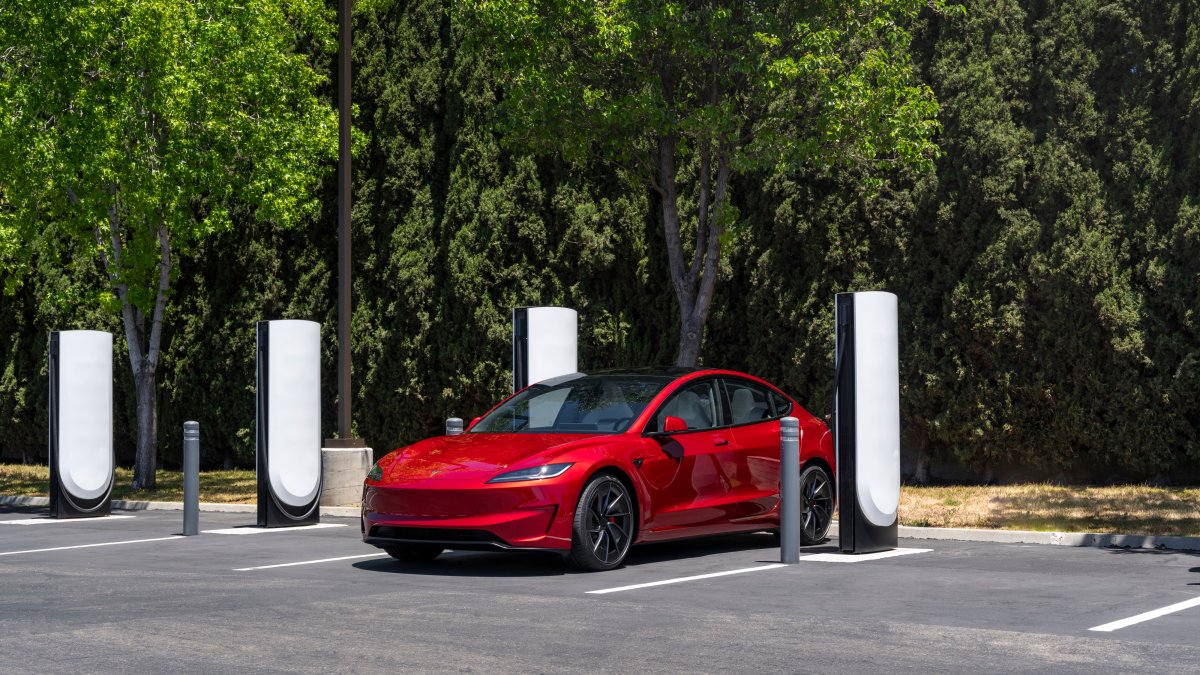
Tesla Makes Transition to V4 Superchargers Worldwide
Tesla is making significant changes to its charging infrastructure as it shifts production from V3 to V4 Superchargers. The company’s Gigafactory in New York recently completed its final V3 Supercharger cabinet, marking the end of an era and the beginning of a new chapter in charging technology.
After producing over 15,000 V3 cabinets over seven years, Tesla has now fully transitioned to ramping up production of the next-generation V4 hardware. This move comes as the electric vehicle market continues to evolve and demand for faster, more efficient charging solutions grows.
Saying Goodbye to V3 Superchargers
The V3 Supercharger has been a staple of Tesla’s charging network, offering 250kW charging speeds that have become a standard for Tesla owners. However, with advancements in vehicle technology and the introduction of high-voltage systems like the Cybertruck, the need for more powerful charging infrastructure has become apparent.
The V4 Supercharger represents a significant upgrade in power electronics and efficiency. With the capacity to power up to eight charging stalls from a single cabinet, the V4 system is not only faster but also more cost-effective to deploy, with each stall reportedly costing under $40,000.
Introducing the V4 Supercharger
The V4 Supercharger features a redesigned stall with a longer cable and a more powerful cabinet. Some stalls even come equipped with ergonomic handles for easier use and payment terminals for non-Tesla users. This new system supports vehicle architectures ranging from 400V to 1000V, enabling charging speeds of up to 500 kW for compatible vehicles.
In an effort to make charging more accessible to all users, Tesla has introduced centralized payment kiosks at select V4 Supercharger locations. This move, along with other enhancements like longer cables, aims to streamline the charging experience for both Tesla and non-Tesla EV drivers.
Enhancing the Charging Experience
Since the first V4 Supercharger was unveiled in March 2023, Tesla has been working towards expanding its network of these new-generation chargers worldwide. With the New York factory now fully dedicated to V4 production, we can expect to see more of these high-powered charging stations popping up globally.
As Tesla continues to open its network to other manufacturers, the versatility and efficiency of the V4 hardware will play a crucial role in maintaining Tesla’s position as a leader in public charging infrastructure. The transition to V4 Superchargers marks a new chapter in Tesla’s commitment to providing fast, reliable, and accessible charging solutions for electric vehicle owners.