
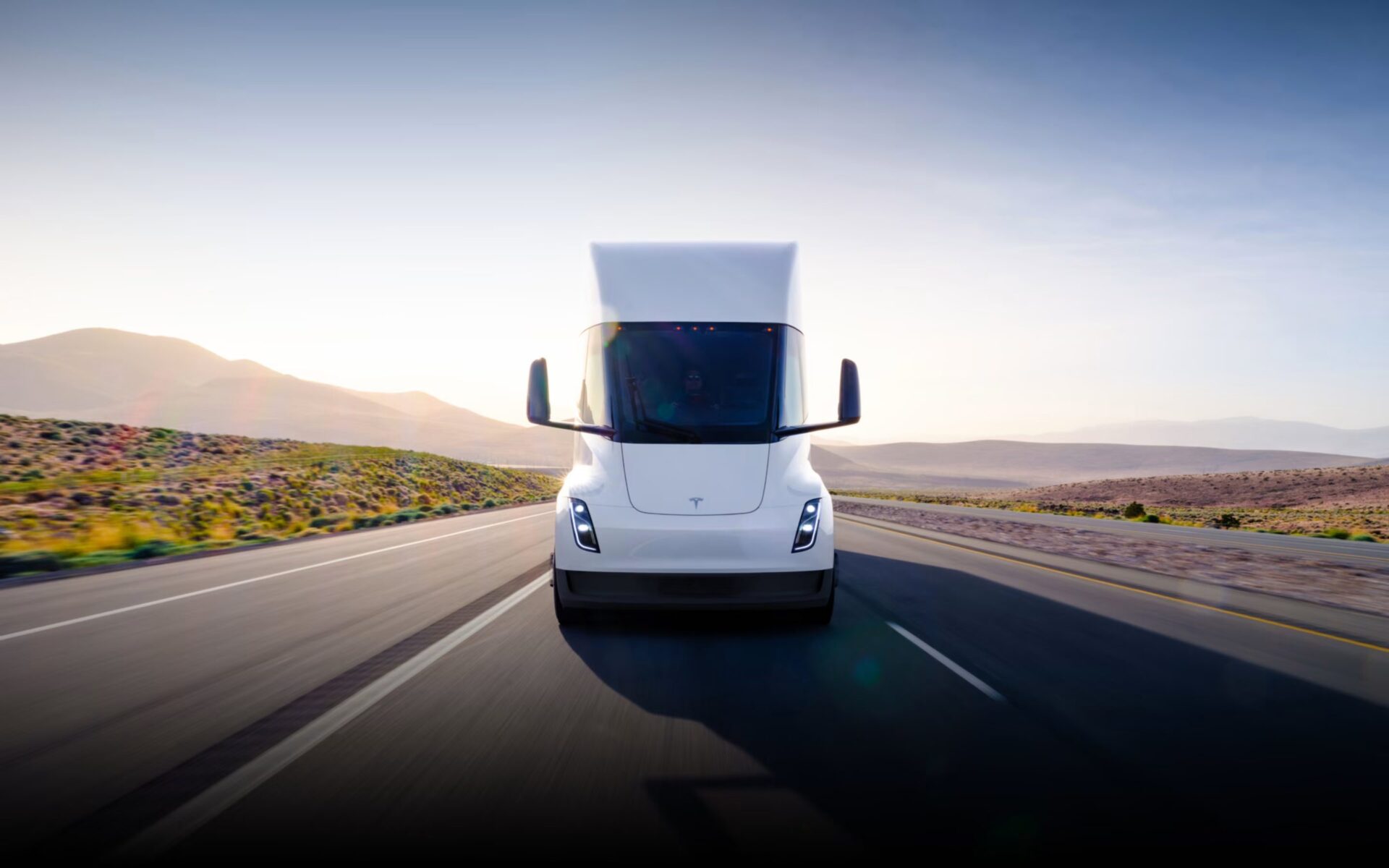
Tesla is making significant strides in its electric trucking initiative, with the introduction of Tesla Semi Megacharger locations on its public navigation map. This move signifies the company’s commitment to establishing a robust charging infrastructure to support its upcoming electric trucks across the United States.
Currently, there are two operational Megacharger sites on the map, capable of delivering impressive peak charging speeds of up to 1.2 megawatts (1,200 kW). Additionally, 64 more Megacharger locations are marked as “coming soon,” indicating a rapid expansion of the charging network in preparation for the rollout of the redesigned Tesla Semi.
The state of Texas leads the charge with 19 upcoming Megacharger sites, followed by California with 17. Other states such as Florida, Georgia, Illinois, and Washington State are also slated to receive multiple locations. Furthermore, states like New York, Nevada, Arizona, and Colorado will each have a couple of Megacharger sites, demonstrating Tesla’s commitment to building a comprehensive charging network nationwide.
This development follows Tesla’s recent unveiling of the final production specs for the redesigned Semi, which will be available in Standard Range and Long Range configurations. Both variants will support MCS 3.2 charging technology, enabling rapid charging speeds that can replenish up to 60% of the truck’s range in just 30 minutes. The Long Range version is set to achieve a peak charging speed of 1.2 MW, aligning with the capabilities of the Megacharger infrastructure being rolled out.
The redesigned Tesla Semi, first revealed last fall, boasts a more streamlined exterior inspired by the Model Y, along with enhancements in efficiency and payload capacity. Validation units of the truck have been spotted undergoing testing near Tesla’s Nevada Semi facilities and the Fremont factory, showcasing the truck’s ability to achieve its advertised 1.2 MW charging rate.
By integrating Megachargers into its navigation system, Tesla is emphasizing the importance of expanding charging infrastructure in tandem with the introduction of its electric trucks. With customer deliveries expected in the near future, the establishment of a nationwide high-power charging network is no longer just a concept – it is becoming a reality in real-time.