
Elon Musk, the CEO of Tesla, is not fazed by Nvidia’s latest development in autonomous driving technology. In a recent exchange on X, Musk expressed confidence in Tesla’s Full Self-Driving (FSD) system, despite Nvidia’s unveiling of Alpamayo, a new end-to-end autonomous driving AI.
Musk highlighted Tesla’s years of experience in training neural networks on real-world data from a live customer fleet, rather than relying solely on simulated environments or limited deployments. He emphasized that achieving significant safety improvements over human drivers takes time, and legacy car companies are unlikely to adopt similar technology at scale for several years.
While some may view Nvidia’s Alpamayo as a potential rival to Tesla’s FSD, Musk remains unconcerned. He believes that the real challenge lies in solving the “long tail of the distribution” rather than achieving 99% autonomy. Despite acknowledging Nvidia’s efforts, Musk is confident in Tesla’s technical lead and believes that competitors will struggle to catch up in the near future.
Nvidia CEO Jensen Huang also praised Tesla’s autonomy stack, calling it the most advanced in the world. He commended Tesla’s end-to-end AI approach, stating that it is “state of the art” and difficult to criticize.
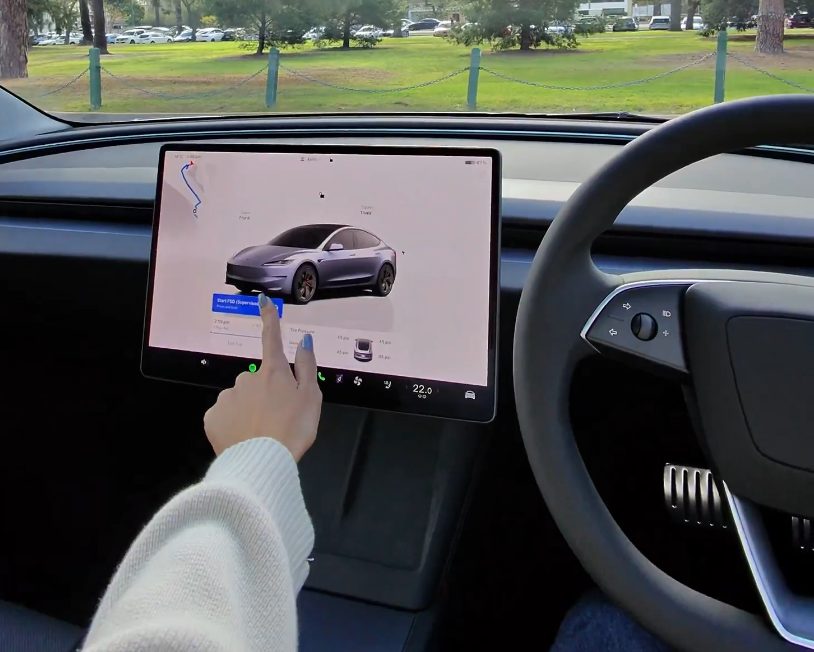
Tesla’s FSD (Supervised) system is now available in seven countries, with South Korea being the latest addition. Regulators and lawmakers worldwide have taken notice of Tesla’s technology, with Nvidia’s Director of AI describing FSD as the first AI system to pass a “physical Turing test.”
In a bold move, Tesla has begun testing “unsupervised” FSD on select Robotaxi vehicles in Austin, Texas, with no driver or safety monitor onboard. Musk’s message is clear: while competitors may eventually catch up, Tesla’s lead in autonomous driving technology is unlikely to be challenged anytime soon.