
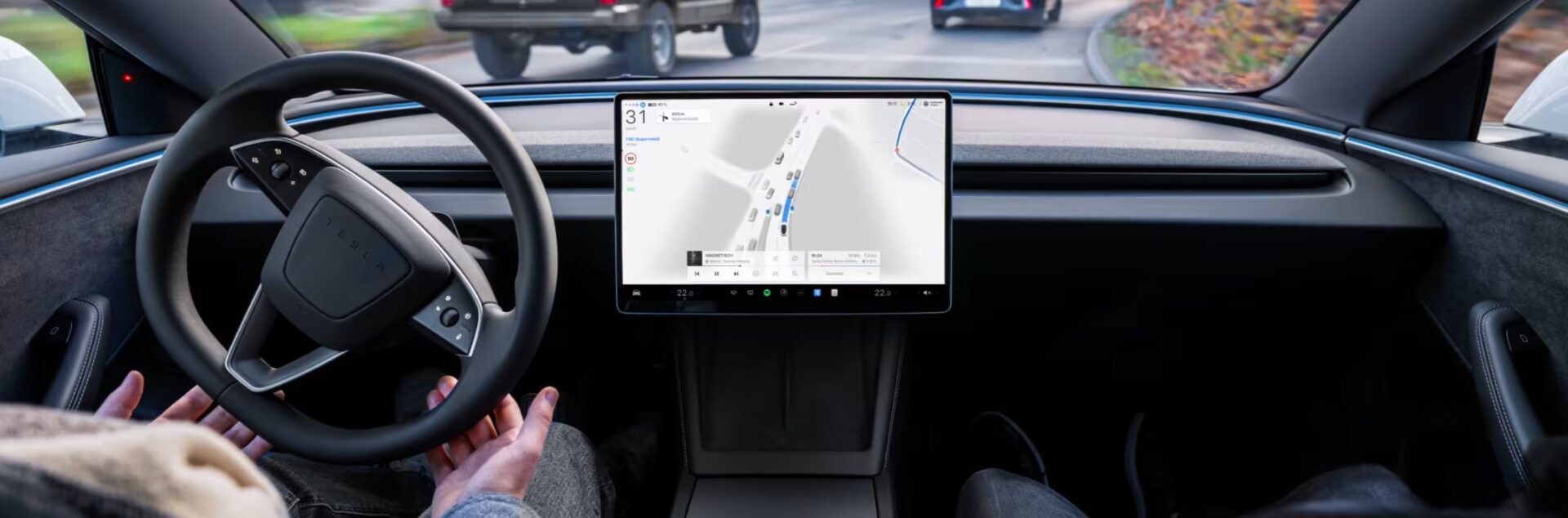
Tesla has recently opened a new AI training center in China, a move that signifies the company’s commitment to localizing the development of its assisted driving and artificial intelligence technologies in the largest EV market in the world. This center is designed to deploy Tesla’s AI capabilities locally, with a specific focus on advanced driver assistance systems and other AI-powered applications tailored for the Chinese market.
Grace Tao, Vice President of Tesla China, confirmed the operational status of the AI training center to local media outlet Cailian. While details about the center’s computational power were not disclosed, Tao mentioned that its capacity is sufficient to meet Tesla’s current needs. The company plans to actively engage in assisted driving initiatives in China, although a specific timeline for the rollout of more advanced features has not been provided.
Despite concerns about slowing demand in the region, Tesla has continued to experience strong momentum in China, with three consecutive months of sales growth. However, the company’s Full Self-Driving system remains in regulatory limbo in China and Europe, even as the technology advances rapidly in other parts of the world.
CEO Elon Musk previously hinted at regulatory approval for FSD in China as early as February, although this claim was later refuted by Chinese state media. In the meantime, Tesla has been laying the groundwork for advanced driver assistance systems in China, which closely resemble FSD in the U.S., but are branded as “Intelligent Assisted Driving.”
Chinese customers have been able to purchase the FSD software package for years, despite the feature being unavailable. However, with the ramping up of local AI training, this situation may soon change. Additionally, Tesla will be transitioning FSD to a subscription-only model globally, starting on February 14.
The new AI training center in China could also support Tesla’s long-term ambitions in the country, including the potential launch of a Robotaxi service. A recent job listing from Tesla hinted at this possibility, which would require domestic AI training infrastructure to meet local data and regulatory requirements.
With over 1.1 million paying FSD users globally and China remaining a critical growth market for Tesla, the newly operational AI training center could play a crucial role in unlocking advanced autonomy in the region. It will be interesting to see how Tesla’s AI capabilities develop further in China and how they will impact the future of assisted driving technologies in the country.