
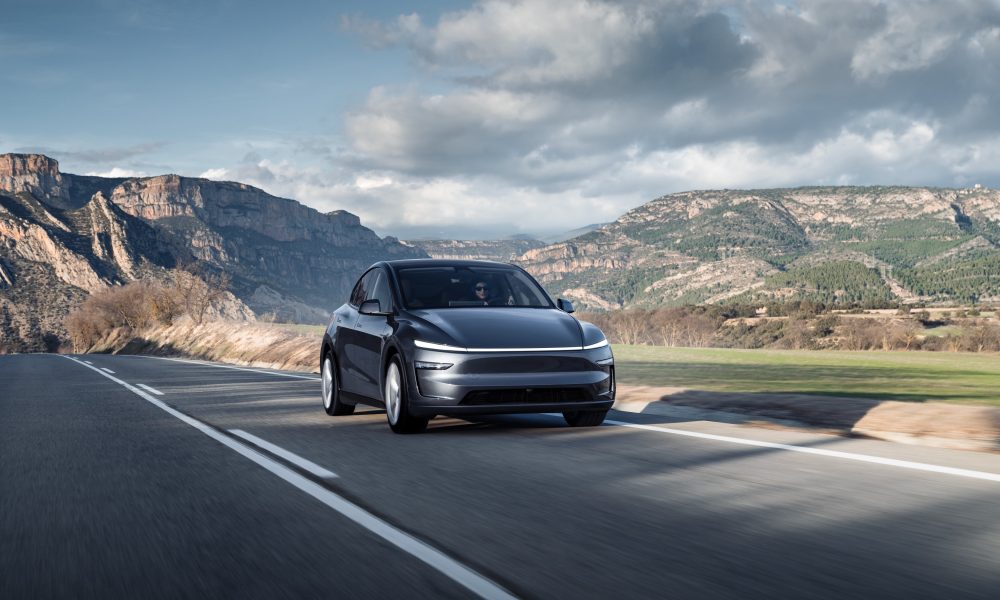
Tesla is gearing up to introduce its Full Self-Driving (FSD) Supervised system in Europe, pending regulatory approval. Recent real-world testing in Berlin has showcased the system’s refined behavior, including handling construction zones, pedestrian detection, and lane changes with impressive precision. Although the system still requires driver oversight, its smooth braking, steering, and decision-making highlight the significant advancements in Tesla’s driver-assistance technology, setting the stage for a potential 2026 rollout.
During a test ride in Berlin with Auto Bild, a leading automotive publication in Germany, a Tesla Model 3 equipped with FSD demonstrated remarkable capabilities in navigating dense city traffic. The system autonomously managed braking, acceleration, steering, and overtaking at speeds up to 140 km/h, while also recognizing construction zones, braking early for pedestrians, and navigating narrow streets with ease. Only one manual override was needed when the system misinterpreted a converted one-way route, showcasing the continuous learning capabilities embedded in Tesla’s vision-based architecture.
Auto Bild’s Robin Hornig praised the FSD Supervised system, noting that it surpasses human drivers with its all-around vision and attentiveness. The journalist highlighted the system’s ability to see more than the human eye, remaining focused and alert at all times. This seamless collaboration between human experience and Tesla’s advanced technology was lauded as a winning combination on the road.
Tesla’s FSD Supervised system, while still categorized as a driver-assistance feature rather than autonomous driving, boasts a comprehensive 360-degree camera suite, constant monitoring, and high computing power. These features represent a significant leap from earlier iterations of the technology and have already been successfully implemented in the U.S., China, and other regions. The system is currently undergoing the approval process in Europe, with Tesla seeking exemptions and aiming to launch the feature through a software update as early as February 2026.
While Tesla’s demonstration in Berlin aligns with capabilities seen in other regions, Europe’s stricter certification environment has posed challenges for the widespread adoption of advanced driver-assistance systems. However, Tesla is actively working to secure approvals in various European countries, paving the way for the introduction of FSD Supervised to the region. As the automotive industry continues to embrace hands-free and city-navigation systems, Tesla remains at the forefront of innovation, driving towards a future where advanced technologies redefine the driving experience.