
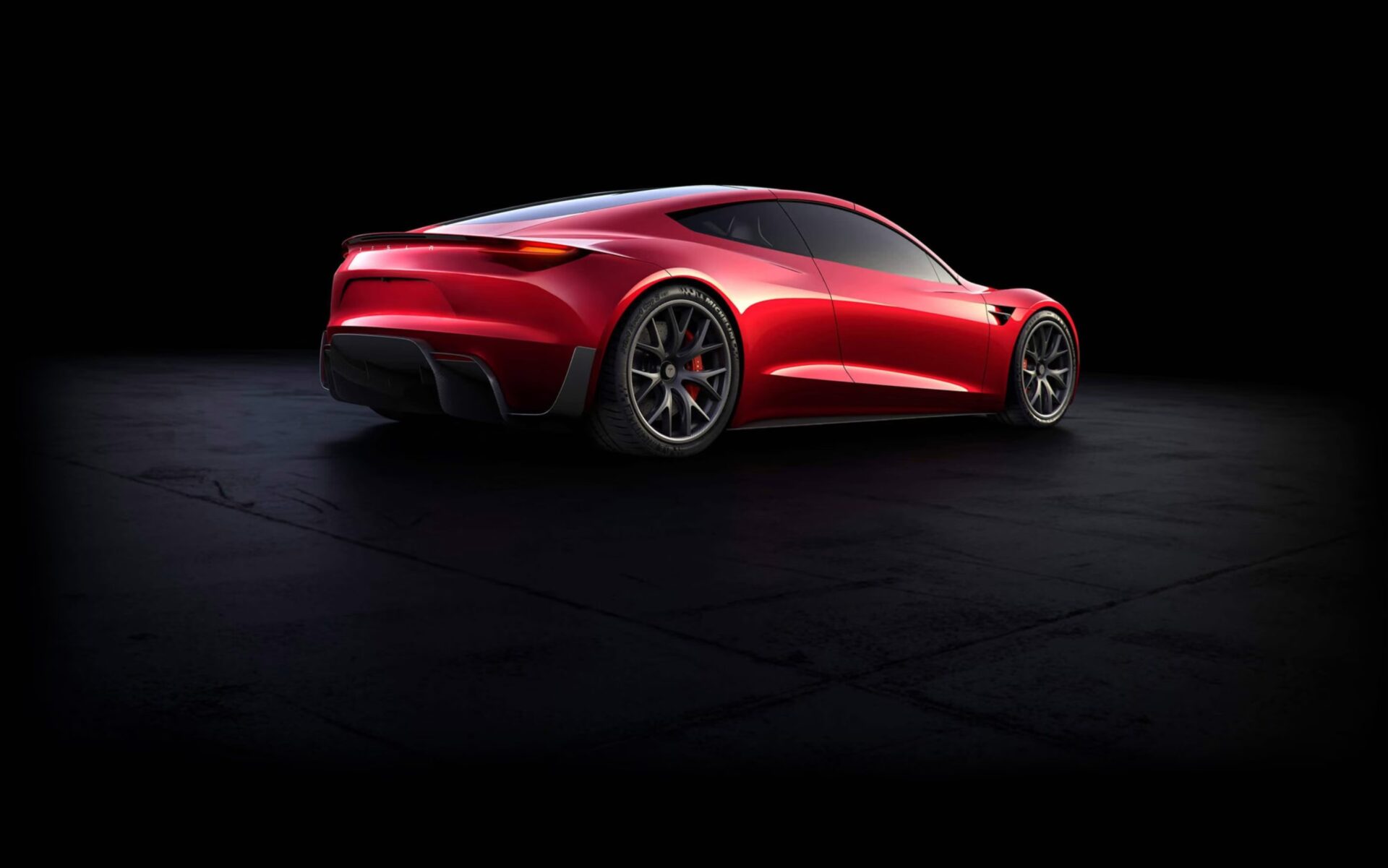
Tesla has recently filed a patent for a groundbreaking “monolithic” seat frame that is expected to make its debut in the upcoming next-generation Roadster. The patent, published on March 5, 2026, describes a single-piece structure made from advanced composites such as carbon-nylon or Kevlar, which will replace the numerous metal parts and brackets typically found in traditional car seats.
This innovative approach aligns with Tesla’s “megacasting” strategy used for vehicle bodies, where multiple small parts are consolidated into one large component. By utilizing a continuous frame that integrates the seat, backrest, and headrest, Tesla aims to significantly reduce weight and complexity while also increasing cabin space in low-slung performance vehicles.
Traditional car seats usually rely on at least 13 major part groups held together by screws and rivets, which can lead to noise and mechanical fatigue over time. In contrast, Tesla’s new design incorporates a “living hinge” system with tunable stiffness zones, allowing the seat to recline and flex without the need for heavy, complex metal gears.
Moreover, the patent introduces a sophisticated movement system that consists of four pairs of linear actuators. These actuators enable six degrees of freedom, allowing the seat to shift into various positions—such as a low-tilt track mode or a higher cruising mode—solely through software-defined presets.
While the premium materials used in this technology suggest its initial application in the $200,000 Roadster, the patent also mentions the possibility of more affordable fiberglass options. This indicates that the technology could potentially scale to the rest of the Tesla lineup or even the upcoming Cybercab, with the aim of simplifying manufacturing processes and reducing costs.
In addition to this groundbreaking seat frame innovation, Tesla has been making strides in other areas as well. For instance, the company has recently begun Full Self-Driving (FSD) testing in Tokyo ahead of its 2026 Japan launch. This testing involves public demonstrations of the FSD Supervised software on the streets of Tokyo using a fleet that includes both Model 3 and Model Y vehicles.
Furthermore, Tesla has offered a glimpse inside its massive Semi factory in Nevada, with journalist Ashlee Vance describing the facility as “enormous and quite spectacular.” This preview precedes a full episode detailing the factory’s operations and the progress of Tesla’s Class 8 electric truck, the Semi.
Lastly, Tesla is actively recruiting senior engineers in Berlin for its “Robotaxi” autonomous vehicle team, indicating a ramp-up of efforts in the autonomous vehicle space. The company is seeking Senior Electrical Design Engineers to work on its Robotaxi program within the Low Voltage Hardware team, which is responsible for designing circuit boards that control hundreds of devices within the vehicles.
Overall, Tesla’s continuous innovation and groundbreaking technologies are shaping the future of mobility and redefining industry standards. With a focus on efficiency, performance, and sustainability, Tesla is leading the way towards a more advanced and connected automotive landscape.