
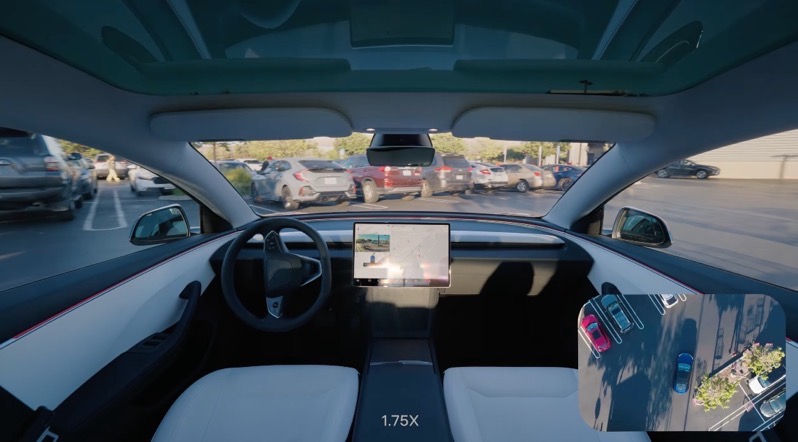
Tesla is introducing a new update for Summon that aims to reduce unnecessary energy usage when Summon Standby is least likely to be used. This update, included in software version 2025.32, was first noticed by the team at Not a Tesla App.
Summon Standby is a feature that keeps a Tesla’s Full Self-Driving (FSD) computer partially awake so owners can quickly activate Summon through the Tesla app. While convenient, this feature can result in phantom battery drain. With the latest update, Tesla is implementing two new conditions to optimize Summon Standby and conserve energy.
The first condition automatically pauses Summon Standby between midnight and 6 a.m., a time frame when Tesla’s data suggests very little usage occurs. The second condition disables Summon Standby if a vehicle remains parked for over 24 hours, reactivating only when the car is driven again.
For Tesla owners, the impact of these changes is minimal. If Summon is used during one of these pauses, the car will simply take a few extra seconds to wake up before responding. In return, energy is saved during times when the feature is unlikely to be utilized.
Summon Standby was introduced last year alongside Actually Smart Summon (ASS), and Tesla has been refining the Summon feature ever since. The latest software update, 2025.32.3, also introduces Low Power Mode, which disables high-drain features like Smart Summon, Sentry Mode, and Cabin Overheat Protection to further reduce phantom drain.
Overall, these updates demonstrate Tesla’s commitment to fine-tuning vehicle software to improve efficiency without compromising user convenience. These optimizations could lead to significant energy savings across the global fleet, reducing costs for owners and easing the strain on the electrical grid.