
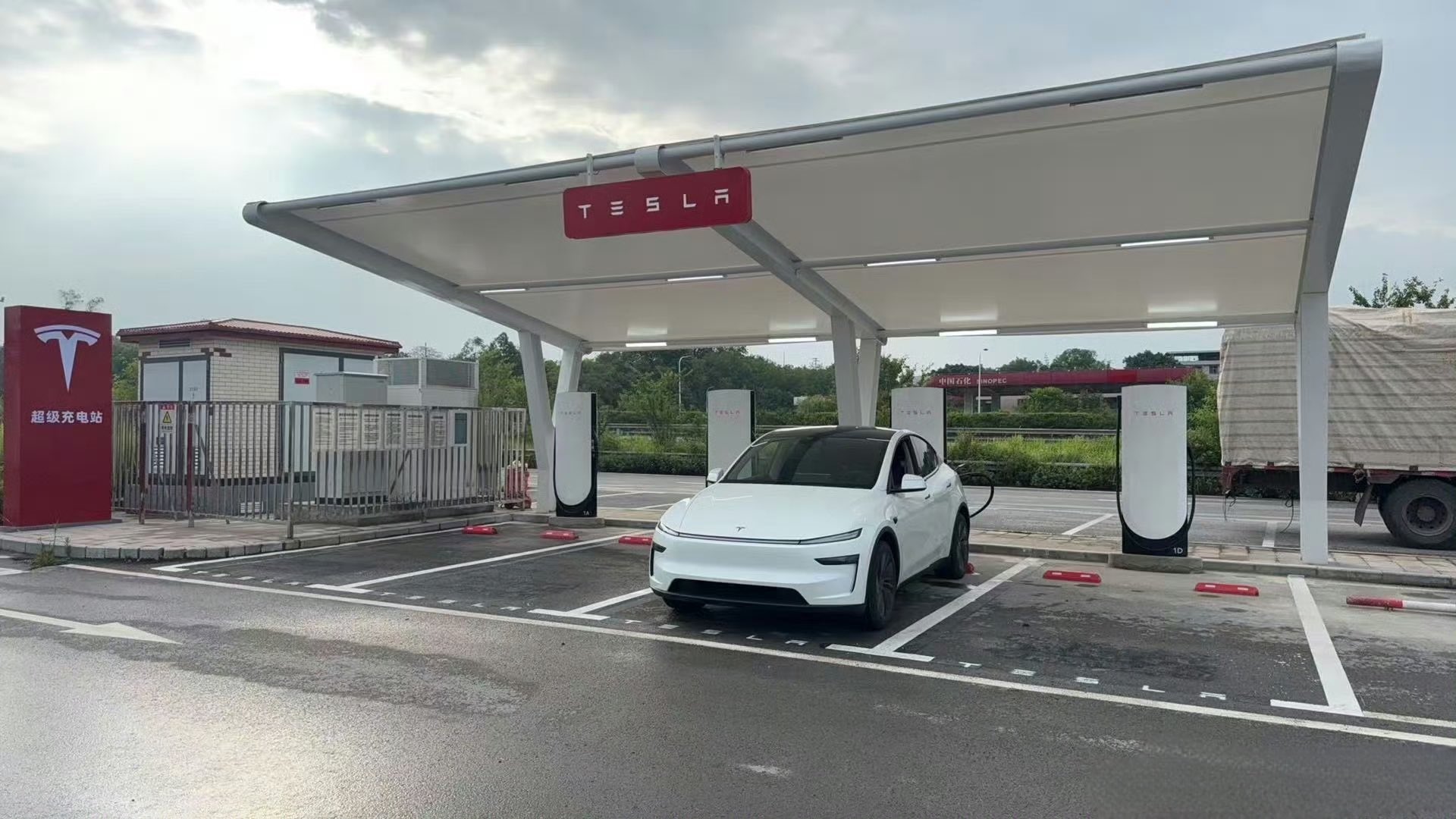
Tesla continues to expand its charging network in China, with the latest update revealing that the company now operates more than 2,500 Supercharger stations and 12,000 Supercharger stalls across the country. This milestone was announced by Tesla Vice President Grace Tao, showcasing the company’s commitment to providing convenient and accessible charging solutions for electric vehicle owners in China.
The rapid expansion of Tesla’s Supercharger network in China is a testament to the growing demand for electric vehicles in the country. With the increasing adoption of electric vehicles, the need for a reliable and widespread charging infrastructure has become more important than ever. Tesla’s Supercharger network aims to address this need by providing fast and convenient charging options for Tesla owners across China.
By operating more than 2,500 Supercharger stations and 12,000 Supercharger stalls, Tesla is ensuring that Tesla owners have access to a robust charging network that can support their everyday driving needs. Whether it’s a quick stop for a top-up or a longer journey requiring multiple charging stops, Tesla’s Supercharger network in China is designed to provide Tesla owners with a seamless charging experience.
The expansion of Tesla’s Supercharger network in China is part of the company’s broader efforts to accelerate the adoption of electric vehicles and reduce carbon emissions. By investing in a comprehensive charging infrastructure, Tesla is not only making it easier for Tesla owners to charge their vehicles but also encouraging more people to make the switch to electric vehicles.
In addition to expanding its Supercharger network, Tesla is also working on developing new technologies and solutions to further improve the charging experience for electric vehicle owners. From faster charging speeds to enhanced connectivity features, Tesla is continuously innovating to make electric vehicle ownership more convenient and sustainable.
Overall, Tesla’s milestone of operating more than 2,500 Supercharger stations and 12,000 Supercharger stalls across China is a significant achievement that highlights the company’s commitment to advancing sustainable transportation. With a growing charging network and ongoing technological advancements, Tesla is well-positioned to lead the transition to electric mobility in China and beyond. recent studies have shown that there is a strong link between mental health and physical health. The relationship between the mind and body is complex and intertwined, with each influencing the other in profound ways.
One of the key findings from these studies is that mental health issues, such as depression and anxiety, can have a direct impact on physical health. People who suffer from these conditions are more likely to experience a range of physical ailments, including heart disease, diabetes, and chronic pain. This is thought to be due to the way in which stress and negative emotions can affect the body’s immune system and inflammatory response.
Conversely, physical health problems can also have a significant impact on mental health. Chronic illnesses and pain can lead to feelings of helplessness, isolation, and depression. In addition, the side effects of certain medications can also exacerbate mental health issues. For example, some medications used to treat high blood pressure or cholesterol can cause mood swings or cognitive impairment.
Furthermore, lifestyle factors play a significant role in both mental and physical health. Poor diet, lack of exercise, and substance abuse can all contribute to the development of mental health disorders and physical conditions. On the other hand, engaging in regular physical activity, eating a balanced diet, and getting enough sleep can help to improve mood, reduce stress, and boost overall well-being.
It is clear that mental and physical health are intricately connected, and it is important to address both aspects in order to achieve optimal well-being. This holistic approach to health care is increasingly being recognized by medical professionals, who are working to integrate mental health services into primary care settings.
In conclusion, the link between mental and physical health is undeniable. By taking care of both aspects of our health, we can improve our overall quality of life and reduce the risk of developing chronic illnesses. It is essential that we prioritize mental health and seek help when needed, in order to maintain a healthy mind and body.