
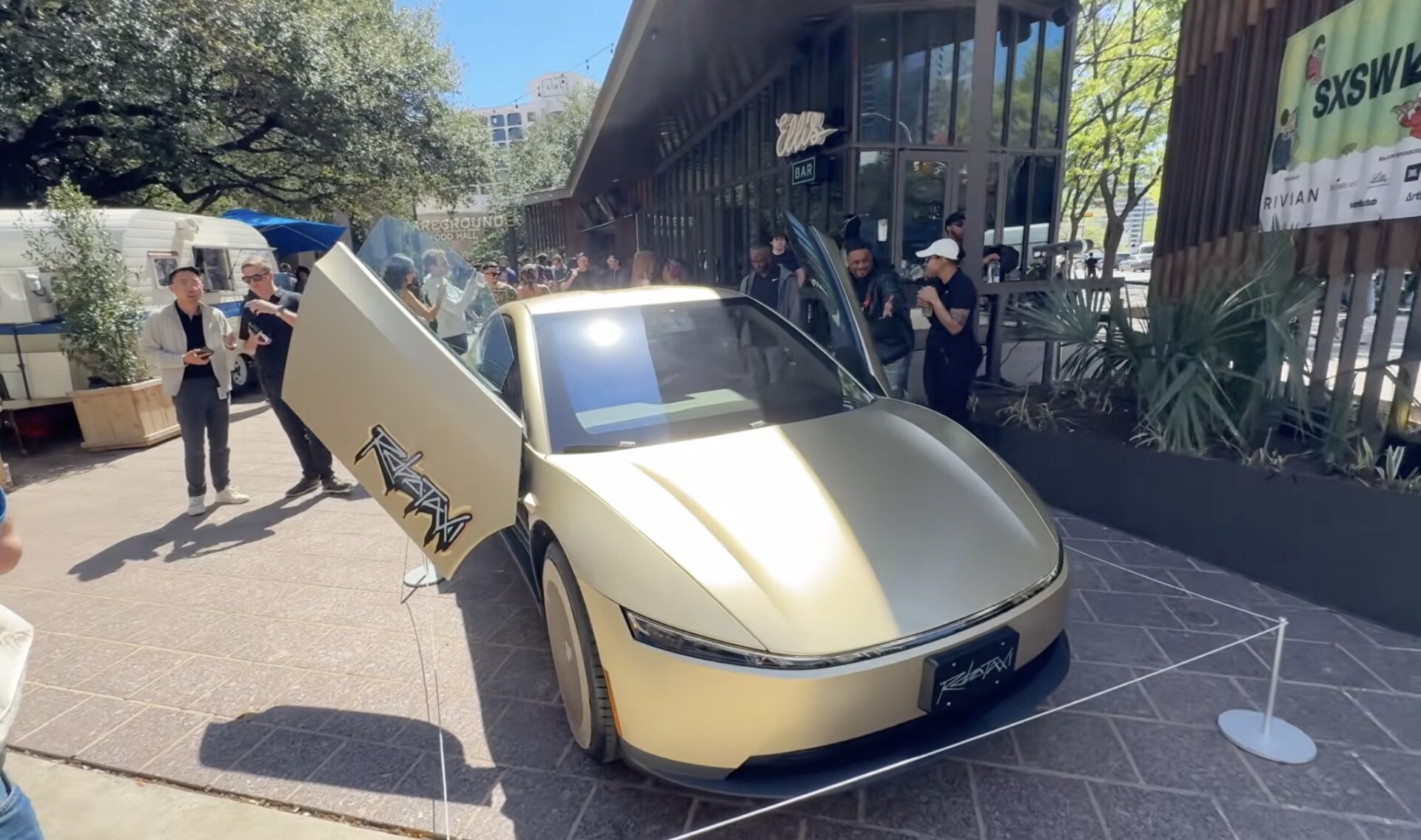
The Tesla Cybercab made a splash at the South by Southwest festival in Austin, Texas, providing a first look at what could be the future of autonomous ride-sharing. The vehicle, designed without a steering wheel or pedals, redefines the passenger experience with a focus on comfort and efficiency.
Reviewers from Out of Spec Reviews were impressed by the spacious interior of the Cybercab, noting that the legroom was “absolutely stellar” and could easily accommodate passengers up to 6’4” tall. The cabin features a massive central display and a lack of traditional dashboard, creating an open and modern feel for passengers. The design of the vehicle prioritizes durability and simplicity, with no door pockets or cubbies to ensure a clean and efficient ride-sharing experience.
Outside, the Cybercab sports a sleek design that avoids the bulky sensors typically seen on self-driving vehicles, relying instead on Tesla’s camera-based Full Self-Driving suite. While specifics such as battery size and range remain undisclosed, the pre-production model showcased at SXSW featured a valid VIN and was built just last month, impressing reviewers with its purpose-built design.
Some cool discoveries from the first look at the Cybercab include the spacious cabin, which even a 6’1” passenger couldn’t touch the front wall with their heels while seated. The vehicle is equipped with a soft, “squishy” suspension to ensure a comfortable ride regardless of road conditions. The butterfly doors open and close automatically, and the rear trunk is surprisingly large for a two-seater vehicle.
While Tesla envisions a future with wireless inductive charging, this specific model features a physical NACS charging port in the rear for use with the existing Supercharger network. Overall, the Cybercab’s debut at SXSW left reviewers excited for what’s to come, with one stating, “This is going to be amazing,” and another expressing a desire to ride in the vehicle. With production potentially starting as early as April 2026, the Tesla Cybercab could revolutionize the way we think about autonomous transportation.