
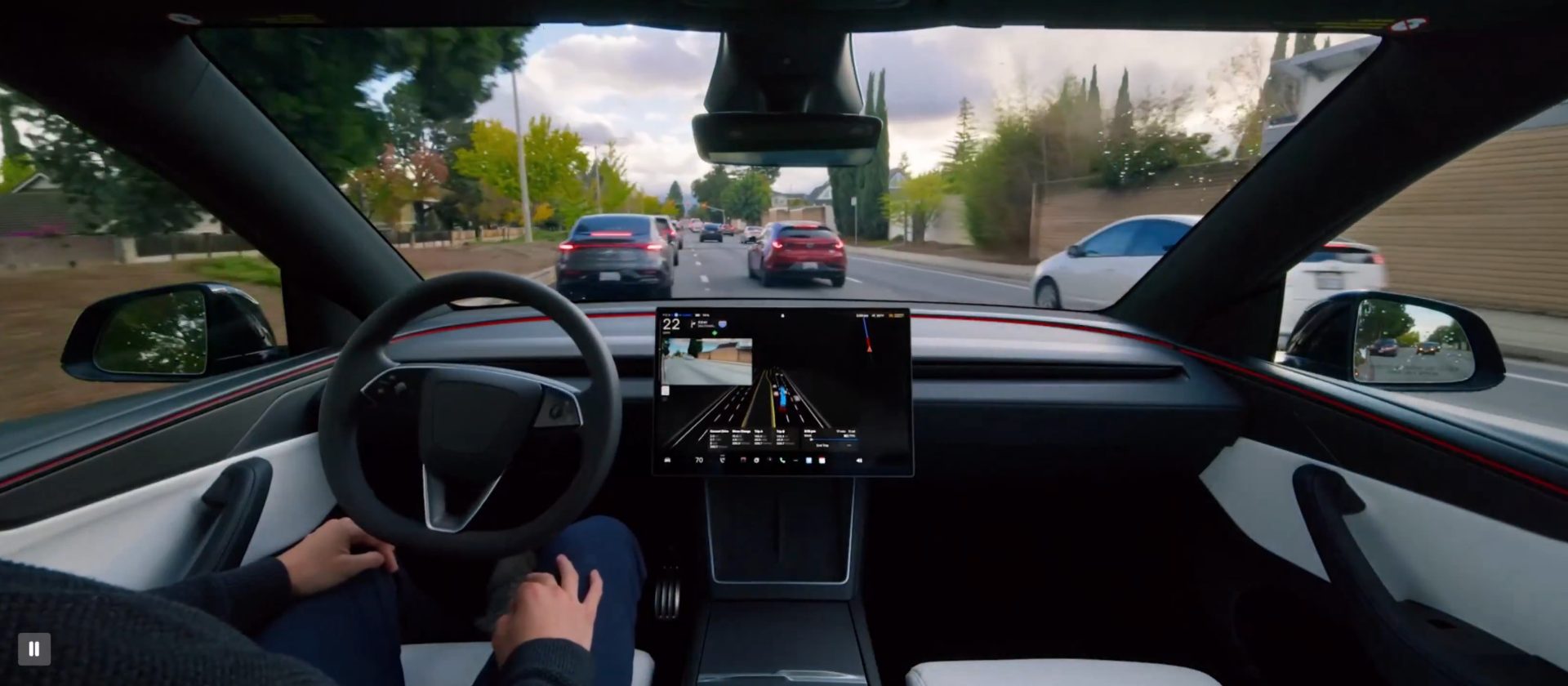
Tesla has recently kicked off public demonstrations of its Full Self-Driving (FSD) Supervised software on the busy streets of Tokyo. The testing fleet, which has now expanded to include a Model Y alongside a Model 3, is being utilized to validate the system’s performance in Japan’s densely populated urban environments.
Hiroshi Hashimoto, President of Tesla Japan, has confirmed that the company is aiming for a full commercial rollout by the end of 2026, pending final regulatory approval. The Level 2 system takes care of steering, braking, and acceleration, while still requiring a human driver to remain attentive. Should the approval be granted, an over-the-air software update could activate the feature for around 40,000 Tesla vehicles already operating on Japanese roads.
Initial footage from the Tokyo trials showcases the software effectively navigating intricate intersections and obeying local traffic laws, such as stopping at crosswalks when required. Ken Maeda, a former Tesla and Porsche executive who observed the trials, remarked, “It’s handling Japan’s unique road environment smoothly. Now, we’re just waiting for official approval from the authorities.”
As Tesla gears up for a 2026 launch in Japan, the company is actively expanding its Full Self-Driving (FSD) validation programs across various continents to secure the necessary regulatory approvals. In Europe, Tesla is working closely with the Dutch vehicle authority to enable the software across the EU, while conducting “ride-along” programs in major German cities.
In China, Tesla is in the final stages of a regulatory review after collaborating with Baidu to navigate stringent mapping and data security laws, with a wide release expected later this year.
The global expansion efforts also extend to the Middle East, where official road trials have commenced in Abu Dhabi as of February 2026. To ensure the software can handle diverse driving conditions, Tesla has designated Australia as a primary testing ground for right-hand-drive vehicles and obtained approval for localized testing in Sweden. These trials in Scandinavia are specifically tailored to assess how the vision-based system performs in challenging Nordic winter conditions.
Overall, Tesla’s push towards expanding its FSD capabilities globally signifies a significant step towards revolutionizing the future of autonomous driving.