
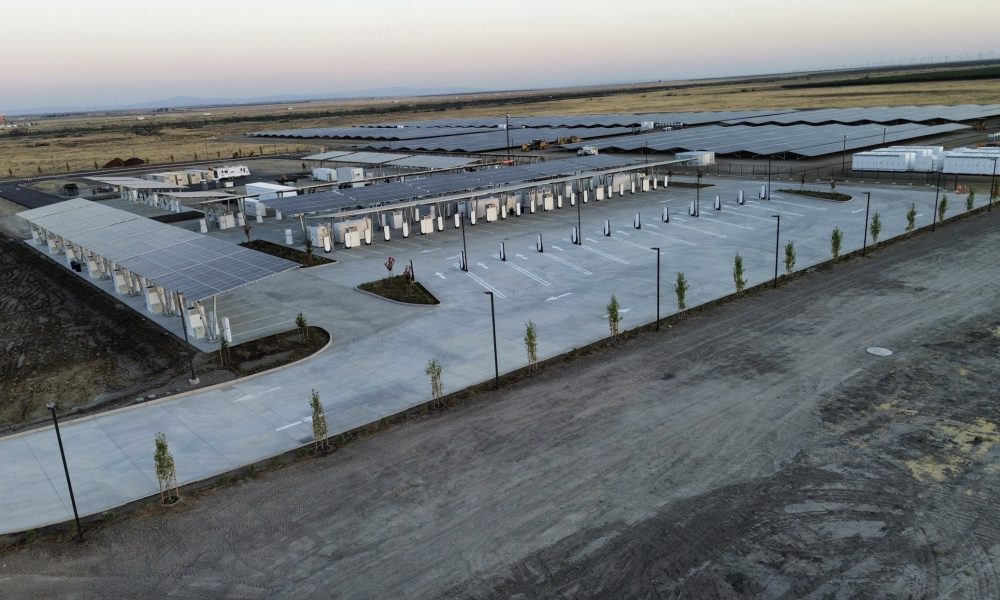
Tesla has recently completed construction at its largest Supercharger ever in Lost Hills, California, with all 168 stalls now officially open to drivers. This Supercharger, known as Project Oasis, has been in development for several years and is a significant milestone for the company.
The Lost Hills Supercharger is powered by 10 Megapack batteries for storage and is completely independent of the grid. With 11 MW of solar panels providing energy to the massive Battery Energy Storage System (BESS), this site is a model of sustainability and innovation in the electric vehicle charging infrastructure.
This Supercharger, which spans across 30 acres, is the largest in the world and comes just in time for the Thanksgiving holiday, the most-traveled weekend of the year in the United States. While the site was partially opened in July 2025 with 84 stalls, Tesla recently finished certifying the site, allowing all 168 stalls to be operational.
The Lost Hills Supercharger is capable of generating approximately 20 GWh of energy annually, enough to power around 1,700 homes. This launch is a significant step for Tesla as it aims to expand its Supercharger network into more rural areas, providing charging options for cross-country trips that require stops in remote regions.
One notable feature of this Supercharger is the inclusion of pull-through stalls, catering to drivers who tow trailers. This design element was well-received following the launch of the Cybertruck and demonstrates Tesla’s commitment to meeting the diverse needs of its customers.
With over 70,000 active Superchargers worldwide, Tesla continues to expand its charging infrastructure and enhance the charging experience for its customers. Some Supercharger locations, such as the Tesla Diner on Santa Monica Boulevard in Los Angeles, offer unique amenities like drive-in movie theaters and soon-to-be full-service restaurants, providing a more enjoyable and convenient charging experience for Tesla owners.
Overall, the completion of the Lost Hills Supercharger marks a significant milestone for Tesla and underscores the company’s commitment to expanding and improving its charging infrastructure to meet the growing demand for electric vehicles.