
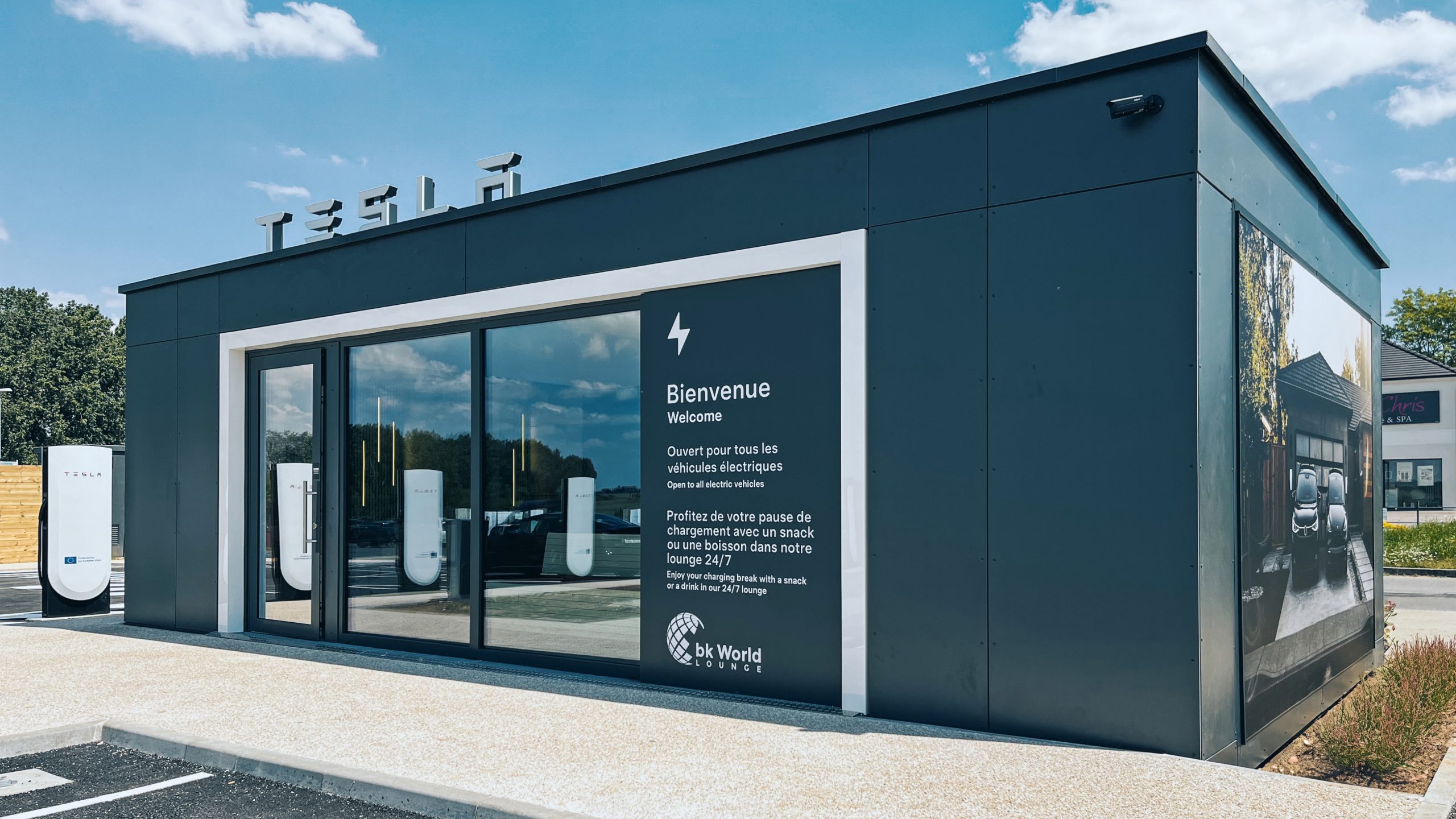
Tesla and Boxabl have joined forces to create modular “Micromenity” structures as part of a new Supercharger pilot program. This innovative partnership aims to enhance the Supercharging experience for Tesla owners, providing them with a unique and convenient solution while on the road.
The collaboration between Tesla and Boxabl, a startup known for its foldable “Casita” homes, was revealed through a recently filed SEC document. This document outlines the plans for building these modular structures at Supercharger locations, offering Tesla customers a comfortable and practical space to relax and recharge.
The “Micromenity” structures are designed to be compact yet functional, providing users with a cozy environment to rest and unwind while their Tesla vehicle charges. These modular units are equipped with all the necessary amenities, including seating areas, charging stations, and other conveniences to enhance the overall Supercharging experience.
By partnering with Boxabl, Tesla is not only demonstrating its commitment to innovation and sustainability but also its dedication to providing customers with a seamless and enjoyable charging experience. The modular nature of these structures allows for easy installation and customization, ensuring that they can be tailored to meet the specific needs of each Supercharger location.
In addition to enhancing the Supercharging experience, the partnership between Tesla and Boxabl also highlights the growing trend towards modular construction and sustainable design. By incorporating these innovative structures into their Supercharger network, Tesla is setting a new standard for eco-friendly and customer-centric infrastructure.
Overall, the collaboration between Tesla and Boxabl represents a significant step forward in the evolution of electric vehicle charging infrastructure. By offering customers a unique and comfortable space to recharge, relax, and socialize, Tesla is not only meeting the needs of its customers but also setting a new benchmark for sustainable and user-friendly charging solutions.
As Tesla continues to expand its Supercharger network and explore new ways to improve the overall charging experience, the partnership with Boxabl is sure to play a key role in shaping the future of electric vehicle charging infrastructure. The world of technology is constantly evolving and advancing, with new innovations and breakthroughs being made every day. One such breakthrough that has been making waves in the tech industry is the development of artificial intelligence (AI). AI is a branch of computer science that aims to create machines that can perform tasks that typically require human intelligence, such as speech recognition, decision-making, and problem-solving.
One of the most exciting aspects of AI is its potential to revolutionize industries across the board. From healthcare to finance to transportation, AI has the power to streamline processes, increase efficiency, and improve outcomes. In the healthcare sector, for example, AI can be used to analyze medical images, predict patient outcomes, and even assist in surgical procedures. In finance, AI can be used to detect fraud, optimize investment strategies, and personalize customer experiences. And in transportation, AI can be used to improve traffic flow, enhance vehicle safety, and even enable autonomous driving.
But while the potential benefits of AI are vast, there are also concerns about its impact on society. One major concern is the potential for job displacement, as AI has the potential to automate tasks that are currently performed by humans. This could lead to widespread unemployment and economic instability, particularly for low-skilled workers. There are also concerns about the ethical implications of AI, such as bias in algorithms, invasion of privacy, and the potential for AI to be used for malicious purposes.
To address these concerns, experts are calling for the development of ethical guidelines and regulations for the use of AI. This includes ensuring that AI systems are transparent, accountable, and fair, and that they are used in ways that benefit society as a whole. It also includes investing in education and training programs to help workers adapt to the changing job market and acquire the skills needed to work alongside AI.
Despite these challenges, the future of AI looks bright. With continued investment and innovation, AI has the potential to transform industries, improve lives, and drive economic growth. By working together to address the ethical and societal implications of AI, we can ensure that this powerful technology is used for the greater good.