
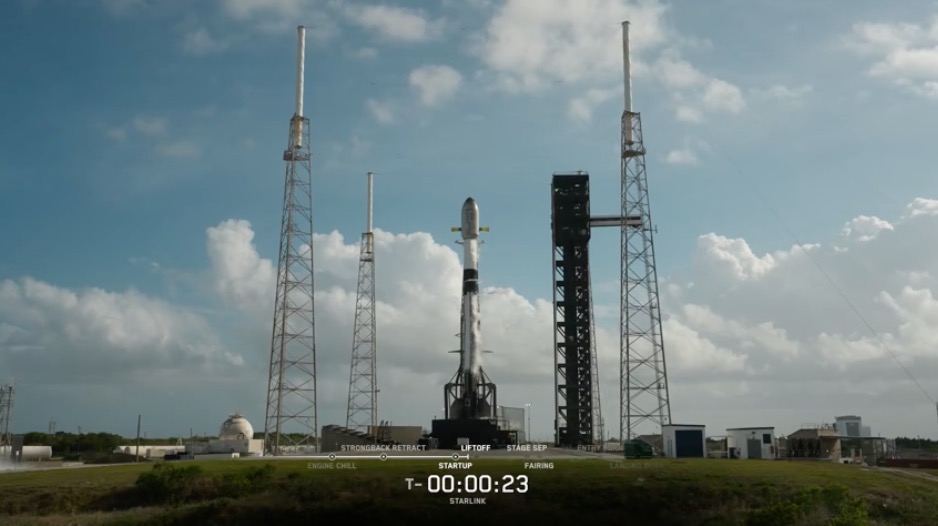
SpaceX achieved a historic milestone on March 30th, when its Falcon 9 booster, known as B1067, completed its 34th successful mission. The veteran booster took off from Space Launch Complex 40 at Cape Canaveral Space Force Station, carrying 29 Starlink satellites into low-Earth orbit. Following the launch, the first stage of the rocket performed a precise landing on the droneship Just Read the Instructions in the Atlantic Ocean.
B1067 has become a legendary figure in the SpaceX fleet since its debut in June 2021. Over the course of its nearly five-year career, the booster has supported a variety of high-profile missions, including human spaceflights such as the Crew-3 and Crew-4 missions to the International Space Station, as well as NASA cargo missions like CRS-22 and CRS-25. It has also launched international satellites for countries such as Turkey, the European Commission, and South Korea, in addition to deploying 23 batches of Starlink satellites.
By achieving its 34th successful mission, SpaceX has broken the world record for the most launches and landings of a single orbital-class rocket. Originally designed to fly 10 times without major refurbishment, the Falcon 9 Block 5 has exceeded expectations as engineers have consistently pushed the limits of reusability. With a goal of reaching 40 flights per booster, SpaceX continues to lower the cost of access to space by reusing flight-proven hardware.
The success of B1067 is crucial to SpaceX’s 2026 launch manifest, which aims to average nearly three launches per week. By leveraging reusable technology, SpaceX is rapidly expanding the Starlink constellation, which currently consists of over 10,000 satellites in orbit. Looking ahead, the company has two more Starlink missions scheduled for the upcoming week, set for April 2nd from Florida and California.
Overall, SpaceX’s commitment to innovation and reusability has not only set new records in the space industry but also paved the way for more frequent and cost-effective access to space exploration. With each successful mission, SpaceX continues to push the boundaries of what is possible in the realm of orbital rocket reusability.