
Colorado Lawsuit: Dealers Sue State Over Direct-to-Consumer License Granted to Scout Motors
A group of dealers in Colorado have filed a lawsuit against the state over a dealer license granted to Scout Motors in December. The dealers argue that Scout should not qualify for the same exemptions as EV-only brands like Tesla and Rivian because it plans to produce gas-extended EVs. This legal battle sheds light on the complexities of electric vehicle regulations and the competitive landscape in the automotive industry.
Scout Motors, a new brand under the Volkswagen Group, is gearing up to introduce electric and range-extended SUVs and trucks in the U.S. However, even before the company has launched any production vehicles, it is facing legal challenges from dealers who are concerned about its direct-to-consumer sales model. The dealers, who represent a significant portion of Volkswagen, Audi, and Porsche dealers in Colorado, are taking issue with the state’s decision to grant Scout a license to sell directly to consumers.
The lawsuit, filed in Denver District Court, alleges that the state’s Department of Revenue Division of Motor Vehicles incorrectly interpreted Colorado law when it determined that Scout qualifies as a manufacturer of only electric vehicles. The dealers argue that Scout and its parent company, the VW Group, are essentially one entity, which would mean that VW is competing with its own franchised dealers in violation of dealer laws.
One of the key points of contention in the lawsuit is Scout’s decision to sell extended-range electric vehicles (EREVs), which are electric vehicles equipped with gas-powered generators to extend their range. The dealers argue that Scout’s EREVs do not qualify for exemptions in Colorado law that are meant for EV-only brands like Rivian and Lucid. This distinction is crucial as it could impact how Scout is allowed to operate in the state.
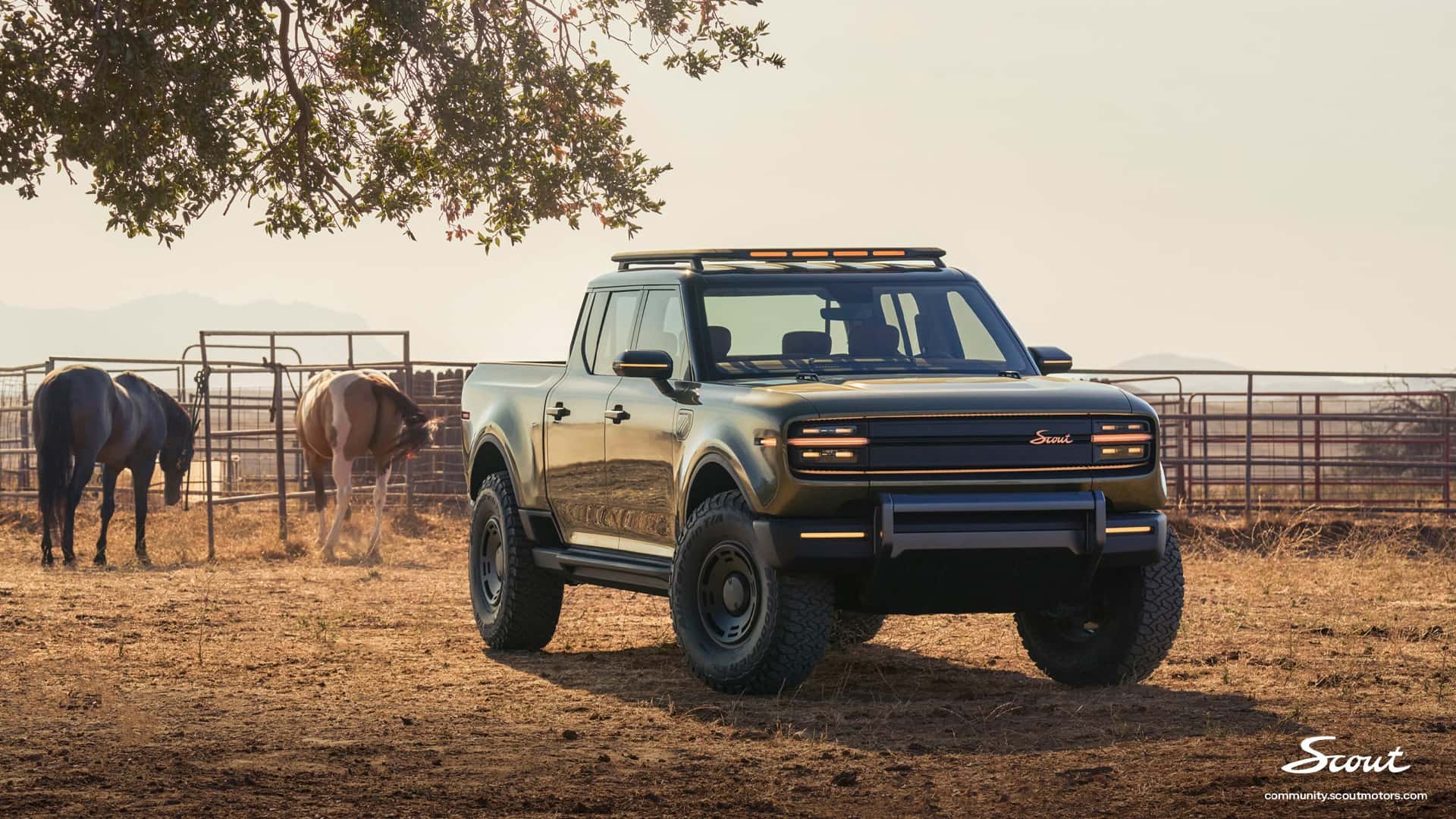
Scout’s EREV models, such as the Terra pickup and Traveler SUV, are designed to offer a balance between electric range and extended driving capabilities. These vehicles feature smaller batteries than pure-electric models, along with a four-cylinder gas engine that boosts overall range. The company claims that its EREV models will offer around 500 miles of range, compared to the 350 miles expected from its all-electric vehicles. Production of the Terra and Traveler is set to begin in 2027 at a new factory in South Carolina.
EREVs have become a popular choice for automakers looking to cater to consumers who are hesitant to fully commit to electric vehicles. These models provide the benefits of electric driving while offering the peace of mind of extended range capabilities. However, the legal dispute in Colorado highlights the challenges that new entrants like Scout Motors face as they navigate the complex regulatory environment surrounding electric vehicles and direct-to-consumer sales. Scout Motors is making waves in the automotive industry with its innovative approach to electric vehicles. The company’s upcoming Terra and Traveler models promise the best of both worlds: zero-emission driving most of the time, plus some backup energy for heavy towing or long road trips. These extended-range electric vehicles, or EREVs, offer a unique solution for consumers looking to reduce their carbon footprint without sacrificing performance.
Ford made headlines last year when it canceled the electric F-150 Lightning in favor of developing an EREV version. Hyundai is also planning to introduce an EREV SUV with an impressive 600 miles of range in the U.S. market by 2027. Ram and Jeep have EREV models set to launch this year as well. Scout Motors is among the early adopters of this technology, with plans to bring EREVs to the U.S. market in the near future.
The decision to offer a hybrid option has proven to be a wise move for Scout Motors, as CEO Scott Keogh revealed that 80% of the company’s reservations are for range-extended vehicles. This high demand for EREVs signals a shift in consumer preferences towards vehicles that offer both eco-friendly driving and practicality for long-distance travel.
However, Scout Motors’ plans may face obstacles in Colorado, where a new dealer-franchise law could impact the company’s ability to operate in the state. The law allows manufacturers to own and operate dealerships if they exclusively produce electric vehicles and have no franchised dealers of the same line-make in the state. The definition of an “electric vehicle” is at the center of the debate, with Scout Motors arguing that EREVs should be considered as such under Colorado law.
Despite the challenges posed by dealer-franchise laws, Scout Motors remains committed to bringing its EREV models to market. Direct-to-consumer sales may be the future of the automotive industry, but for now, traditional dealerships are fighting to maintain control. Lawsuits in Florida and California have been filed against Scout Motors and other manufacturers in an effort to block their plans for direct sales.
As the automotive industry continues to evolve, companies like Scout Motors are paving the way for a new era of sustainable transportation. With their innovative EREV technology, consumers can enjoy the benefits of electric driving without compromising on performance or convenience. The future of transportation is electric, and Scout Motors is leading the charge towards a cleaner, greener future on the road. The world of technology is constantly evolving, with new advancements and innovations being made every day. One of the most exciting developments in recent years is the rise of artificial intelligence (AI). AI is the simulation of human intelligence processes by machines, especially computer systems. It has the ability to learn, reason, and make decisions like humans, and has the potential to revolutionize industries and change the way we live and work.
One of the most promising applications of AI is in the healthcare industry. AI has the potential to transform healthcare by improving patient outcomes, reducing costs, and increasing efficiency. AI-powered technologies can analyze vast amounts of medical data to identify patterns and trends that can help doctors make more accurate diagnoses and develop personalized treatment plans. AI can also be used to assist in surgical procedures, monitor patient vital signs, and even predict potential health issues before they arise.
In addition to healthcare, AI is also being used in a variety of other industries such as finance, transportation, and manufacturing. In finance, AI is being used to detect fraud, automate trading, and provide personalized financial advice. In transportation, AI is being used to improve driver safety, optimize traffic flow, and develop autonomous vehicles. In manufacturing, AI is being used to automate tasks, improve quality control, and optimize production processes.
Despite its many benefits, AI also raises concerns about privacy, security, and job displacement. As AI becomes more advanced, there is a risk that personal data could be compromised or misused. There is also the fear that AI could lead to job losses as machines take over tasks that were previously done by humans. These concerns highlight the need for regulations and ethical guidelines to ensure that AI is used responsibly and ethically.
Overall, the rise of AI is an exciting development that has the potential to transform industries and improve our lives in countless ways. As AI continues to evolve, it will be important for governments, companies, and individuals to work together to harness its power for the greater good and ensure that it is used in a way that benefits society as a whole. With the right approach, AI has the potential to revolutionize the world and usher in a new era of innovation and progress.