
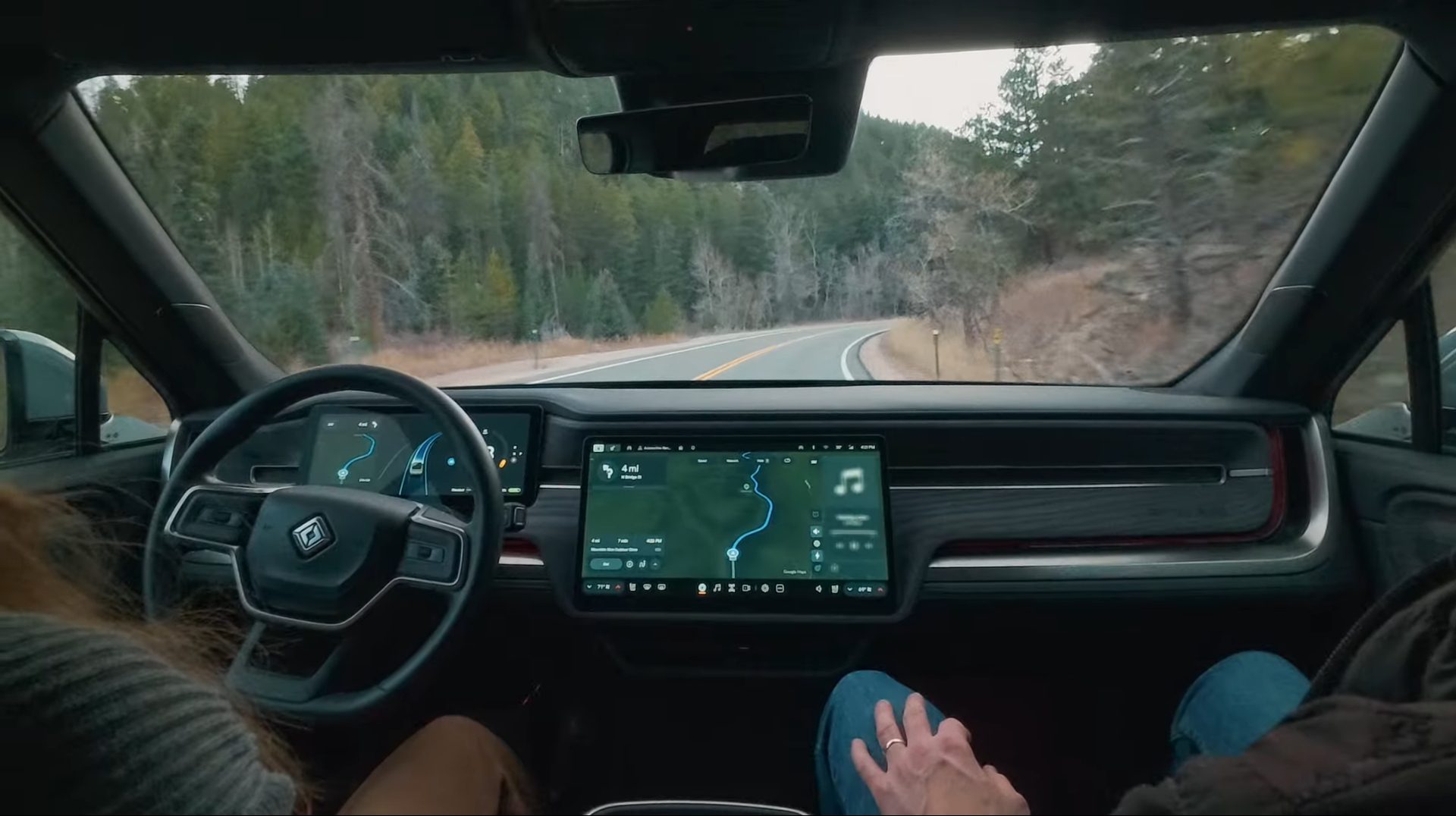
Rivian is making a bold move to challenge industry giants like Tesla and Waymo in the realm of self-driving technology with the introduction of Autonomy+, a new subscription service set to launch in early 2026. Priced at $2,500 upfront or $50 per month, Autonomy+ significantly undercuts Tesla’s Full Self-Driving (Supervised) package, which currently costs $8,000 outright or $99 per month.
The key differentiator for Rivian’s Autonomy+ is its reliance on new hardware, including the Gen 3 autonomy platform. This platform boasts 11 cameras, five radars, and a front-facing LiDAR sensor, all powered by Rivian’s custom-made silicon, RAP1. Built on TSMC’s 5nm process, the chip features a Rivian-designed neural engine capable of over 800 TOPS and forms the core of the Autonomy Compute Module 3. This module can process an impressive five billion pixels per second and supports multi-chip scaling through RivLink, a low-latency interconnect.
Rivian has confirmed that future R2 vehicles will integrate LiDAR alongside ACM3, providing detailed 3D spatial mapping and redundancy for challenging real-world scenarios. The Gen 3 Autonomy hardware is currently undergoing validation and is expected to be included in R2 models by the end of 2026.
In the short term, Rivian’s existing R1 lineup will receive software updates, including Universal Hands-Free, a hands-free assisted driving mode available on more than 3.5 million miles of mapped roads in the U.S. and Canada. This feature can even operate off-highway when lane markings are clear. Rivian believes that these enhancements will not only improve road safety but also meet customer demands and drive business growth. Both current R1 models and future R2 vehicles will continue to evolve towards point-to-point navigation, eyes-off driving, and eventually personal Level 4 autonomy.
With Tesla’s rapid advancements in FSD technology, upcoming AI5 and AI6 chips, Waymo’s expanding robotaxi network, and Rivian’s foray into custom silicon and LiDAR-based autonomy, the self-driving competition is intensifying. The year 2026 is shaping up to be a pivotal moment in the self-driving industry, with companies vying for supremacy in the autonomous vehicle space. The world is constantly changing and evolving, and with it, so are the ways we communicate with each other. In today’s digital age, there are more ways than ever to connect with people from all over the globe. From social media platforms to video conferencing tools, the possibilities are endless when it comes to staying in touch with friends, family, and colleagues.
One of the most popular forms of communication in the modern age is social media. Platforms like Facebook, Instagram, Twitter, and LinkedIn allow us to share updates, photos, and videos with our network of friends and followers. These platforms also make it easy to connect with people we may not have seen or spoken to in years, making it easier than ever to stay in touch with old acquaintances.
Another popular form of communication in the digital age is video conferencing. Tools like Zoom, Skype, and Google Meet have become essential for conducting business meetings, virtual events, and even catching up with friends and family members who live far away. Video conferencing allows us to see and hear the people we are speaking with, creating a more personal and engaging experience than traditional phone calls or emails.
In addition to social media and video conferencing, messaging apps like WhatsApp, iMessage, and Facebook Messenger have also become popular ways to communicate with others. These apps allow us to send text messages, photos, videos, and even make voice and video calls, all from one convenient platform. Messaging apps have made it easier than ever to keep in touch with our loved ones, no matter where they are in the world.
Overall, the digital age has revolutionized the way we communicate with each other. With social media, video conferencing, and messaging apps at our fingertips, staying connected with others has never been easier. As technology continues to advance, the possibilities for communication will only continue to grow, allowing us to connect with people in ways we never thought possible.