
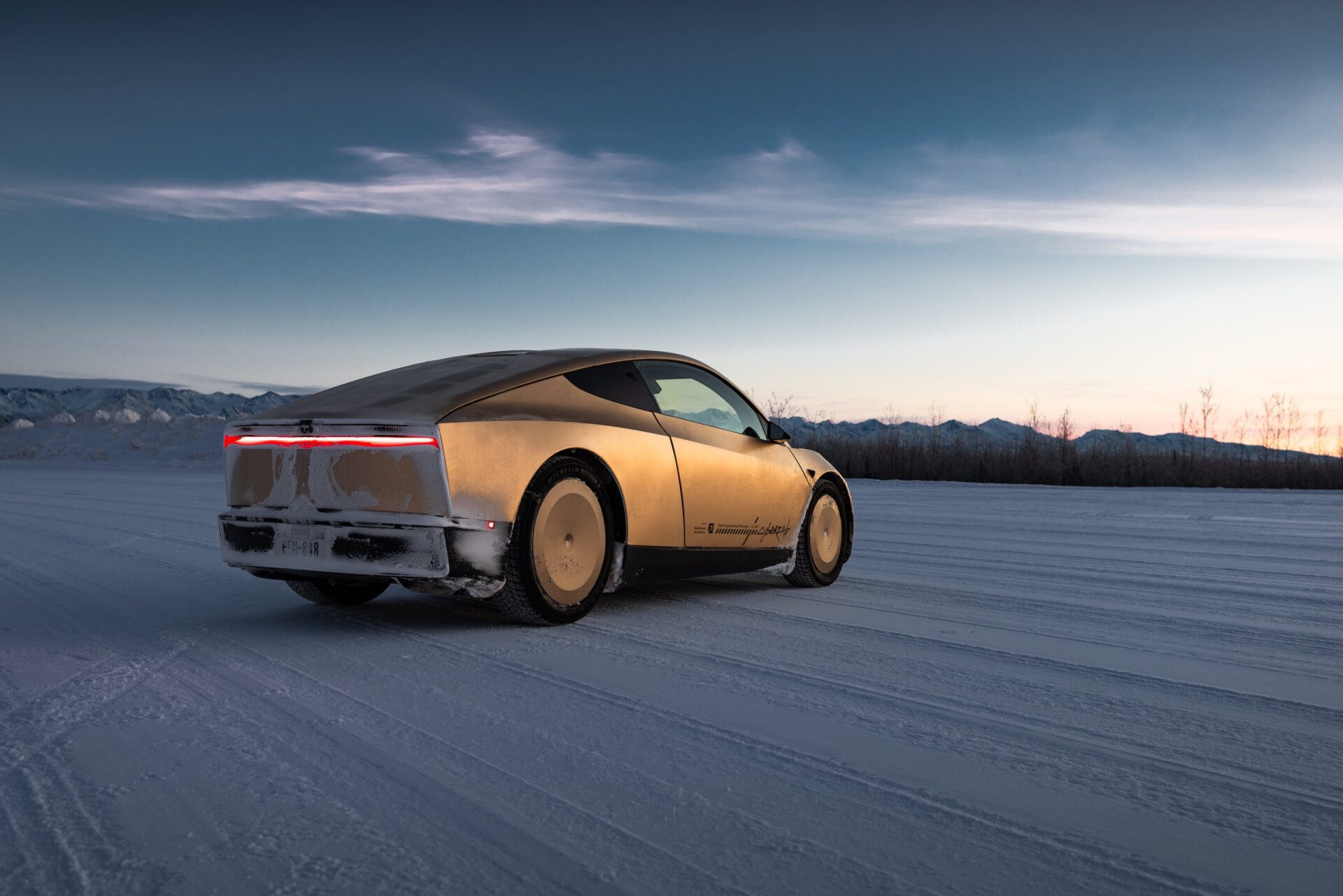
Tesla has just received a game-changing waiver from the Federal Communications Commission (FCC) that will allow the company to deploy its revolutionary wireless charging technology. This groundbreaking decision paves the way for Tesla to utilize Ultra-Wideband (UWB) sensors in ground-based pads and vehicles, a move that will play a crucial role in powering the autonomous charging capabilities of the upcoming Cybercab.
Under previous regulations, UWB sensors were limited to handheld devices to prevent interference with satellite and military communications. However, Tesla successfully argued that its low-power and precise system posed no risk to other radio services, leading to the FCC granting the waiver for deployment.
The significance of this regulatory win cannot be overstated, especially for the Cybercab, which Tesla has confirmed will not include a traditional charging port. As a fully autonomous robotaxi, the Cybercab requires a hands-free method of refueling, which the UWB sensors will provide by enabling the vehicle to navigate over a charging pad with centimeter-level accuracy for maximum power efficiency.
The FCC emphasized that the signal from these sensors is brief and shielded by the car’s metal frame once parked, laying the legal groundwork for Tesla to establish automated charging infrastructure in parking lots and driveways across North America.
While this waiver is a major step forward for Tesla’s autonomous vision, the FCC has imposed specific operational requirements on the company. Tesla must ensure that the sensors only activate during a parking event and immediately shut down once the vehicle is stationary. Additionally, Tesla must notify organizations like NASA before installing commercial charging hubs near sensitive satellite stations or radio astronomy sites.
This development removes a significant legal barrier for Tesla in achieving a fully autonomous, self-charging fleet. By automating the physical connection to the power grid, Tesla is positioning itself to operate robotaxi services with significantly lower costs compared to competitors who rely on manual labor for vehicle charging.
In conclusion, Tesla’s FCC waiver for wireless charging technology marks a significant milestone in the company’s journey towards a sustainable and efficient autonomous future. The integration of UWB sensors in ground-based pads and vehicles will revolutionize the way electric vehicles are charged, setting a new standard for innovation in the automotive industry.