
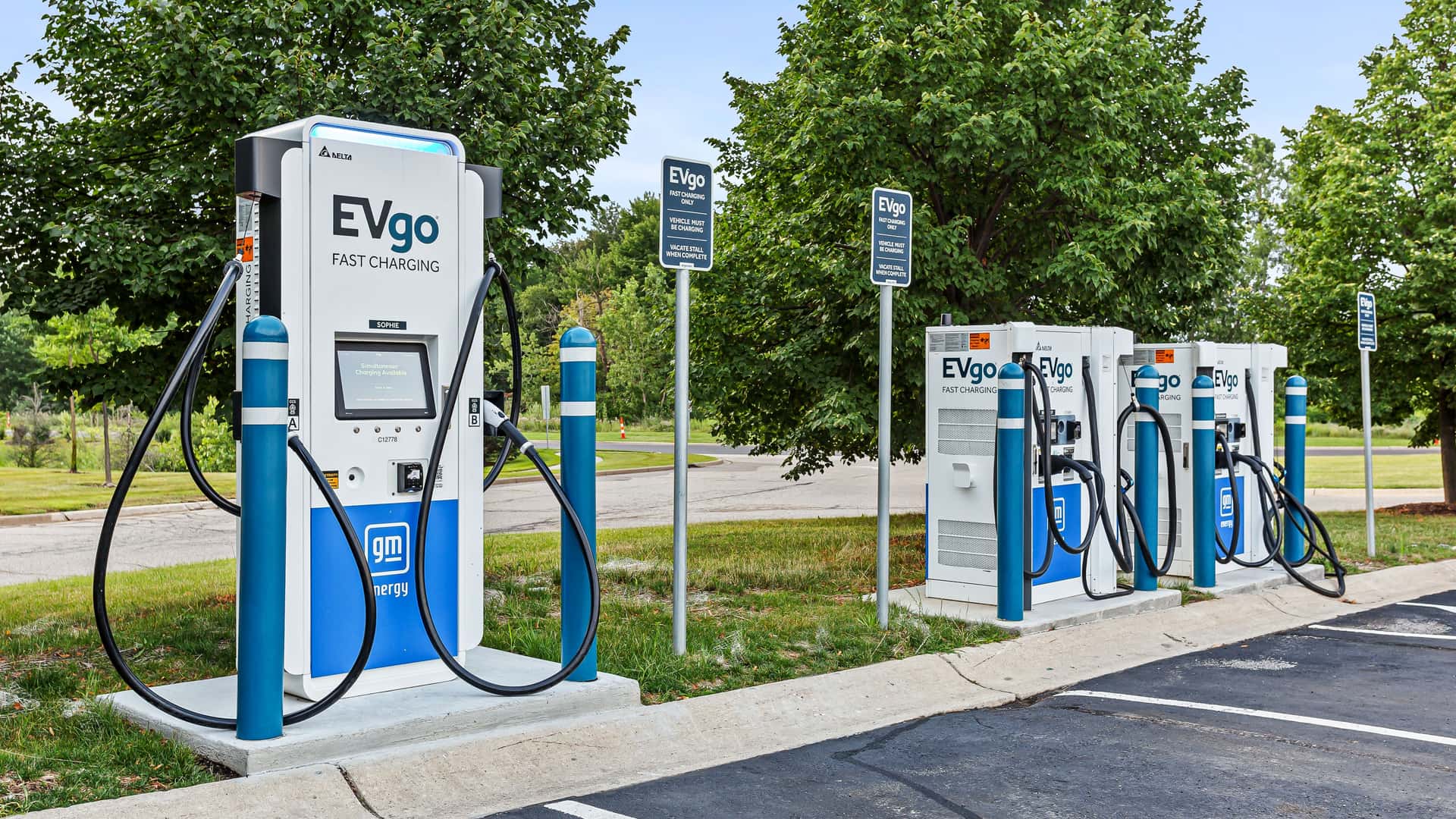
EV Charging Networks Racing to Install Tesla-Style NACS Connectors
EVgo, one of the largest EV charging networks in the United States, is making a significant push to install Tesla-style NACS cables at its stations nationwide. This move comes as other companies also race to retrofit or install new NACS stalls across the country, benefiting both Tesla and non-Tesla EV owners who prefer not to carry around an adapter.
Following a successful pilot in 2025, where EVgo installed nearly 100 NACS connectors across 22 metropolitan areas, the charging network is now aiming to accelerate deployment this year. Over 500 NACS connectors are set to go online by the end of 2026 at EVgo’s 350-kilowatt-capable stations.
The new or upgraded sites will be operational in more than 25 states, with a focus on major metropolitan areas such as Austin, Houston, Las Vegas, Orlando, Phoenix, Chicago, Dallas, Detroit, and San Francisco.
As the number of EVs with native Tesla-style NACS charging ports continues to increase, other charging operators are also joining the trend by retrofitting old stations and installing new stalls with NACS connectors. This move aims to simplify the charging experience for EV drivers, eliminating the need for various charging adapters.
While EVgo is leading the charge in catering to NACS-equipped EVs, there is still much ground to cover. Currently operating 1,165 DC fast charging stations in the U.S., EVgo offers a total of 4,783 charging ports, with only 98 of them equipped with NACS connectors.
Although some rival companies have made quicker progress, there is still a considerable amount of work needed to increase the number of DC fast chargers with NACS connectors nationwide. Tesla remains the frontrunner in this space, with 36,102 NACS ports at 2,970 Supercharger stations, holding a monopoly on the market for the foreseeable future.
ChargePoint follows with 530 NACS fast charging ports and 4,349 CCS1 ports, while Ionna ranks third with 312 NACS ports and 544 CCS1 ports. BP Pulse and EVgo also have a presence in this competitive landscape.
According to the Department of Energy’s Alternative Fuels Data Center, there are a total of 31,119 CCS1 DC fast charging ports at 11,298 stations, indicating a growing infrastructure to support the expanding EV market in the U.S.
With the race to install Tesla-style NACS connectors heating up among EV charging networks, the future looks promising for EV owners seeking convenient and efficient charging solutions on the go.
Title: The Impact of Social Media on Mental Health
In today’s digital age, social media has become an integral part of our daily lives. With platforms like Facebook, Instagram, Twitter, and TikTok, we are constantly connected to the world around us and have the ability to share our thoughts, experiences, and photos with just a few taps on our phones. While social media has its benefits, such as staying connected with friends and family, it also has a darker side that can significantly impact our mental health.
One of the most significant ways in which social media affects our mental health is through comparison. When we scroll through our feeds and see our friends and acquaintances posting about their perfect vacations, successful careers, or picture-perfect relationships, it’s easy to fall into the trap of comparing our own lives to theirs. This can lead to feelings of inadequacy, jealousy, and low self-esteem, as we constantly strive to measure up to the seemingly flawless lives of others.
Moreover, social media can also lead to feelings of isolation and loneliness. While we may have hundreds or even thousands of followers online, studies have shown that excessive use of social media can actually make us feel more disconnected from others in real life. This is because online interactions lack the depth and intimacy of face-to-face relationships, leading to a sense of emptiness and disconnection from the world around us.
Additionally, social media can also contribute to anxiety and depression. The constant barrage of information and notifications can be overwhelming, leading to feelings of stress and anxiety. Moreover, the pressure to constantly curate a perfect online persona can be exhausting and can lead to feelings of inadequacy and self-doubt. This can further exacerbate symptoms of depression and anxiety, making it difficult to cope with daily life.
However, it’s important to note that social media is not inherently bad for our mental health. In fact, it can be a valuable tool for staying connected with loved ones, sharing our passions and interests, and finding support and community. The key is to use social media mindfully and in moderation, being mindful of how it affects our mental health and taking steps to protect ourselves from its negative effects.
In conclusion, while social media has revolutionized the way we connect with others and share our lives, it also has significant implications for our mental health. By being mindful of how social media affects us and taking steps to protect ourselves from its negative effects, we can harness its benefits while minimizing its impact on our mental well-being.