
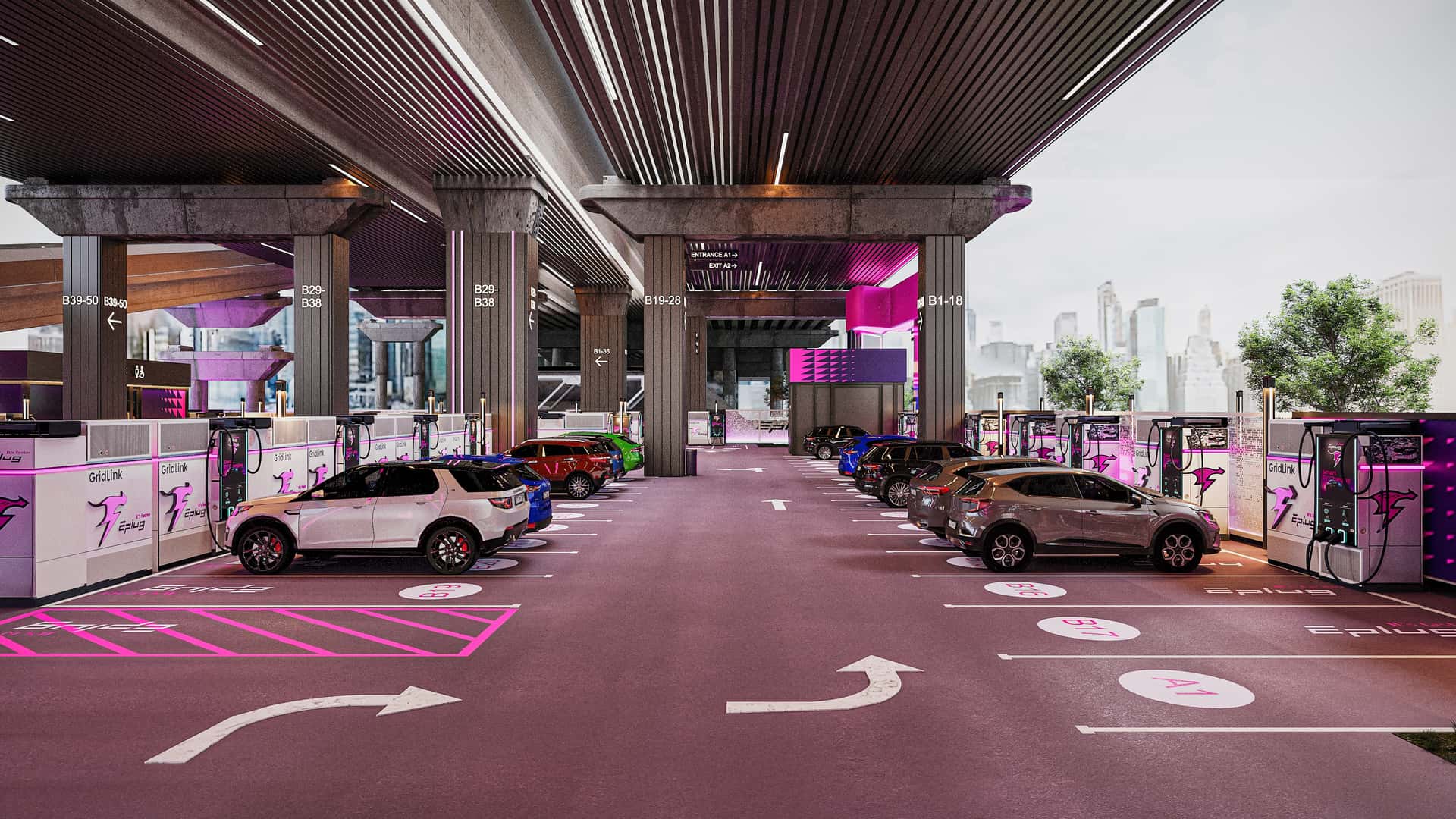
The upcoming electric-vehicle charging hub in New York City is set to be a game-changer for the American auto industry. With 44 stalls powered by lithium-ion batteries, the station promises to revolutionize the way EV drivers charge their vehicles.
Charging company XCharge and electrification contractor Energy Plus have teamed up to bring this innovative charging hub to Brooklyn next quarter. The station, located in the Williamsburg neighborhood, will feature 44 chargers serving 88 parking spaces. This significant infrastructure development is a testament to the rapid expansion of EV charging technology and its crucial role in supporting the shift towards battery-powered vehicles.
One of the key benefits of the new charging hub is its potential to reduce the cost of charging for EV drivers during peak hours. By drawing electricity from the grid during off-peak hours and storing it in lithium-ion batteries, the station can offer more affordable charging rates to drivers. This innovative approach not only benefits consumers but also helps to alleviate strain on the grid during times of high demand.
Each charger at the hub will be capable of dispensing up to 300 kilowatts of power, surpassing the capabilities of many existing charging stations. This high power output allows for faster charging times and greater convenience for EV drivers. Additionally, the use of on-site battery storage sets this charging hub apart from traditional fast chargers. By storing electricity in large containers filled with lithium-ion cells, the station can operate independently of the grid and provide a reliable power source for EVs.
The XCharge charging hub in New York City represents a new era in EV infrastructure, where battery-powered charging stations are becoming the norm. By integrating energy storage systems into the charging process, these hubs are not only more efficient but also more sustainable. As the demand for electric vehicles continues to grow, innovative solutions like the XCharge hub will play a crucial role in supporting the transition to a greener transportation system. XCharge, a leading provider of electric vehicle (EV) charging solutions, has unveiled its latest innovation in the form of the GridLink EV charging hub in Brooklyn, New York. This cutting-edge facility is equipped with 44 charging stalls, each featuring two fast-charging cables, an information display, and a stationary energy storage battery.
According to Aatish Patel, co-founder and president of XCharge North America, the GridLink hub offers several advantages over traditional charging stations. By utilizing stored energy from off-peak times, the facility can reduce strain on the grid during peak demand hours. With a total capacity of 9.46 megawatt-hours, the chargers are housed in containers that each contain 215 kilowatt-hours of battery storage, allowing them to charge up to 126 EVs from empty to full.
One notable benefit of the GridLink hub is its potential to lower charging costs for EV owners. In urban areas, public fast-charging prices can be steep, especially during rush hour. However, by leveraging stored energy and charging at off-peak times, the facility may be able to offer more competitive rates to drivers. This could be particularly appealing to drivers of larger EVs with high-capacity batteries, who often face hefty charging bills at conventional stations.
XCharge has not disclosed specific pricing details for charging at the Brooklyn hub. However, given the high costs of fast charging in cities like New York, where rates can exceed $0.65 per kilowatt-hour, any potential savings could make a significant difference for EV owners. With the growing number of rideshare drivers in the city transitioning to electric vehicles, the GridLink hub could become a popular destination for cost-conscious drivers looking to recharge their vehicles.
In addition to its cost-saving benefits, the GridLink hub also supports bidirectional charging, allowing it to send stored power back to the grid during emergencies. This capability can help alleviate strain on the grid during peak demand periods and contribute to overall grid stability.
Overall, XCharge’s GridLink EV charging hub represents a major step forward in the evolution of electric vehicle charging infrastructure. By combining fast-charging capabilities with energy storage and bidirectional charging, the facility offers a glimpse into the future of sustainable and efficient EV charging solutions. As electric vehicles continue to gain popularity, innovations like the GridLink hub will play a crucial role in supporting the widespread adoption of EV technology. have been growing steadily over the past few years, the benefits of lithium-ion EV batteries extend far beyond just powering electric cars. These batteries are now being utilized as stationary energy storage systems to support the grid and help manage increasing electricity demand.
One of the key applications of lithium-ion EV batteries in the U.S. is in supporting utilities in managing the rise in electricity demand from energy-intensive AI data centers. These data centers require a significant amount of power to operate efficiently, and as their numbers continue to grow, the strain on the grid also increases. By using lithium-ion EV batteries as stationary energy storage systems, utilities can store excess energy during off-peak hours and release it during times of peak demand, helping to stabilize the grid and prevent blackouts.
In addition to supporting utilities with managing electricity demand, lithium-ion EV batteries can also help increase the reliability and resiliency of the grid. By deploying these batteries strategically across the U.S., utilities can create a more robust energy infrastructure that is better equipped to handle disruptions and outages. This is especially important in areas prone to extreme weather events, where power outages can have serious consequences for communities.
Furthermore, the use of lithium-ion EV batteries as stationary energy storage systems can also help reduce greenhouse gas emissions and support the transition to renewable energy sources. By storing excess energy from renewable sources like solar and wind power, these batteries can help smooth out fluctuations in supply and demand, making it easier to integrate renewables into the grid.
Overall, the deployment of lithium-ion EV batteries as stationary energy storage systems across the U.S. represents a significant step towards a more sustainable and resilient energy future. As the demand for electricity continues to grow, these batteries will play a crucial role in supporting the grid and ensuring reliable power supply for all.