
Nvidia has recently expanded its robotaxi program by adding two top Chinese automakers, BYD and Geely, to its list of partners. This move is part of Nvidia’s strategy to establish a strong presence in the autonomous vehicle market globally.
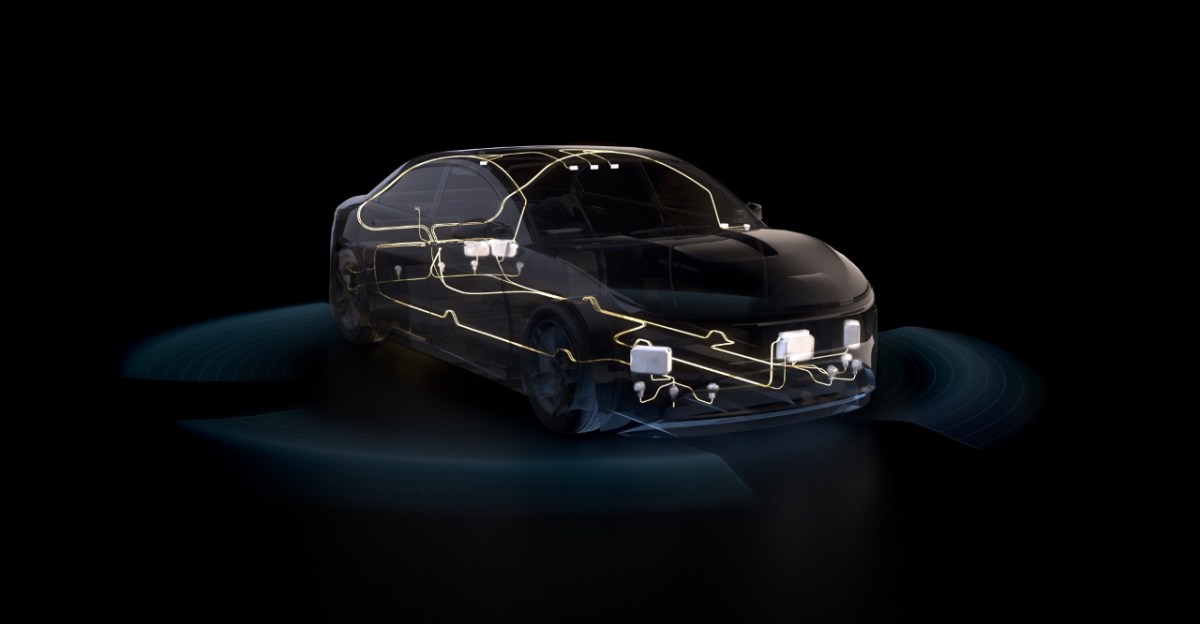
During the GTC conference, Nvidia announced that BYD and Geely, along with Isuzu and Nissan, will utilize the chipmaker’s Drive Hyperion platform. This platform combines essential components such as chips, computers, sensors, and software required for the development of Level 4 autonomous vehicles.
BYD, which already uses Nvidia chips in its conventional vehicles, will now leverage the Hyperion platform to create next-generation Level 4 vehicles. On the other hand, Geely is incorporating Nvidia’s Thor chips in its new Zeekr vehicles. Geely also supplies Zeekr vehicles to Waymo for its robotaxi service in the US, where Nvidia’s products are also being utilized.
The collaboration between Nvidia and these Chinese automakers comes at a time of heightened trade tensions between the US and China. Nvidia’s chips, particularly those used in data centers for AI training, have been at the center of negotiations between the two countries. Despite these challenges, Nvidia’s partnership with BYD and Geely could significantly accelerate the development of autonomous vehicles in China, potentially positioning the country to surpass the US in this sector.
Nvidia is not only working with Chinese companies but also expanding its reach to other automakers worldwide. Nissan will adopt the Hyperion platform for its autonomous vehicles, while Lyft will utilize Nvidia’s technology to enhance its machine learning capabilities for ridesharing and autonomous vehicle scaling.
Moreover, Nvidia’s collaboration with Uber aims to launch a global network of robotaxis, with a target of deploying 100,000 vehicles by 2027. This partnership covers 28 markets across four continents, with plans to introduce robotaxis in Los Angeles and San Francisco by early 2027. Uber is partnering with various automakers like Lucid, Volkswagen, and Stellantis, all of whom are leveraging Nvidia’s products for autonomous vehicle development.
Nvidia’s advancements in autonomous driving technology have been facilitated by its virtual testing capabilities and open-source AI models like Alpamayo. These tools, along with synthetic data generation and test capabilities, have enabled Nvidia to make significant progress in the self-driving sector.
To address safety concerns associated with autonomous vehicles, Nvidia has introduced Halos OS, a safety system that acts as a “safety guardrail” for autonomous driving systems. This system intervenes when AI models are about to make unsafe decisions, ensuring the overall safety and reliability of autonomous vehicles.
Nvidia’s continued efforts to establish itself as a leader in self-driving technology underscore its commitment to innovation and collaboration with global automakers. By leveraging its expertise in AI and autonomous systems, Nvidia is poised to play a key role in shaping the future of autonomous vehicles worldwide.