
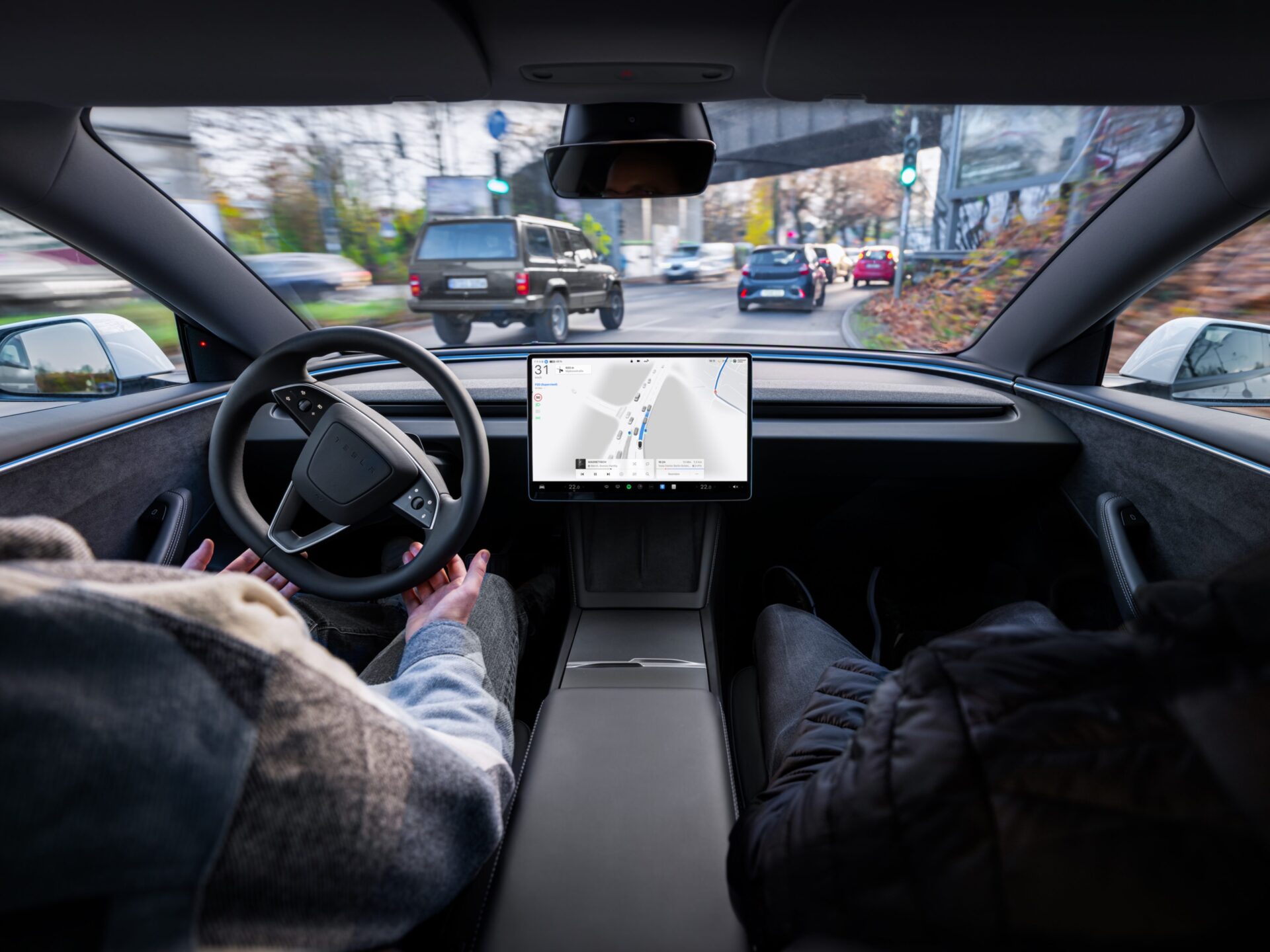
Tesla’s Full Self-Driving (FSD) technology is receiving high praise from Nvidia’s Director of AI and Distinguished Research Scientist, Jim Fan. Fan recently shared his impressions of Tesla’s latest FSD build, calling it the first AI system to pass what he refers to as the “physical Turing test.”
Fan, who leads embodied AI research at Nvidia, was impressed by the capabilities of Tesla’s FSD 14. He described the experience of using the technology as akin to being driven home by a human, even though it was actually a neural net at the wheel. Fan went on to call FSD a “god-like technology,” predicting that it will become as ubiquitous as smartphones in the future.
The physical Turing test, according to Fan, evaluates whether an AI can perform real-world physical tasks as naturally as a human. In Tesla’s case, this means navigating complex urban environments, reacting to unpredictable situations, and driving in a way that feels human-like.
Tesla has been making significant strides in autonomous driving, with reports of Model 3s driving up to 5,000 miles on FSD without any human intervention. The company has also expanded FSD into seven countries and continues to iterate on the software, with the latest versions even allowing texting behind the wheel under certain conditions.
Nvidia’s endorsement of Tesla’s FSD technology carries weight due to the company’s role in powering much of the world’s AI infrastructure. As a leader in AI technology, Nvidia’s support of Tesla’s approach to real-world AI is significant.
Elon Musk, Tesla’s CEO, echoed Fan’s sentiments, noting that FSD 14 shows signs of “sentience maturing.” Musk believes that Tesla’s FSD system is currently the best real-world AI available.
The conversation around autonomous driving has shifted, with the focus now on how soon it will become the norm rather than if it feels human-like. Tesla’s advancements in FSD technology are paving the way for a future where self-driving cars are commonplace on our roads.