
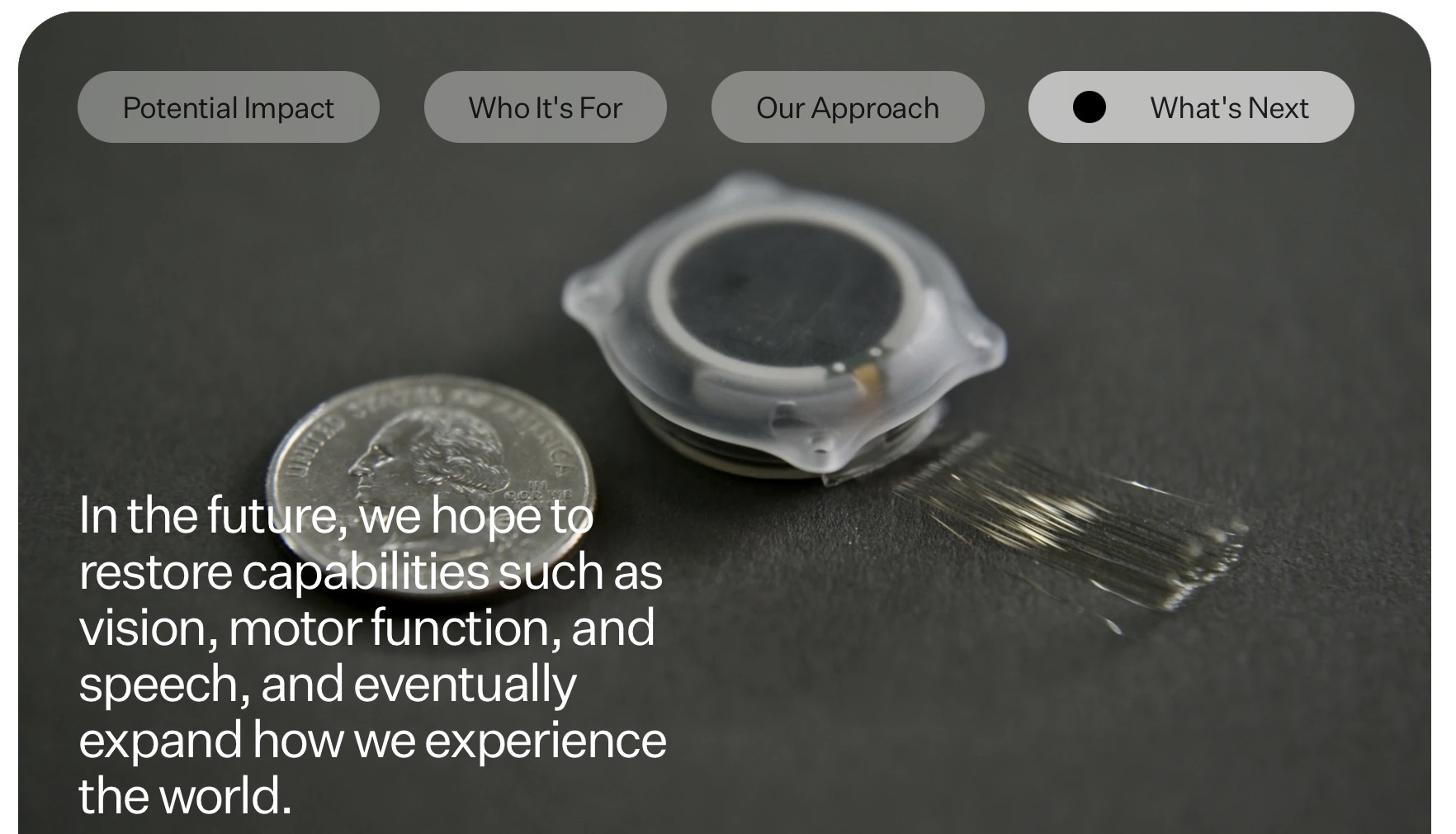
Neuralink, the brainchild of Elon Musk, has made significant strides in its mission to merge the human brain with technology. The company recently announced that 21 individuals, known as “Neuralnauts,” are now enrolled in clinical trials worldwide. This expansion marks a shift from early experiments to creating solutions for individuals with paralysis and speech impairments.
The flagship product of Neuralink, Telepathy, enables individuals with quadriplegia to control various devices such as computers, smartphones, and robotic limbs using their thoughts alone. Unlike traditional methods like voice commands or eye-tracking, Telepathy records neural activity directly from the brain’s motor cortex and translates these signals into digital commands.
A major breakthrough highlighted by Neuralink is the speed of communication achieved by the participants. While able-bodied individuals typically use a mouse at a rate of 8 to 10 bits per second (BPS), several participants have surpassed this range. Nick, for example, achieved over 10 BPS within his first week, utilizing his “telepathic” cursor to feed himself and gesture with a robotic arm.
The technology is also being harnessed to restore speech to individuals with ALS. By mapping “imagined” finger movements to a digital keyboard, participants have achieved typing speeds of 40 words per minute. Neuralink aims to increase this speed to 140 words per minute through its VOICE clinical trial.
The impact of Neuralink goes beyond technical achievements for the participants. Noland, the first human recipient, has utilized his newfound independence to pursue a degree in neuroscience. Sebastian, a medical student, now relies on Neuralink for up to 17 hours a day to study for exams and annotate research papers. Similarly, Audrey, the first female participant, has leveraged the device to create intricate digital art with the goal of opening a physical gallery to showcase her work.
Looking ahead to 2026, Elon Musk revealed plans for a next-generation “cybernetic augment” with three times the capability of the current technology. Additionally, Neuralink is gearing up for human trials of Blindsight, a device designed to restore vision by directly stimulating the visual cortex. While the initial vision may be low resolution, the ultimate aim is to surpass natural human vision.
To support this growth, Neuralink is transitioning towards high-volume production and a more automated surgical process in 2026. This includes a new technique that inserts implant threads directly through the protective dura mater of the brain, making the surgery less invasive for future participants.
In conclusion, Neuralink’s advancements in merging the human brain with technology are paving the way for groundbreaking innovations that have the potential to transform the lives of individuals with neurological conditions. The future looks promising as the company continues to push the boundaries of what is possible in the realm of brain-computer interfaces.