
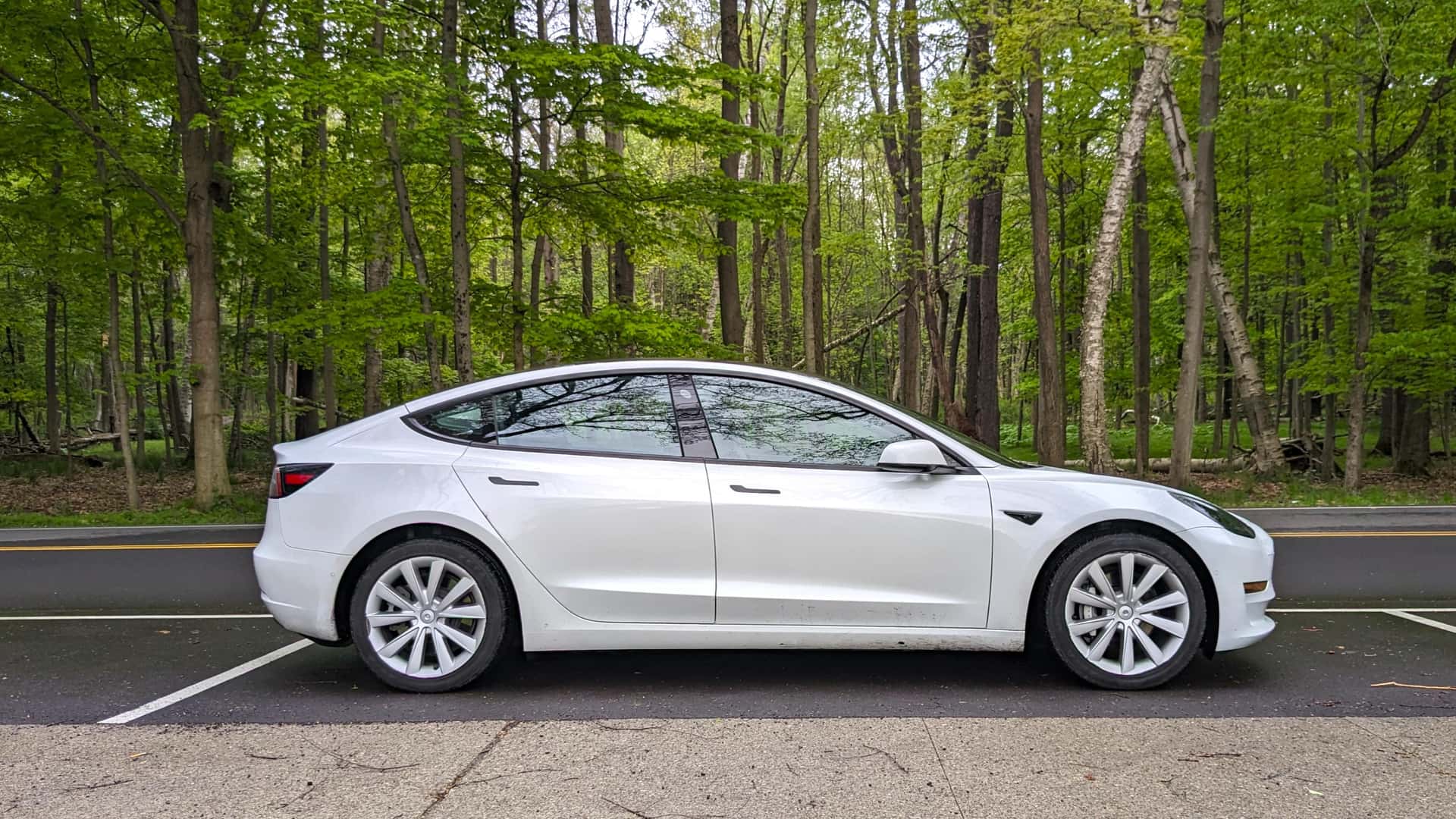
The used Tesla Model 3 continues to be a popular choice for buyers looking for an affordable and reliable electric vehicle. With its abundance on the secondhand market, solid range and charging specs, class-leading software, and a price tag under $20,000, it’s no wonder why the Model 3 is considered one of the best electric cars you can buy.
One of the primary concerns for buyers of used electric vehicles is the health and performance of the battery. However, data from battery-health startup Voltest shows that a significant number of Model 3s have well over 100,000 miles on them and still retain most of their battery capacity. Around 70% of the vehicles tested by Voltest have at least 80% of their battery health remaining, indicating that Tesla’s batteries are durable and long-lasting.
When it comes to battery chemistry, lithium iron phosphate (LFP) batteries have shown to be more resilient and long-lasting compared to high-nickel chemistries like nickel-cobalt-aluminum (NCA) packs. Data from Voltest on 20 Model 3s with over 100,000 miles on them revealed that LFP battery packs maintained a state of health ranging from 87% to 93%, while NCA packs scored between 71% to 83%. This suggests that LFP batteries degrade more slowly over time, even after many miles of use.
While the sample size of the study was small, the results provide a real-world look at how different battery chemistries perform in Tesla Model 3s. The data suggests that LFP batteries perform as advertised, lasting longer and maintaining better range over time compared to high-nickel chemistries. The differences in battery health were significant enough to show that age alone could not account for the disparities in performance.
Overall, if you’re in the market for a used Tesla Model 3, opting for a model with an LFP battery pack could ensure that your vehicle’s battery stays healthy and performs well for years to come. With advancements in battery technology and a better understanding of how different chemistries impact battery life, buyers can make more informed decisions when choosing a used electric vehicle. The debate over which Tesla battery chemistry is better, NCA or LFP, has been ongoing for quite some time. Both have their own advantages and disadvantages, but recent research has shed some light on the differences in longevity between the two.
According to a recent study by Voltest, a company that specializes in analyzing battery health, NCA cars seem to degrade faster than LFP cars. There are a variety of factors that could have led to that, but one compelling theory is that NCA cars have slightly smaller battery packs than LFP cars. This means that NCA cars are likely charged more often to travel the same distance, leading to more charge/discharge cycles. Additionally, Tesla encourages owners of LFP-equipped cars to charge to 100%, while owners of NCA cars should only charge to 80%. This difference in charging behavior could also contribute to the faster degradation of NCA batteries.
But how can you tell if a Tesla uses LFP cells? It’s not always easy to find that information in used car listings, and Tesla doesn’t currently sell cars in the U.S. with that battery chemistry. However, Tesla did announce that it would switch over to LFP packs for its base-model Standard Range RWD Model 3s in late 2021, before discontinuing the model in October 2024.
According to Recurrent, you can find out if a Tesla uses LFP cells by checking the vehicle’s settings. In the Controls menu, go to Software, then Additional Vehicle Information. Additionally, in the charging menu, you’ll see a recommendation to charge to 100% if it’s an LFP car, while vehicles with other chemistries will suggest not charging past 80%.
It’s important to note that while LFP may be better in terms of battery longevity, it may not be your only priority when choosing a Tesla. Non-LFP Tesla models offer all-wheel drive and longer ranges, which could outperform a smaller LFP pack over time, even when considering differences in degradation.
If you’re interested in purchasing a brand-new LFP EV in the U.S., your options are currently limited. Despite the promising attributes of LFP technology, there is barely a supply chain for it in America at this point. Some of the only LFP-equipped cars available are Rivians and the Ford Mustang Mach-E.
In conclusion, the debate between NCA and LFP battery chemistries continues, with recent research suggesting that LFP may offer better longevity. However, other factors such as charging behavior and overall range should also be considered when choosing a Tesla model.