
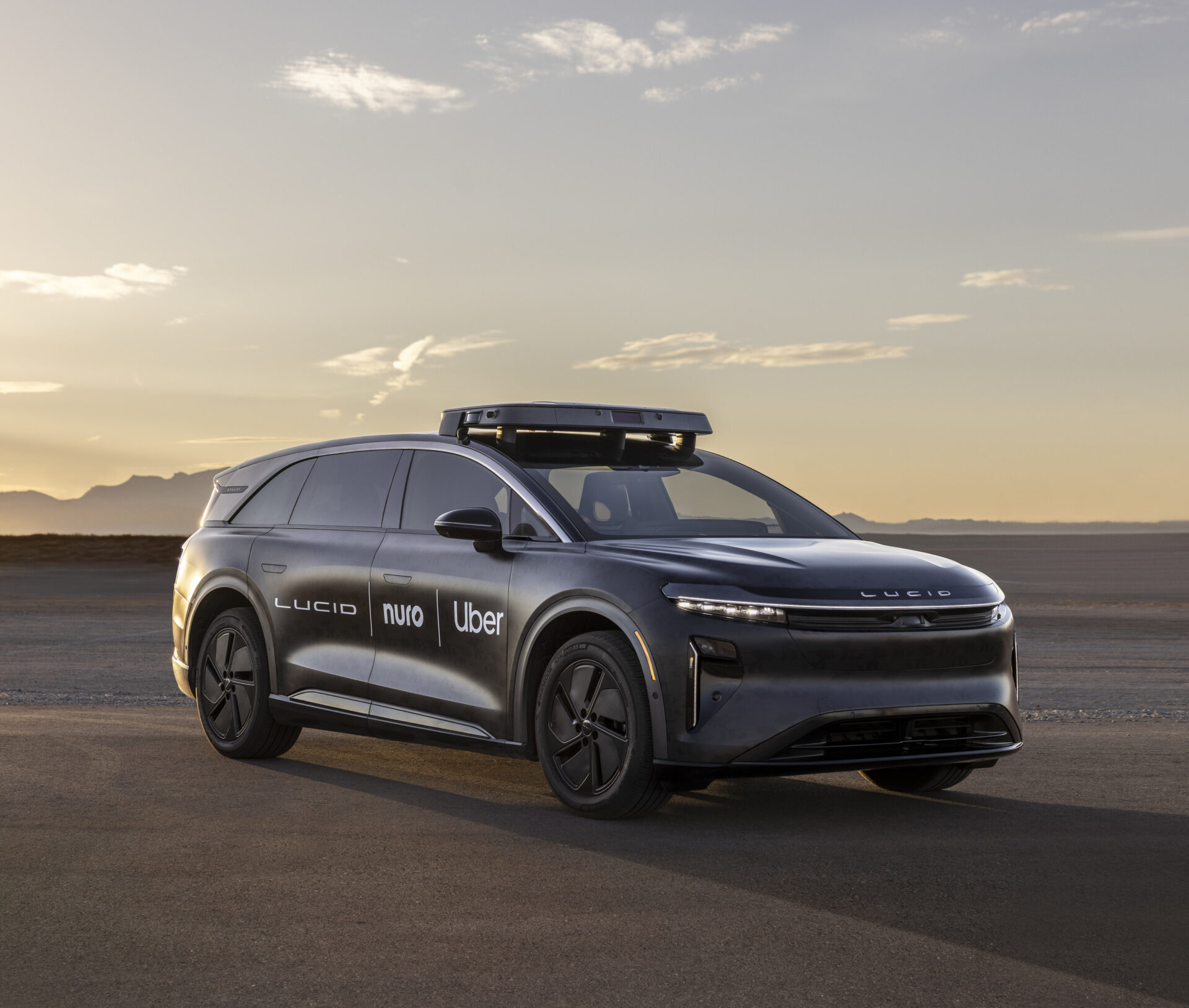
Lucid Motors has recently announced the delivery of its first engineering vehicle for an upcoming Uber-exclusive robotaxi network. This vehicle has been handed over to Nuro, an autonomous driving technology company, for integration with its Nuro Driver system. This move marks a significant step towards the development of a futuristic robotaxi network.
The delivery of this engineering vehicle follows Lucid’s partnership with Uber and Nuro to establish a global robotaxi network. As part of this collaboration, Uber is expected to deploy over 20,000 autonomous Lucid vehicles equipped with Nuro’s self-driving technology across various international markets within the next six years.
The initial phase of this program is set to kick off in a major U.S. city in 2026. Lucid’s Gravity SUVs will serve as the designated robotaxis, featuring the Nuro Driver, a Level 4 autonomous driving system. These vehicles will be available for ride-hailing exclusively through the Uber platform, either operated directly by Uber or through its fleet partners.
For Lucid Motors, this venture represents not only an entry into the robotaxi sector but also a potential shift in its long-term business model. The Uber-exclusive fleet could position Lucid as a prominent supplier of purpose-built autonomous electric vehicles on a large scale.
In addition to its foray into the robotaxi realm, Lucid is also making strides on the consumer front. The company recently confirmed its plans to introduce three new midsize electric vehicles, starting with an electric SUV slated for release in late 2026. These new models will complement Lucid’s existing premium lineup while expanding its market presence.
The delivery of the first robotaxi engineering vehicle signifies that Lucid’s partnership with Uber and Nuro is progressing from the planning phase to execution. The upcoming years will be crucial as Lucid navigates the development of its consumer EV lineup alongside its ambitions to power one of the world’s largest autonomous ride-hailing services. This innovative collaboration holds promise for a future where autonomous vehicles play a significant role in urban transportation.