
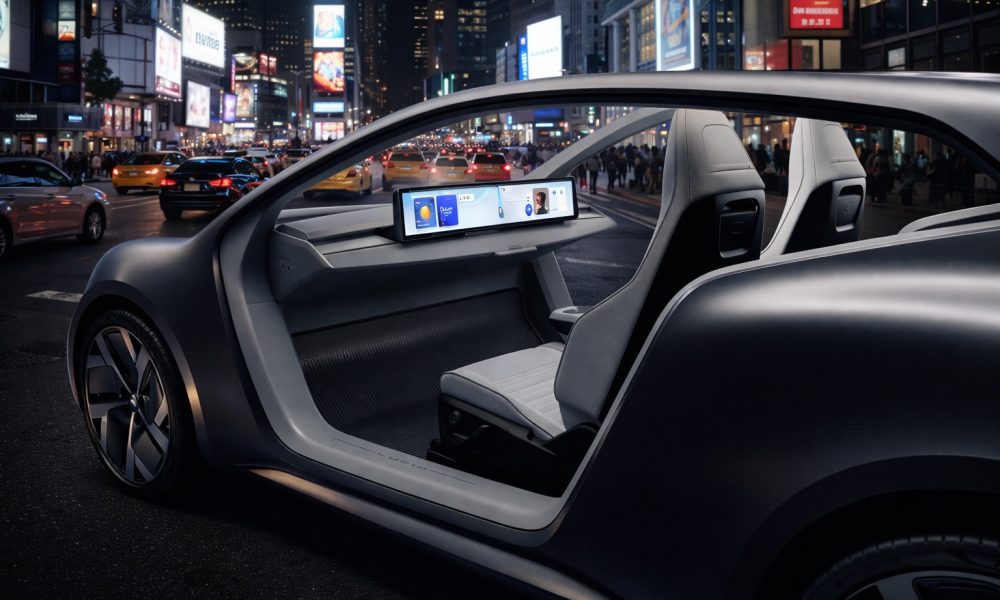
Lucid Group has officially unveiled its Lunar Concept autonomous robotaxi platform at its New York investor day event. This new concept is a significant step forward for the company and puts them in direct competition with Tesla, who is also making waves in the autonomous ride-hailing market with their Cybercab.
The comparison between Lucid’s Lunar Concept and Tesla’s Cybercab is inevitable. Elon Musk first introduced the idea of a Tesla robotaxi back in 2019, and the concept took a major leap forward in 2024 with the unveiling of the Cybercab. Tesla has been testing the Cybercab on public roads and at Gigafactory Texas, signaling their progress towards mass production. With a goal of producing one vehicle every 10 seconds, Tesla is ramping up their efforts to dominate the autonomous ride-hailing market.
In contrast to Tesla’s strategy of creating their own ride-hailing network, Lucid has opted to partner with Uber. They are currently in advanced discussions to deploy vehicles based on the Midsize EV platform at a large scale. This platform also underpins consumer SUVs priced below $50,000 and features Lucid’s redesigned Atlas electric drive unit, which is designed to be more efficient and cost-effective to manufacture.
At the investor day event, Lucid outlined a recurring software revenue model for the Lunar Concept, including an in-vehicle AI assistant and monthly autonomous driving subscriptions priced between $69 and $199. This mirrors Tesla’s Full Self-Driving subscription model and shows that Lucid is ready to compete in the software revenue space.
While Tesla’s Cybercab aims for a price point below $30k and operating costs as low as 20 cents per mile, regulatory challenges still lie ahead. This creates an opportunity for competitors like Lucid to make their mark in the autonomous ride-hailing market. The Lunar Concept may not have a launch date yet, but it arrives at a crucial moment in the race for autonomous vehicles, where every serious EV player must step up to compete with Tesla.