
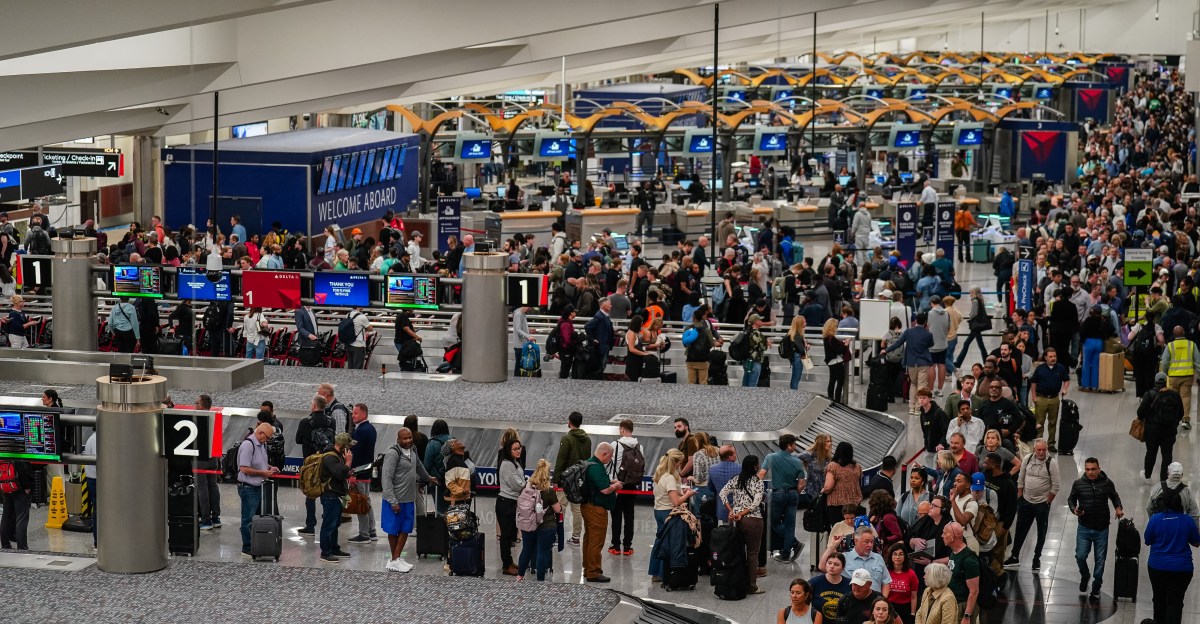
The chaos at airports across the country, including Houston’s George Bush Intercontinental Airport, has reached unprecedented levels due to the budget impasse that has led to the lapse in funding for the TSA. This has resulted in long lines, delayed flights, and frustrated travelers.
KC Guidry, like many other travelers, experienced the impact of this budget stalemate firsthand. She arrived at the airport hours before her flight, only to find security lines stretching out of the terminal and into the underground parking garage. Despite her efforts to adjust her schedule, she still had to wait for hours to get through security.
The situation has been exacerbated by the high number of Transportation Security Officers (TSOs) calling out sick. While TSOs are required by law to show up for work, many have been independently calling out sick in protest of not receiving a paycheck since late February. This has led to call-out rates exceeding 33% at some of the country’s largest airports.
The Trump administration’s response to the chaos has been met with criticism, as the president has tied any deal to restore TSA funding to the passage of the Safeguard American Voter Eligibility (SAVE) Act, which Democrats are prepared to filibuster. Instead of resolving the budget stalemate, Trump ordered ICE agents to assist TSA agents at airports, a move that has been met with confusion and mixed reactions.
The Heritage Foundation’s Project 2025, which calls for the complete dismantling of the TSA, seems to align with the administration’s actions. Former DHS Secretary Kristi Noem took steps to deunionize TSA workers and increase security measures during her tenure, but her successor, Markwayne Mullin, may have a different approach.
Mullin, who was recently confirmed as the new DHS Secretary, has expressed a desire to improve funding for the department but has ties to the Heritage Foundation and has voted in line with their positions in the past. This has led supporters of TSA privatization to see an opportunity to push for the privatization of airport security.
With TSA workers quitting at a rate of nearly 200 per week and the chaos at airports continuing to escalate, the future of airport security and the TSA remains uncertain. The Trump administration’s handling of the situation and Mullin’s leadership will play a crucial role in determining the outcome of this ongoing crisis. Travelers who have experienced the chaos of airport meltdowns during peak travel periods such as Thanksgiving 2025 and Spring Break 2026 may be open to radical changes if it means faster and more efficient security checkpoints. The idea of privatizing airport security is one option that has been gaining attention.
Privatization could take different forms, such as the model seen at Kansas City International or Orlando Sanford airports. These airports have contracted a third-party security company called VMD Corp to staff the checkpoints, while still following TSA procedures. This arrangement has resulted in significantly shorter wait times, with VMD Corp boasting lines of less than 3 minutes at their airports.
However, privatization is not without its challenges. A cautionary tale can be found at Calgary International in Canada, where a company named Paladin International took over screening duties in 2024. Since then, security screeners have reported consistent understaffing, poor working conditions, and even being denied basic necessities like bathroom breaks and access to water. Wait times at Calgary routinely exceed 30 minutes, far higher than the national average for Canada.
While privatization is not a perfect solution, the current status quo is unsustainable. As long as the TSA remains a political pawn, travelers should be prepared for periodic disruptions and long wait times at security checkpoints. If President Trump continues to lament the state of airports in the US, he should look no further than the administration for accountability.
In conclusion, the idea of privatizing airport security may offer a potential solution to the ongoing issues with TSA checkpoints. However, careful consideration and oversight are necessary to ensure that the transition is smooth and that the safety and well-being of both travelers and security personnel are prioritized. The Importance of Mental Health in Today’s Society
Mental health is a topic that is often overlooked in today’s society, but it is crucial for overall well-being and quality of life. In recent years, there has been a growing awareness of the importance of mental health and its impact on individuals, families, and communities.
One of the key reasons why mental health is so important is because it affects every aspect of a person’s life. From their relationships with others to their ability to work and function in society, mental health plays a crucial role in shaping a person’s overall well-being. When mental health is neglected or untreated, it can lead to a range of negative consequences, including depression, anxiety, substance abuse, and even suicide.
In addition to its impact on individuals, mental health also has broader societal implications. Research has shown that mental health issues can have a significant economic impact, costing billions of dollars each year in lost productivity and healthcare expenses. Furthermore, mental health issues can also strain relationships, lead to social isolation, and contribute to a range of social problems, such as crime and homelessness.
Despite the growing awareness of the importance of mental health, there is still a significant stigma attached to mental illness. Many people are reluctant to seek help for mental health issues due to fear of being judged or discriminated against. This stigma can prevent individuals from getting the help they need and can contribute to a cycle of shame and silence surrounding mental health.
It is crucial that we work to break down these barriers and promote open and honest conversations about mental health. By raising awareness, providing education, and offering support to those in need, we can help to reduce the stigma surrounding mental illness and encourage more people to seek help when they need it.
In conclusion, mental health is a vital component of overall well-being and quality of life. By recognizing the importance of mental health and taking steps to promote positive mental health practices, we can create a society that is healthier, happier, and more resilient. It is up to all of us to prioritize mental health and work together to create a world where everyone has access to the care and support they need to thrive. The Evolution of Technology in Education: From Blackboards to Smartboards
Over the past few decades, technology has revolutionized the way we learn and teach in the classroom. From the days of traditional blackboards to the introduction of smartboards, the evolution of technology in education has been nothing short of remarkable.
In the past, teachers relied heavily on blackboards to convey information to their students. They would write notes and diagrams on the blackboard using chalk, and students would copy down the information in their notebooks. While this method was effective in its own right, it was limited in terms of interactivity and engagement.
However, with the advancement of technology, the introduction of smartboards has completely transformed the way teachers deliver lessons. Smartboards are interactive whiteboards that allow teachers to display multimedia content, such as videos, images, and presentations, directly onto the board. This not only makes the learning experience more engaging for students but also helps teachers to present information in a more visually appealing way.
One of the key advantages of smartboards is their interactivity. Teachers can use touch-sensitive pens to write, draw, and interact with the content on the board, making lessons more dynamic and engaging. Students can also interact with the smartboard by touching, dragging, and manipulating objects on the screen, which helps to enhance their learning experience.
Another benefit of smartboards is their ability to access online resources and educational tools. Teachers can use the internet to search for relevant information, videos, and interactive activities to supplement their lessons. This allows for a more personalized and enriched learning experience for students, as they have access to a wealth of resources at their fingertips.
Furthermore, smartboards have the ability to save and store lessons digitally, which can be accessed and revisited by students at any time. This not only helps to reinforce learning but also allows for greater flexibility in terms of teaching methods and approaches.
Overall, the evolution of technology in education, from blackboards to smartboards, has had a profound impact on the way we teach and learn. Smartboards have revolutionized the classroom environment, making lessons more interactive, engaging, and dynamic. As technology continues to advance, it will be interesting to see how it further transforms the education landscape in the years to come.