
Investors have been questioning Rivian’s massive $24 billion cash burn, wondering if such a high expenditure was necessary for the electric vehicle startup. However, CEO RJ Scaringe defended the spending, stating that it was a calculated move in order to establish Rivian as a significant player in the automotive industry.
During a podcast appearance on Buy Hold Rant, Scaringe emphasized the importance of investing significantly in order to build a “very large company.” He acknowledged that Rivian’s cash flow situation may raise concerns among investors, but he remains confident in the long-term strategy of the company.
The discussion around Rivian’s cash burn arose when a chart comparing the company’s free cash flow to other automakers was presented. The chart showed Rivian’s spending trajectory in comparison to Ford’s EV segment, Lucid, Polestar, Fisker, and Faraday, indicating that Rivian had spent more money over a similar timeframe than its competitors.
Scaringe explained that Rivian’s early years were challenging, with unexpected obstacles that impacted the company’s financial situation. Unlike Tesla, which had the advantage of entering the EV market when competition was scarce, Rivian faced fierce competition and market dynamics that further strained its finances.
The COVID-19 pandemic and subsequent supply chain disruptions also played a significant role in Rivian’s financial challenges. Component sourcing during a period of high demand and limited supply put pressure on the company’s costs, forcing Rivian to accept premium prices for necessary components.
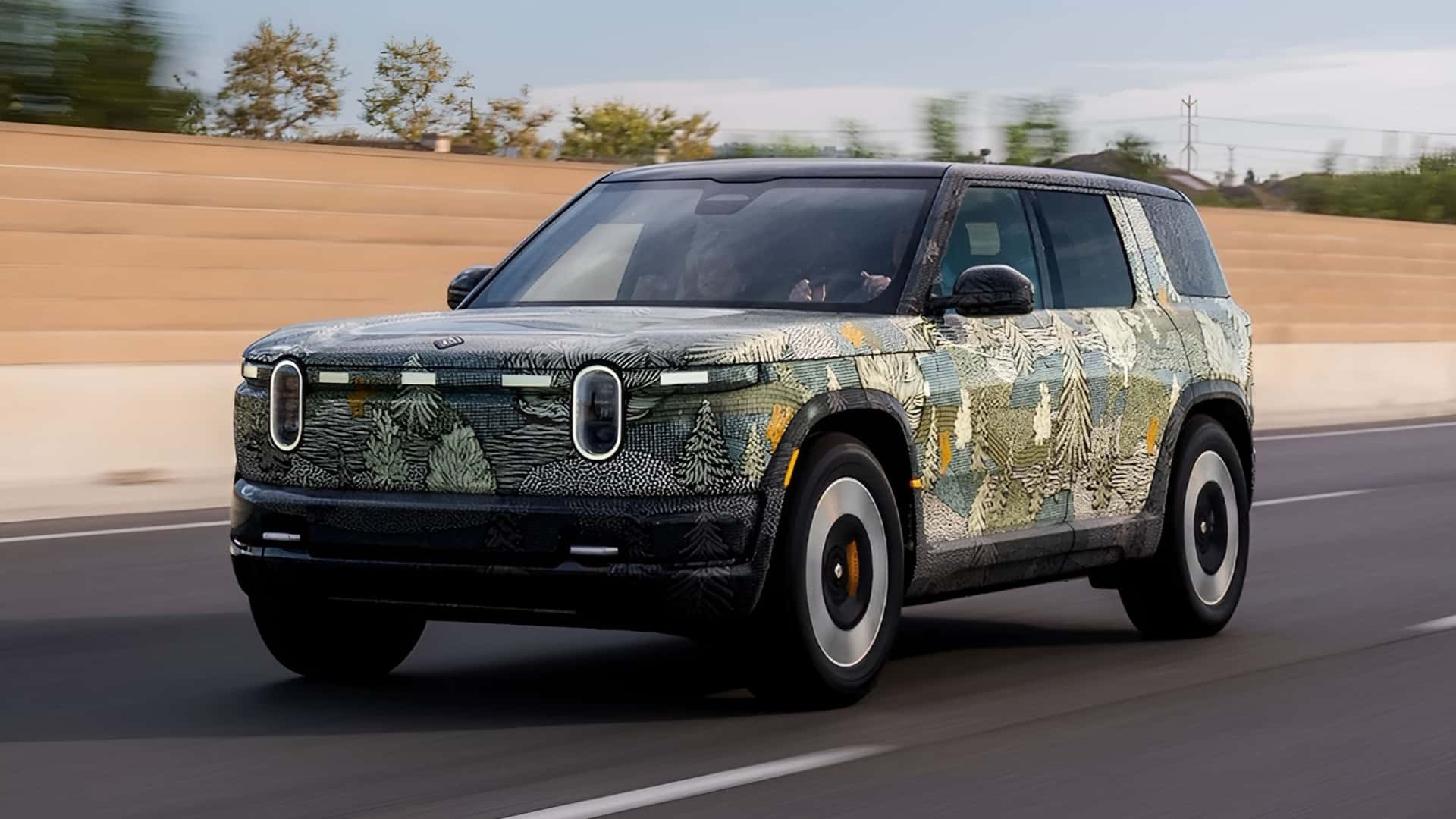
Despite the hurdles faced by Rivian in its early years, the company is now gearing up for the launch of its R2 model, a smaller crossover SUV that could be a game-changer for the brand. With plans to produce up to 155,000 R2s annually, Rivian is hoping to make a significant impact in the electric vehicle market.
The success of the R2 model could be the turning point for Rivian, propelling the company into the spotlight and solidifying its position in the industry. However, the company’s stock has taken a hit, dropping 90% from its IPO highs, reflecting the challenges and uncertainties surrounding Rivian’s ambitious growth strategy. However, CEO RJ Scaringe has recently made a bold statement, claiming that Rivian projects to be able to make this transition without raising any additional outside funding. This announcement comes as a surprise to many in the industry, as the electric vehicle market is highly competitive and capital-intensive.
Rivian, founded in 2009, has been making waves in the electric vehicle market with its innovative designs and technology. The company’s R1T pickup truck and R1S SUV have garnered a lot of attention and praise for their performance and range. With a starting price of around $70,000, these vehicles are not cheap, but Rivian believes they have what it takes to compete with the likes of Tesla and other established automakers.
Scaringe’s confidence in Rivian’s ability to grow without additional funding is based on the company’s strong financial position and its partnerships with major investors like Amazon and Ford. These partnerships have provided Rivian with the resources and support needed to scale up production and expand its product lineup.
In addition to its current lineup of electric vehicles, Rivian also has plans to enter new markets, such as electric delivery vans and autonomous vehicles. These initiatives will require significant investment, but Scaringe is confident that Rivian’s existing resources and strategic partnerships will enable the company to achieve its goals without the need for outside funding.
While some may view Scaringe’s statement as overly optimistic, others see it as a testament to Rivian’s potential and the strength of its business model. Only time will tell if Rivian can truly make the leap from niche player to industry leader, but one thing is certain: the electric vehicle market is rapidly evolving, and Rivian is poised to be at the forefront of this transformation.