
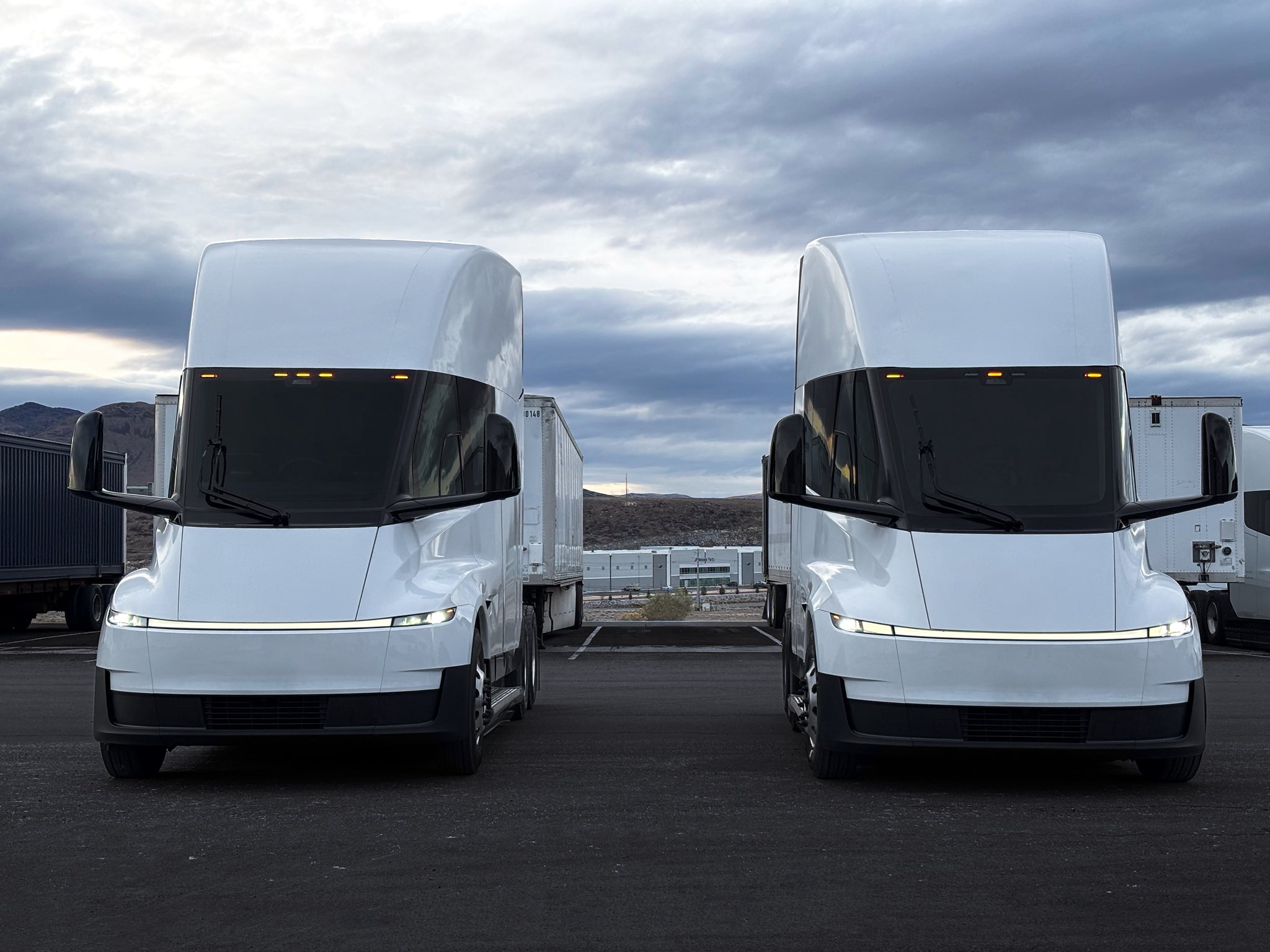
This design choice helps in maintaining stability and handling of the Semi-truck, especially when carrying heavy loads. The structural battery pack not only adds strength to the chassis but also reduces the weight of the vehicle, contributing to improved efficiency and range.
Tesla Semi Performance and Efficiency
During the test drive, Jay Leno was impressed by the acceleration and performance of the Tesla Semi-truck. The instant torque from the electric motors provides quick acceleration, even with a trailer attached. The quiet operation of the Semi was also highlighted, making it a more comfortable and peaceful driving experience compared to traditional diesel trucks.
Tesla claims that the Semi-truck can accelerate from 0 to 60 mph in just 5 seconds without a trailer. With a full load, the acceleration time may vary, but it is still impressive for a vehicle of its size and weight.
The efficiency of the Tesla Semi is another key feature. With its aerodynamic design and advanced battery technology, the Semi can achieve a long range on a single charge. Tesla promises a range of up to 500 miles for the Semi-truck, making it a viable option for long-haul transport routes.
Conclusion
The latest episode of Jay Leno’s Garage featuring the Tesla Semi-truck provided valuable insights into the design, engineering, and performance of this groundbreaking vehicle. With its innovative features, advanced technology, and impressive performance, the Tesla Semi aims to revolutionize the logistics industry and accelerate the transition to sustainable transportation.
As Jay Leno continues to showcase cutting-edge automotive technology on his show, his friendship with Elon Musk and his support for Tesla’s mission to accelerate the world’s transition to sustainable energy remain strong. The Tesla Semi represents a significant step towards a cleaner, greener future for the transportation industry, and Jay Leno’s enthusiasm for the vehicle reflects the excitement and potential of electric vehicles in the modern era.
With the Tesla Semi entering production and set to hit the roads soon, it will be interesting to see how this revolutionary truck transforms the logistics and transportation sector. As technology continues to evolve and improve, electric vehicles like the Tesla Semi are paving the way for a more sustainable and efficient future.
Stay tuned for more updates on the Tesla Semi and other innovative electric vehicles as they continue to shape the future of transportation.
A low center of gravity is essential for ensuring better handling of a vehicle and significantly reducing the risk of a rollover. This feature is especially crucial for large commercial trucks like the Tesla Semi, which are designed to carry heavy loads over long distances. According to Dan Priestly, a Tesla engineer, the low center of gravity of the Tesla Semi is integrated densely with the overall chassis to maximize structural performance.
One of the key concerns for truckers and logistics companies is the longevity of the Tesla Semi’s battery. The battery is designed to last for the lifetime of the vehicle, with a durability of up to a million miles. Despite some degradation over time, the battery retains most of its capacity in the long run. Additionally, the battery is engineered to withstand frequent charging and discharging, making it suitable for the demands of long-haul transportation.
The Tesla Semi can charge at a peak rate of 1.2 megawatts, allowing it to regain around 60% state-of-charge in just 30 minutes. This fast charging capability is crucial for minimizing downtime and ensuring efficient operations for logistics companies.
To manage the thermal performance of the large battery pack, the Tesla Semi is equipped with a sealed liquid coolant system that runs through cooling channels in the battery pack. This system has a lifespan of around 1 million miles, and Tesla Semi owners will rarely need to replace the coolant. The integrated cooling system helps maintain the battery pack at an optimal temperature, ensuring efficient performance in all conditions.
In cold weather, the Tesla Semi utilizes a heat pump to keep the battery warm and maintain optimal performance. The battery pack’s cubical shape helps conserve heat overnight, ensuring that the vehicle is ready for operation in the morning. The heat pump can transfer heat from various components to the battery pack, ensuring consistent performance even in extreme cold weather conditions.
The Tesla Semi’s powertrain is designed for energy efficiency, with a unique two-axle system that optimizes power distribution. The front axle, known as the ‘torque axle,’ handles acceleration and power maneuvers, while the rear axle provides power at highway speeds. This single-speed system eliminates the need for a two-speed transmission, further enhancing efficiency.
Overall, the Tesla Semi’s innovative design and engineering features make it a reliable and efficient option for long-haul transportation. With a focus on battery longevity, charging speed, thermal management, and powertrain efficiency, the Tesla Semi is well-equipped to meet the demands of the modern logistics industry. The world of technology is constantly evolving, with new innovations and advancements being made every day. From the latest smartphones to cutting-edge artificial intelligence, it seems like there is always something new and exciting on the horizon. One area of technology that has seen significant growth in recent years is the field of virtual reality (VR).
Virtual reality is a technology that allows users to immerse themselves in a digital environment, experiencing sights and sounds as if they were actually there. This technology has been around for decades, but recent advancements in hardware and software have made VR more accessible and realistic than ever before.
One of the most popular applications of virtual reality is in the world of gaming. With VR headsets like the Oculus Rift and HTC Vive, gamers can transport themselves into a virtual world, interacting with characters and environments in ways that were previously unimaginable. This immersive experience has revolutionized the gaming industry, with many developers now creating games specifically for VR platforms.
But virtual reality is not limited to just gaming. It has also been used in a variety of other industries, from healthcare to education to marketing. In the healthcare field, VR has been used to train medical students and simulate surgical procedures, allowing them to practice in a safe and controlled environment. In education, VR has been used to create immersive learning experiences, allowing students to explore historical sites or conduct virtual science experiments.
In the world of marketing, VR has been used to create interactive and engaging experiences for consumers. Companies can create virtual showrooms or product demos, allowing customers to experience their products in a whole new way. This has proven to be an effective way to drive sales and build brand loyalty.
As the technology continues to evolve, the possibilities for virtual reality seem endless. From training simulations to virtual travel experiences, VR has the potential to revolutionize the way we interact with the world around us. With more and more companies investing in VR technology, it is clear that virtual reality is here to stay.
In conclusion, virtual reality is a technology that is changing the way we experience the world. With its immersive and interactive nature, VR has the potential to revolutionize a wide range of industries, from gaming to healthcare to marketing. As the technology continues to advance, we can only imagine what exciting new applications of virtual reality will emerge in the future.