
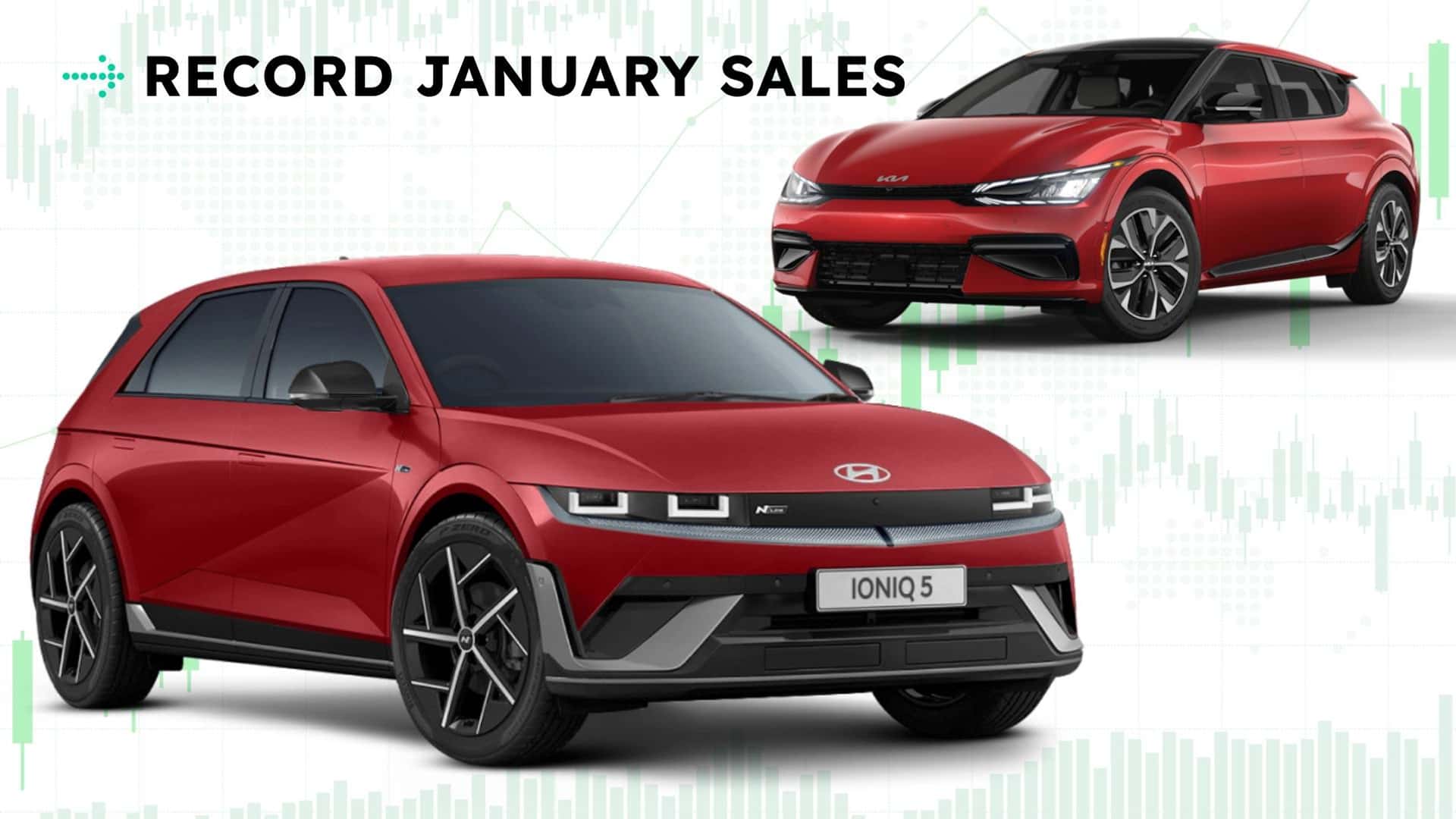
The Hyundai Motor Group had an outstanding January, with record-breaking sales for their electric vehicles and hybrids. The Ioniq 5 and Ioniq 6, along with the hybrid versions of the Tucson and Santa Fe, saw a surge in sales, making it the best January ever for these models. While Kia EV9 sales experienced a slight decline, the EV6 reached new heights in terms of sales.
One of the key factors contributing to the success of Hyundai and Kia’s electrified models is their relative immunity from Trump’s tariffs. This is because most of these vehicles are manufactured in the U.S. or South Korea, with only a small percentage of components sourced from China.
In January, Hyundai’s total sales saw a 15% increase, with sales of electrified vehicles jumping by 41%. The Ioniq 5 remained the top-selling EV for the brand, with a 54% increase in sales compared to the same period last year. The Ioniq 6 also saw a modest increase in sales, up by 15% to 871 units.
The standout performer in terms of growth was the hybrid models, with the Santa Fe Hybrid sales increasing by a remarkable 160% and the Tucson Hybrid witnessing an 89% growth. Kia, on the other hand, sold more cars than Hyundai in January, with a 12% increase in total sales. The EV6 saw a 27% increase in sales, while the three-row EV9 experienced a slight dip of about 12.5% in sales.
Gas-powered SUVs continued to be the best-sellers for both brands, but hybrids are increasingly making up a larger share of Hyundai and Kia’s total sales. Hyundai sold over 15,000 units of the Tucson, including hybrid and plug-in hybrid versions, while Kia sold over 11,000 units of the Sportage, which also includes hybrid versions.
The success of Hyundai and Kia in January can be attributed to their competitive lease and financing options on EVs. For example, the 2025 Ioniq 5 can be leased for as low as $199 per month for 24 months with $4,000 due at signing. Additionally, Hyundai EVs can now be purchased on Amazon, making the buying process as easy as shopping for any other household item online.
Looking ahead, Hyundai and Kia may face challenges in 2025 due to regulatory uncertainties surrounding the federal tax credit. However, their EV, hybrid, and PHEV sales are expected to remain strong, largely unaffected by Trump’s tariffs on items imported from Mexico and Canada.
Overall, Hyundai and Kia’s electrified models continue to gain momentum in the market, thanks to their competitive offerings and immunity from tariffs. The future looks bright for these automakers as they continue to drive towards a more sustainable and electrified future.