
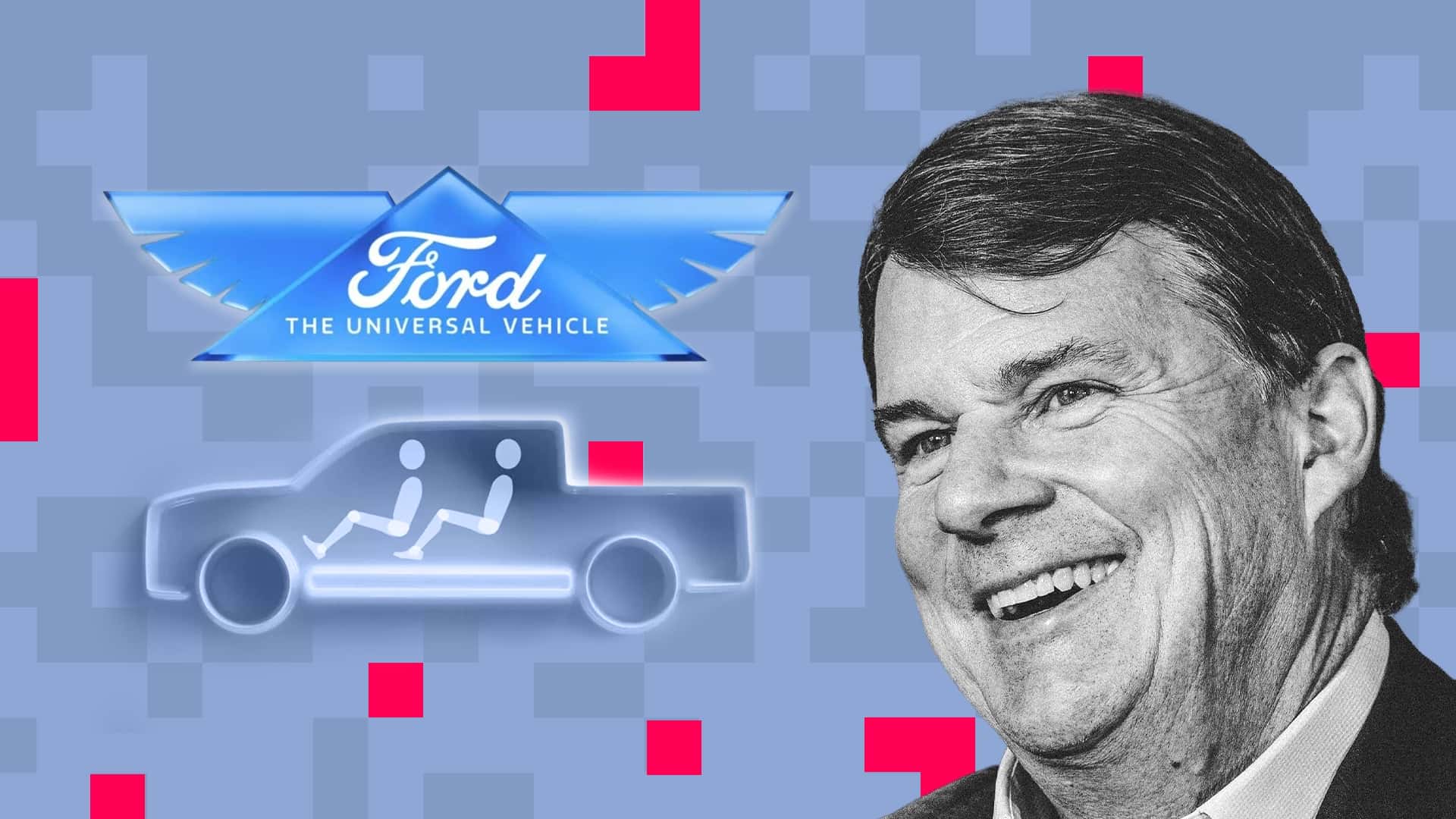
The project was dubbed the “skunkworks” effort, a term borrowed from Lockheed Martin’s secretive division that developed the U-2 spy plane. Ford CEO Jim Farley has compared this project to the Apollo missions of the 1960s and ’70s, highlighting its significance and complexity.
Farley provided an update on the progress of the project, indicating that crucial steps such as the supply chain, parts, and plant conversions have been completed. Prototype vehicles are already operational, running with Ford software. However, Farley remained elusive about the specific “top hats” or bodies that the platform could utilize, hinting at the possibility of a new Mustang Mach-E being part of the lineup.
In a recent interview with InsideEVs, Farley emphasized the high-risk nature of the project, likening it to Ford’s power unit development for Formula 1. He described it as one of the most challenging projects he has ever been involved in, highlighting the technological and cost competitiveness that the company is aiming to achieve, especially against Chinese counterparts.
The Universal EV (UEV) Platform, set to debut in 2027 with an electric pickup truck priced around $30,000, is a key component of Ford’s electrification strategy. The platform is expected to underpin multiple variants, including a midsize crossover, signaling Ford’s commitment to expanding its electric vehicle lineup.
Farley revealed that the commercialization of the project is progressing well, with all parts designed and quoted. Manufacturing facilities are being retrofitted, and prototypes are being built using Ford’s zonal electric architecture software. The integration of Ford software and custom-designed silicon has been a significant milestone in the project’s development.
The UEV architecture represents a significant shift in how Ford approaches electric vehicle production. With a dedicated team in California working independently on the project, Ford aims to redefine its approach to electric vehicle manufacturing and address past challenges. The $5 billion investment underscores the company’s commitment to innovation and competitiveness in the rapidly evolving electric vehicle market. Ford is venturing into the electric vehicle market with a new project that is being led by veterans of companies like Tesla, Apple, and Rivian. The project will see the construction of a reimagined assembly line, setting the stage for a groundbreaking new era in automotive manufacturing.
The electric vehicle (EV) itself will be powered by new lithium iron phosphate (LFP) batteries that have been co-developed with Chinese giant CATL. These batteries will allow the EV to run efficiently while using 20% fewer parts compared to a typical vehicle, ultimately cutting costs for consumers. Ford has also revealed that the inaugural truck will offer the interior space of a mid-size crossover while fitting inside the footprint of the Maverick. Additionally, the EV will support full over-the-air updates on a ground-up zonal electric architecture and will feature “eyes-off” automated driving assistance about a year after it goes on sale.
One of the key goals of this project is to meet the production costs that Chinese giant BYD can achieve in Mexico. This is crucial for making EVs that are not only environmentally friendly but also profitable for the automaker. Ford’s decision to cancel the F-150 Lightning electric truck last year and focus more on hybrids for its larger vehicles underscores the importance of this new project for the company’s future success in the EV market.
However, Ford’s CEO, Jim Farley, has acknowledged that the success of the Universal EV Production System is not guaranteed. Many automakers have faced challenges with quality issues, especially in terms of software, on their newest EV platforms. The project represents a significant departure from traditional manufacturing processes, with new technologies and approaches being implemented at every stage of production.
“We have taken on so many experimental approaches to new suppliers,” Farley said. “You know, it’s a totally different way of building the vehicle. New workstation designs. All new IT solutions to support the parts release.” This innovative mindset and willingness to embrace change are what will ultimately determine the success of Ford’s ambitious foray into the electric vehicle market. Ford CEO Jim Farley has recently emphasized the importance of the company’s UEV (urban electric vehicle) project in staying competitive with China’s automakers. With the rise of electric vehicles and the increasing global demand for sustainable transportation options, Farley believes that the UEV project is critical for Ford’s future success.
During a recent tour of a Ford truck factory in Michigan, President Donald Trump expressed his openness to Chinese vehicles being sold in the U.S., as long as they are built domestically. This statement may have raised concerns among U.S. auto executives, as Farley has previously highlighted China’s dominance in technology, costs, and profitability within the automotive industry.
Farley acknowledged China’s automakers as significant competitors, along with South Korean manufacturers. He praised Trump’s interest in the topic, stating that it is a positive development for the country to engage in a debate about automotive policies and competition on a global scale.
At the recent Consumer Electronics Show (CES), Chinese auto conglomerate Geely hinted at a potential entry into the U.S. market, further emphasizing the need for Ford to stay ahead in the electric vehicle market. While Farley did not provide specifics about the UEV platform, he hinted at the possibility of it underpinning future models like a next-generation Mustang Mach-E.
As Ford continues to navigate the rapidly evolving automotive landscape, Farley remains focused on ensuring that the company remains competitive and innovative in the face of increasing competition from China and other global automakers. The UEV project represents a key initiative for Ford as it seeks to establish itself as a leader in the electric vehicle market and secure its position in the future of transportation.