
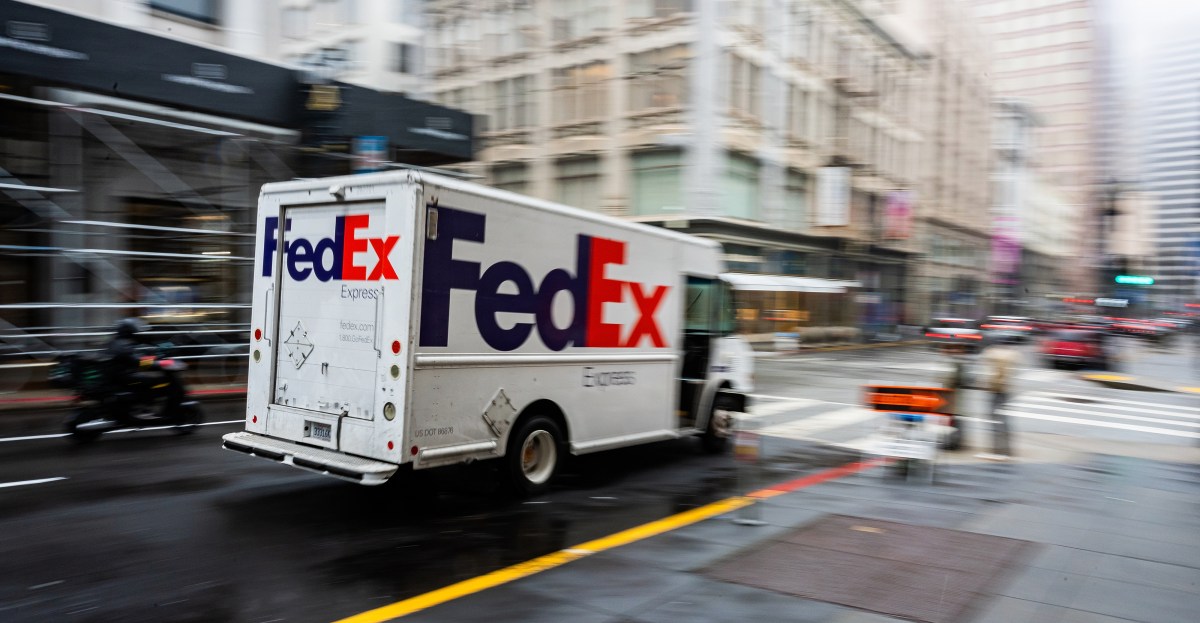
FedEx has announced its plans to pass along any refunds resulting from the Supreme Court’s ruling that some of President Donald Trump’s tariffs are deemed “illegal.” The company made this statement on its website, clarifying that while no refund process has been established yet by the courts, FedEx is committed to reimbursing shippers and consumers impacted by tariffs if they are able to retrieve the funds.
This decision comes after FedEx filed a lawsuit in the US Court of International Trade, requesting a full refund of tariff payments from the Trump administration. Typically, FedEx covers the cost of duties and tariffs on behalf of customers when packages arrive in the US, later billing customers for these fees.
In their official statement, FedEx expressed their clear intent to pass on any refunds they receive to the shippers and consumers who originally bore those charges. However, the timeline for these refunds and the exact process for requesting and issuing them will depend on future guidance from the government and the court.
The Supreme Court recently ruled that the tariffs imposed by President Trump under the International Emergency Economic Powers Act (IEEPA) exceeded his powers. These tariffs were placed on imported products from countries such as China, Canada, and Mexico, with additional reciprocal tariffs imposed on many other nations. Following this ruling, President Trump enacted a new 10 percent tariff under the Trade Act of 1974.
In addition to FedEx, more than 1,000 companies including Costco, Revlon, Bausch + Lomb, Dyson, and L’Oréal have also filed lawsuits in the US Court of International Trade in hopes of reclaiming the funds spent on Trump’s tariffs. The efforts to seek refunds for these tariffs highlight the impact of trade policies on businesses and consumers alike.
As the legal proceedings unfold and guidance is provided by the government and the court, FedEx remains committed to ensuring that any refunds received are promptly passed on to those affected by the tariffs. This ongoing situation underscores the complexities and implications of trade policies on the global economy.