
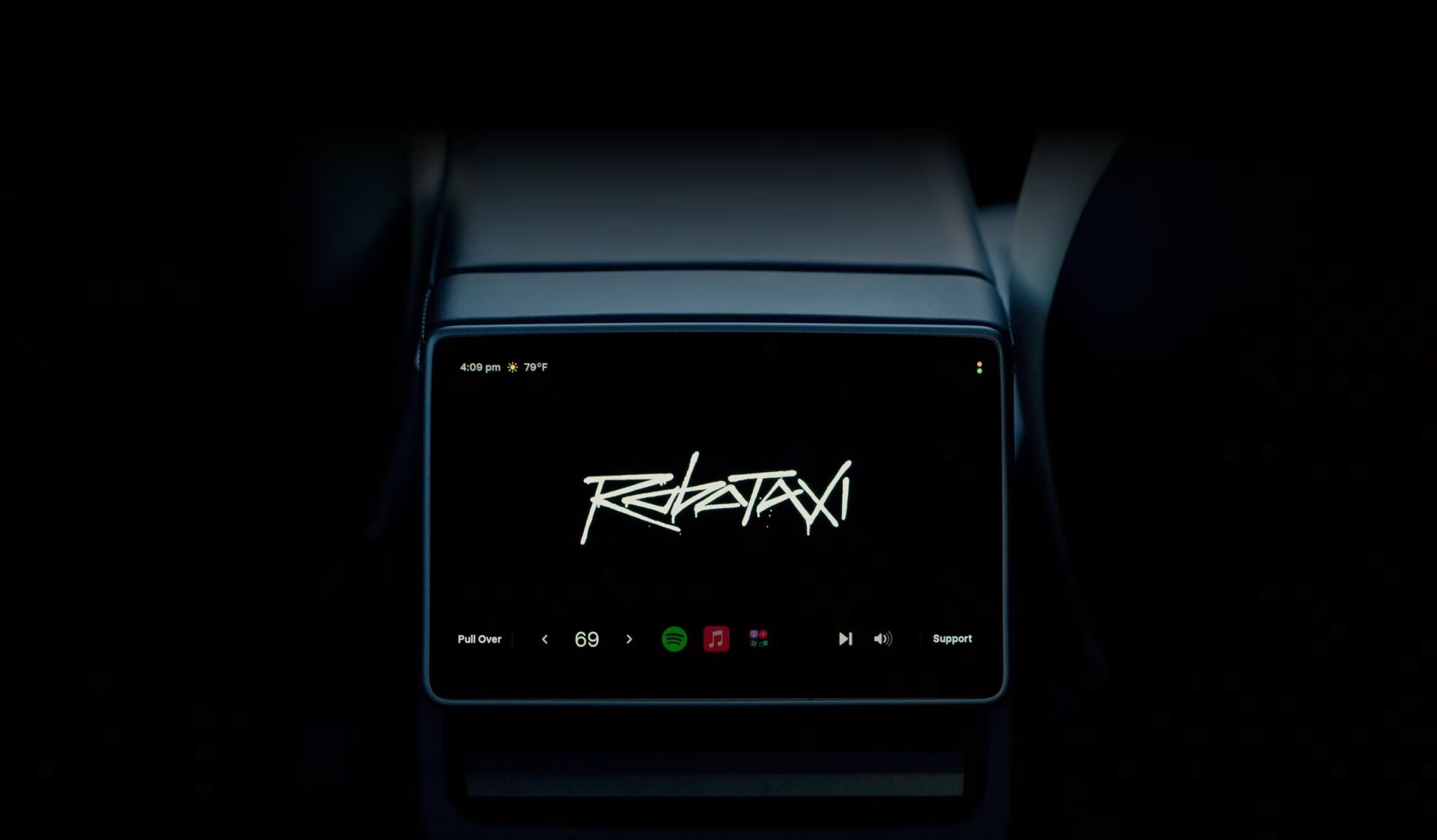
Tesla’s Robotaxi service in Austin has reached a significant milestone, with new footage showcasing how the system reacts when a passenger tries to intervene. The company has officially launched fully unsupervised Robotaxi rides in Austin, Texas, marking a groundbreaking moment in autonomous driving. These vehicles operate without any safety monitors inside and rely solely on cameras, without the use of LiDAR or radar.
A former Tesla AI engineer shared one of the first publicly documented unsupervised Robotaxi rides, giving insight into how Tesla’s Full Self-Driving Unsupervised system responds when a rider attempts to take control. In the video, attempting to manipulate the steering wheel triggers an on-screen warning instructing occupants not to touch the steering wheel. The system is designed in a way that the steering wheel does not provide any control over the vehicle, and continuous tugging prompts a safe pull-over maneuver.
This distinction highlights the difference between Tesla’s consumer-facing Full Self-Driving and its Robotaxi deployment. In Robotaxi mode, the vehicle is always in control, treating human passengers as riders rather than fallback drivers. The steering wheel serves as a disabled control interface, with Tesla’s upcoming Cybercab set to eliminate it entirely.
Ashok Elluswamy, Tesla’s AI chief, confirmed the shift towards unsupervised Robotaxi rides in Austin. Previously, Tesla’s Austin Robotaxi fleet operated without drivers but with safety monitors in the passenger seat. The recent change fulfills Elon Musk’s promise to remove the last layer of human oversight, making the service truly unsupervised. Initial unsupervised rides were limited to employees before opening up to the public.
Since the rollout, more footage has emerged online, showcasing entire end-to-end rides where empty Teslas arrive to pick up passengers. These videos offer a real-world demonstration of Tesla’s autonomy stack in action without human backup.
The next step is to introduce this unsupervised capability to privately owned Teslas. Musk has stated that current-generation AI4 hardware is capable of achieving fully autonomous driving. However, the most advanced versions of FSD are currently exclusive to Tesla’s Robotaxi fleet, with gradual improvements expected to be introduced over time.